
Picking
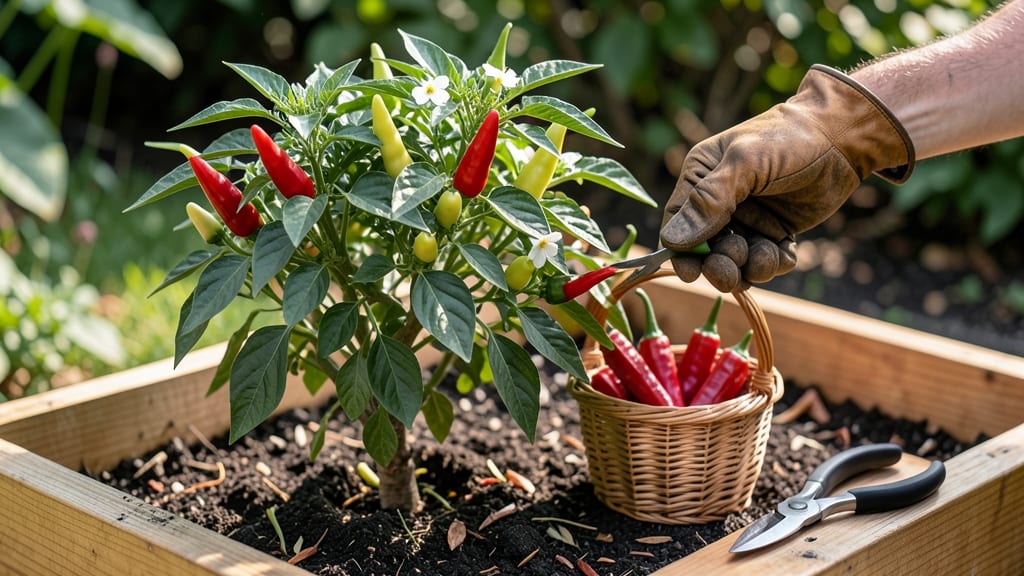
Harvesting ghost peppers at the right time means the difference between a 500,000 SHU firecracker and a weak 100,000 — and it all comes down to color, size, and firmness.
You’ve spent months nurturing your 🌶️ ghost peppers, but picking too soon or too late can ruin the heat you’ve been waiting for. The key? Watching for those three color-stage shifts that signal peak ripeness — and knowing when to grab your shears.
Ghost peppers don’t just change color; they transform in flavor and potency. A green pepper might still be building heat, while a red one could be past its prime.
I’ll walk you through the exact cues to harvest for maximum spice, plus how to avoid common mistakes that dull the burn.
Ready to turn your garden into a heat factory? Let’s break down the color-based tricks that guarantee a harvest packed with fire — and how to store them so the heat lasts all season.


Ghost pepper harvesting by color: the 3 stages for optimal heat
Ghost peppers reach their peak heat and flavor through distinct color stages, each offering unique characteristics. The green stage delivers mild heat but high acidity, while the yellow and red stages bring maximum potency and sweetness.
Understanding these stages helps you decide when to harvest for the best SHU levels—whether you're growing for heat or balanced flavor.
Color isn’t the only factor—firmness, size, and even the plant’s stem separation play roles. For example, a ghost pepper at the red stage can hit 500,000 SHU, but if harvested too early, it might only deliver 200,000 SHU.
Let’s break down each stage so you can pick at the perfect moment.
🌱 Pro Tip: Use a sharp pruning shears to harvest—twisting can damage the plant and reduce future yields. Always leave a small stem attached to prevent rot.
| Stage | Color & Size | Heat Level (SHU) | Flavor Profile | Best For |
|---|---|---|---|---|
| Green | 3-4 inches, glossy green | 100,000–200,000 | Tangy, grassy, mild heat | Early season use, pickling |
| Yellow | 3.5-4.5 inches, golden hue | 300,000–400,000 | Sweet, fruity, balanced heat | Sauces, dried peppers |
| Red | 4-5 inches, deep red | 500,000–1,000,000+ | Rich, smoky, max heat | Hot sauces, long-term storage |
🌶️ Harvest Tip: Wait until 75% of peppers reach the desired color for consistent heat levels.
The green stage is ideal if you need peppers quickly or prefer a milder kick. These peppers are crunchier and pack a sharp acidity, making them great for fresh salsas or fermented dishes.
However, their heat potential is far from peak, so if you’re growing for heat, skip this stage unless you’re in a rush.
When ghost peppers transition to yellow, their sugar content increases, and the heat ramps up significantly. This is my personal favorite stage for drying or making sauces because it offers a balanced flavor—sweet with a fiery backend.
The yellow hue signals that the pepper is nearly fully mature, but not quite at its maximum heat potential.
For maximum heat, wait until the peppers turn deep red. At this stage, they’re at their peak SHU levels and develop a rich, smoky flavor. The red stage is best for hot sauces, powders, or long-term storage, as the heat intensifies further over time.
However, be cautious—overripe red peppers can become wrinkled and lose some potency.
🌡️ Temperature Matters: Ghost peppers need warmth (70°F+) to ripen fully. If temperatures drop below 60°F, color changes slow down, and peppers may stay green or yellow longer. Use a row cover or move potted plants indoors if frost threatens.
Harvesting at the wrong stage can ruin your crop. For example, picking green peppers too late in the season means missing the yellow and red stages entirely. Conversely, waiting too long for red peppers can lead to overripe fruit that’s tough and less flavorful.
Aim to harvest every 2-3 days during peak season to catch peppers at their ideal stage.
To test ripeness beyond color, give the pepper a gentle squeeze. It should feel firm but slightly yielding, like a ripe tomato. If it’s rock-hard, it’s underripe; if it’s mushy, it’s overripe.
Also, check the stem separation—a ripe pepper will detach cleanly from the plant with minimal effort.
Store harvested ghost peppers in a cool, dark place (like a paper bag) to slow ripening. If you’re drying them, harvest at the red stage for the most intense heat.
For fresh use, yellow-stage peppers offer the best flavor-heat balance, while red peppers deliver the biggest kick for adventurous gardeners.
How to test ghost pepper ripeness before harvesting (without guessing)
Ghost peppers are tricky—harvest too soon, and you’ll miss their signature 500,000 SHU heat. Too late, and they’ll shrivel or lose flavor. The key is testing ripeness before picking. Start by checking the stem separation method: gently twist the pepper at its base.
If it snaps cleanly with minimal resistance, it’s ready. If it resists or tears, wait a few days.
Next, perform the touch test—press a pepper firmly with your thumb. A ripe ghost pepper should yield slightly (like a ripe tomato) but not feel mushy. Overripe peppers collapse under pressure, while underripe ones stay rock-hard. This test works best in the morning when peppers are firmest.
Compare sizes too—ghost peppers should reach 3-4 inches long. Use a ruler or caliper for accuracy. Smaller peppers (under 2 inches) are underripe, while larger ones may be overripe. Pay attention to color consistency—ripe peppers have uniform hues, not patchy spots.
Harvesting past red stage reduces capsaicin levels by 30-50%. If peppers turn wrinkled or soft, they’re past prime. For max heat, pick when fully red but still firm. Yellow peppers offer a milder balance (300,000-400,000 SHU), while green ones are least potent (100,000-200,000 SHU).
For advanced testing, check the stem end. A ripe ghost pepper will have a slightly dry stem with no moisture. If it’s sticky or oozing, the pepper is overripe.
Another trick: smell the stem. Ripe peppers emit a sweet, earthy aroma, while unripe ones smell bland or green.
Harvest frequency matters too. Pick peppers every 2-3 days during peak season to encourage more production. Use clean, sharp pruners to avoid damaging the plant. Cut stems 1 inch above the pepper to prevent disease. Store harvested peppers in a cool, dark place (50-60°F) to slow ripening.
Remember: color alone isn’t enough. Combine the touch test, stem separation, and size check for foolproof ripeness. With these methods, you’ll always harvest ghost peppers at their peak heat and flavor—no guessing required. 🌶️