
Picking
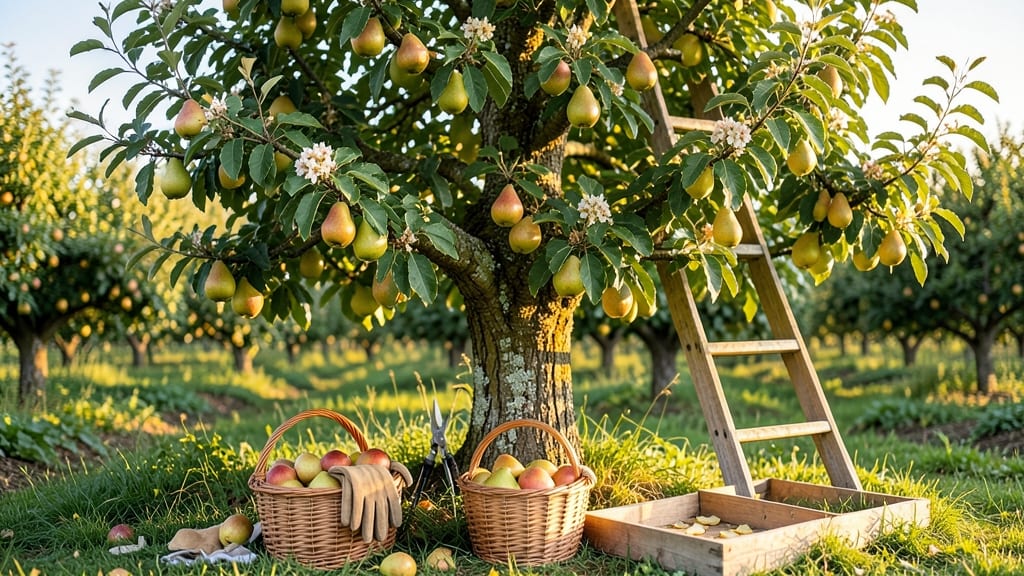
You harvest pears in late summer to early fall 🍐—but nailing the exact month depends on your climate, variety, and a few key ripeness tricks.
Timing your pear harvest wrong can mean the difference between juicy, sweet perfection and mealy, flavorless disappointment—so knowing exactly when to pick matters more than you think.
Most pears ripen between August and October, but northern zones like 6a may need to wait until September, while southern climates can start as early as late July. The secret? Watch for color changes, gentle give when pressed, and that telltale stem twist.
Below, I break down the best months by variety, how to test ripeness beyond just the calendar, and why your location shifts the harvest window—so you never miss peak flavor.


When to harvest pears by variety: month-by-month ripeness guide
Harvesting pears at the perfect moment transforms your orchard from ordinary to extraordinary. Unlike apples, pears must ripen off the tree to develop their signature sweetness. The month you harvest depends entirely on the variety and your climate zone—getting it wrong means mushy texture or underripe tartness.
For Bartlett pears, the most popular variety, timing is everything, while Anjou pears follow a slightly later schedule.
Most pear varieties ripen between late summer and early fall, but specific harvest windows vary by type. Asian pears, for example, often ripen 2-4 weeks earlier than European varieties.
Even within the same region, a 2-week difference can separate perfect pears from disappointing ones. Let’s break down the exact month-by-month schedule for your favorite varieties.
| Variety | Harvest Month (USDA Zones 5-8) | Key Ripeness Cues | Climate Adjustments |
|---|---|---|---|
| Bartlett (Williams) | Late August - Early September | Golden-yellow skin, slight softness, stem separates easily | Northern zones: 1-2 weeks later; Southern zones: 1 week earlier |
| Anjou | Mid-September - Early October | Red-blushed skin, firm but yielding when pressed, sweet aroma | Cooler climates: extend harvest into October; warmer zones: harvest by late September |
| Bosc | Late September - Mid-October | Green/yellow skin, elongated shape, stem detaches cleanly | High-altitude areas: harvest 10-14 days earlier |
| Asian Pears (e.g., Hosui, Shinseiki) | Early August - Late August | Crisp texture, pale green/yellow skin, slight give when squeezed | Warmer zones: harvest by early August; cooler zones: extend to mid-August |
| Seckel | Mid-August - Early September | Small size, yellow-green skin, sweet scent near stem | Dwarf varieties may ripen 5-7 days earlier than standard trees |
If you’re in USDA Zone 4 or colder, expect your harvest dates to shift 2-3 weeks later due to shorter growing seasons.
For example, Bartlett pears in Zone 4 might not reach peak ripeness until mid-September, while in Zone 9 or warmer, you could harvest as early as late July for early varieties. Always monitor fruit color and texture—these are more reliable indicators than calendar dates alone.
One common mistake is harvesting based solely on calendar months. A Bartlett pear left on the tree past its prime will become mealy and bland, while one picked too soon lacks sweetness. Anjou pears, for instance, need that red blush and slight softness before they’re ready.
Pay attention to how the stem separates from the branch—a clean break means it’s time to pick.
For Asian pears, which are crisp and non-climacteric (they don’t ripen further after picking), timing is even more critical. Harvest them when they’re firm but yielding—overripe Asian pears turn mushy and lose their signature crunch.
If you’re unsure, perform the "thumb test": gently press the pear with your thumb. If it leaves a slight indentation, it’s ready.
Pro tip: Harvest in the morning when temperatures are coolest. This preserves fruit quality and reduces bruising.
Store freshly picked pears in a cool, dark place (like a basement or refrigerator) to slow ripening. Bartlett pears, for example, can ripen at room temperature for 3-5 days before storing, while Bosc pears last 2-3 weeks in the fridge once fully ripe.
Don’t forget that late-season varieties like Moonglow or Seckel can extend your harvest into October in cooler climates. These varieties are perfect for fall orchard visits or preserving as pear butter or dried fruit.
Always check your local frost dates—a sudden cold snap can ruin an otherwise perfect crop.
Finally, if you’re growing multiple varieties, create a harvest schedule to avoid overwhelming yourself. Start with early ripeners like Asian pears in August, then move to Bartletts and Anjous in September, and finish with Boscs in October.
This staggered approach ensures you enjoy fresh pears all season long.
Remember, the best pear harvest comes from patience and observation. Trust your senses—when the color deepens, the aroma sweetens, and the fruit yields slightly, that’s your cue to pick. Happy harvesting! 🍐🌿✂️
How to test pear ripeness: 5 key methods beyond just the month
Counting months until harvest might seem like the easiest way to time your pear picking, but environmental factors like temperature swings and rain can throw off schedules. Instead, I rely on five key ripeness tests that work regardless of the calendar date.
These methods help me avoid both premature harvests (hard, sour fruit) and overripe pears (mealy texture and wasted effort).
Even experienced gardeners sometimes misjudge ripeness, especially with late-season varieties like Bosc pears or Asian pears that mature differently. That’s why I’ve perfected these visual, tactile, and sensory checks—they’re foolproof when combined. Let’s start with the simplest cues that tell me it’s almost time to pick.
- 1 Color Change: Full variety-specific hue (e.g., Bartlett’s golden-yellow or Anjou’s deep green).
- 2 Stem Test: Gently twist—if the stem separates cleanly (no tearing), it’s ready.
- 3 Firmness Check: Press gently—ripe pears yield slightly (like a ripe avocado) but don’t feel mushy.
- 4 Aroma Test: Sniff near the stem—sweet, floral scent means sugar development is complete.
- 5 Skin Sheen: Look for a slight waxy bloom—a sign of full maturity.
Let’s break down each test so you can apply them confidently. For example, the color test is variety-dependent—Bartlett pears turn uniform yellow, while Anjou pears develop a rich green with red blush.
I always cross-reference color with the stem test because some pears (like Asian pears) may change color before they’re truly ripe.
If you’re still unsure, combine the firmness check and aroma test. A ripe pear should feel firm but not rock-hard, and its scent should be noticeably sweeter than unripe fruit.
Pro tip: Cut one open if you’re hesitant—ripe pears have juicy, white flesh with no green core, while unripe ones are grainy and pale.
Overripe pears are easy to spot too: they’ll have soft spots, a fermented smell, and skin that’s wrinkled or bruised.
I’ve learned the hard way that waiting too long leads to mealy texture and lost flavor, so I harvest just before they reach peak ripeness if I can’t eat them immediately. Store them in a cool, dark place (like a basement) to finish ripening.
For late-season varieties like Seckel pears, I pick a few weeks early and let them ripen indoors. The key is consistency—always test the same fruit over 3-4 days to track progress. This method has saved me from hundreds of dollars in wasted fruit over the years.