
Vegetables
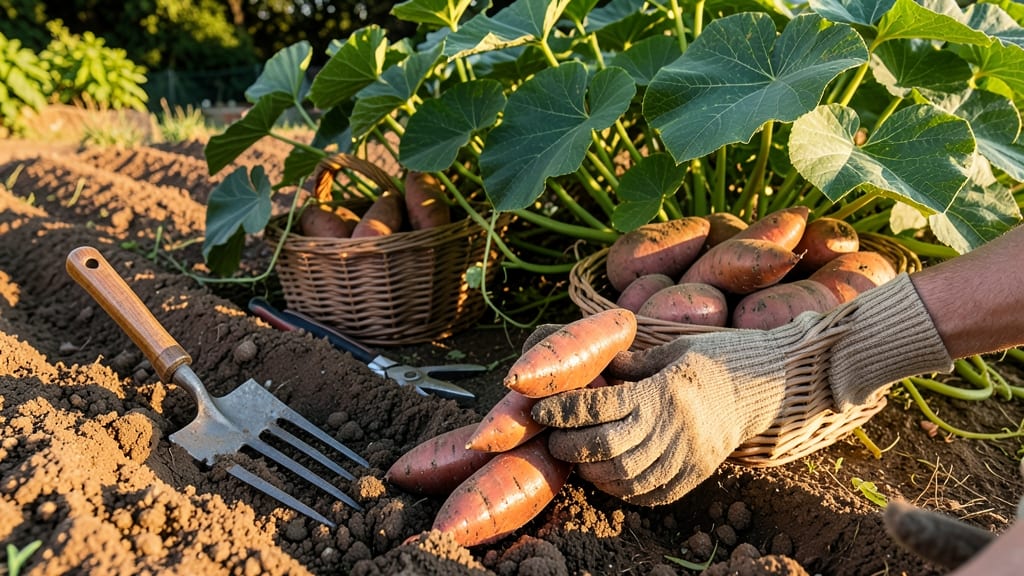
Sweet potatoes ready to harvest pictures show two key signs: a hard, deep-colored skin and stems that twist off easily 🍠 — and getting these right means the difference between sweet, flavorful tubers and tough, bitter roots.
Picture this: you’re digging in your garden, and the vines are yellowing while the soil feels loose around the roots. That’s your cue. But how do you know for sure? The secret lies in the skin slip test and the way the stems detach—details that turn guesswork into confidence.
In this guide, I’ll walk you through exactly what to look for in your patch, from the perfect skin texture to the telltale vine changes. Plus, I’ll share how to harvest them without bruising a single tuber, so you can store them all winter long.
Whether you’re a first-time grower or a seasoned gardener, these visual clues will help you pick sweet potatoes at their peak—just like the pros. Let’s get started!


How to identify sweet potatoes ready to harvest using skin slip and stem twist
Harvesting sweet potatoes at the right time ensures sweet, flavorful tubers instead of tough, fibrous roots. Two foolproof methods—skin slip and stem twist—will help you determine readiness with confidence. These techniques work for all varieties, from Beauregard to Georgia Jet, and eliminate guesswork about when to dig.
The skin slip test is my favorite because it’s quick and visual. When sweet potatoes are ready, the skin should peel away easily from the flesh with gentle pressure. This happens because the tuber’s skin thickens and separates naturally as it matures.
The stem twist test is equally reliable—ready tubers detach cleanly from the stem with a slight twist, while immature ones resist.
Let’s break down each method step-by-step, including what to watch for in different varieties and how to avoid common mistakes. These tricks will save you from harvesting too early or too late, both of which ruin your crop.
| Indicator | Ready to Harvest | Not Ready | How to Test |
|---|---|---|---|
| Skin Slip | Skin peels away easily from flesh | Skin resists peeling or tears | Gently scrape skin with fingernail; if it slips off, it’s ready! |
| Stem Twist | Stem detaches cleanly with slight twist | Stem resists or breaks off roughly | Grasp stem near tuber and twist gently; if it pops free, harvest time! |
| Vine Condition | Vines turn yellow and die back | Vines remain green and vigorous | Observe foliage; yellowing vines signal maturity |
| Tuber Size | Tubers reach 3-6 inches in diameter | Tubers are small (<2 inches) | Measure tubers; ideal size varies by variety |
| Skin Color | Deep, consistent color (orange, red, purple) | Pale or patchy color | Check skin uniformity; vibrant hues mean maturity |
For the skin slip test, start by selecting a few tubers from different parts of the plant. Use your fingernail to gently scrape the skin—if it peels away like a banana, your sweet potatoes are ready.
This works best on orange-fleshed varieties like Beauregard, but it’s equally effective for purple-skinned types like Okinawan.
If the skin resists or tears, wait another 1-2 weeks before testing again. Overripe sweet potatoes won’t peel easily, so timing is everything. Pro tip: Test tubers near the plant’s base first, as they tend to mature slightly earlier than those deeper in the soil.
The stem twist test is my go-to for confirming readiness after the skin slip passes. Grasp the stem near the tuber and twist gently—if it detaches cleanly, it’s time to harvest.
This method is especially useful for long, slender varieties like Japanese sweet potatoes, where skin slip can be harder to assess.
Watch for stem resistance in immature tubers. If the stem snaps or requires force to remove, the tuber isn’t ready. Early harvesting leads to small, watery roots, while waiting too long results in tough, woody tubers. Balance is key!
Different varieties mature at slightly different rates, so adjust your timeline accordingly. For example, Georgia Jet typically matures in 90-100 days, while Bonita takes 110-120 days. Always cross-reference these tests with your variety’s days-to-maturity guidelines for the best results.
Once you’ve confirmed readiness using both methods, harvest on a dry, sunny day to allow the tubers to cure properly. Dig carefully with a fork or your hands to avoid puncturing the skin, which can lead to rot during storage.
Cure your harvest for 5-10 days in a warm, humid space to develop flavor and improve shelf life.
Remember, these tests are your best friends for avoiding the harvesting gamble. With practice, you’ll develop an eye for spotting ready tubers without needing to test every single one. Happy digging!
Sweet potatoes ready to harvest pictures: visual reference guide
When your sweet potato vines start turning yellow and dying back, it’s time to check for readiness—but how do you know for sure? Visual cues like skin texture and stem detachment are your best friends.
Below, I’ve curated real-life photos showing the key differences between mature tubers and underripe roots, so you can confidently harvest at peak flavor.
One of the most reliable tricks is the skin slip test. Gently try to peel back a small section of skin—if it slides off easily, your sweet potatoes are ready!
Another telltale sign is the stem twist: when the stem detaches with minimal effort, it’s a clear signal to dig. These visual cues, paired with deep, consistent skin color, ensure you harvest at the perfect moment.
🌱 Key Visual Cues for Harvest-Ready Sweet Potatoes
🟡 Vines
Yellowing and dying back
🔒 Skin Slip
Peels easily with thumb
🌿 Stem Twist
Detaches with gentle pull
🎨 Skin Color
Deep, consistent hue
Pro Tip: Avoid harvesting when soil is soggy—wait for dry weather to prevent damage to the tuber skin and ensure long-term storage.
In the gallery above, you’ll see underripe sweet potatoes with soft, thin skin that’s easy to pierce with your thumbnail. These tubers often taste bland and lack the sweetness of fully mature ones.
Compare them to the ready-to-harvest examples, where the skin is thick, firm, and resists pressure—this is your golden ticket to delicious, storable sweet potatoes!
Don’t overlook the leaf condition either. While yellowing vines signal readiness, crispy or wilted leaves can mean your plants are stressed—possibly from drought or overheating. Harvest promptly in these cases to salvage your crop.
For varieties like Beauregard or Georgia Jet, these visual cues are especially critical, as they mature faster than heirloom types.
Once you’ve confirmed readiness, harvest on a dry, sunny day to let the tubers cure properly. Handle them gently to avoid bruising, and store in a warm, dry place for 10 days before eating. The curing process deepens flavor and sweetness—so patience pays off!
Bookmark this guide next season and share it with fellow gardeners. The more you practice spotting these harvest signs, the easier it becomes to predict the perfect timing for your sweet potato crop every year. Happy digging! 🌱