
Watering
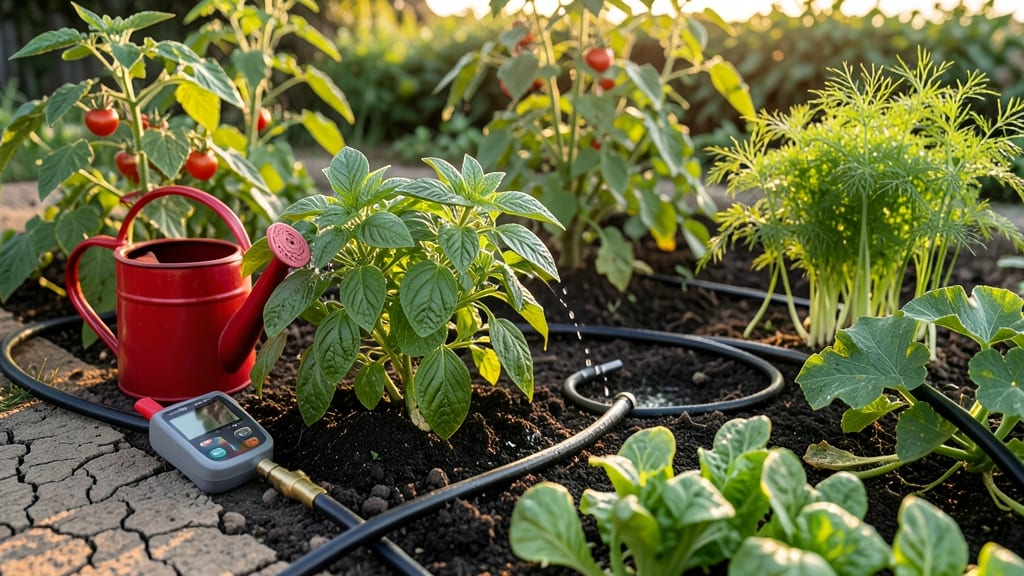
Watering your vegetable garden every day can actually harm your 🥬 plants more than help them, especially in Zone 6a where moisture needs shift with the seasons.
Overwatering your vegetable garden is one of the fastest ways to kill your plants—yet many gardeners fall into the trap of daily watering, thinking more moisture equals better growth. The truth? Most vegetables thrive on a carefully timed schedule, not a rigid daily routine.
Instead of guessing, check soil moisture by sticking your finger an inch deep: if it feels dry, water deeply until moisture reaches 6 inches down. This method ensures roots grow strong while saving you time and water.
Below, I’ll break down the ideal watering schedule by plant type, how to spot overwatering, and smart techniques like mulching to keep your garden healthy without the daily chore.
How often should you water vegetables: ideal scheduling by plant type
Watering your vegetable garden isn't a one-size-fits-all task—what works for leafy greens like spinach can drown root crops like carrots. The key is understanding each plant's needs, which vary based on growth stage, soil type, and climate.
For example, tomatoes and peppers need consistent moisture, while onions and garlic prefer drier conditions. Overwatering is just as harmful as underwatering, often leading to root rot or fungal diseases.
Soil type plays a massive role in watering frequency. Sandy soil drains quickly, requiring more frequent watering, while clay soil holds moisture longer, reducing the need for daily checks. Even in my garden, I’ve learned that mulching can cut watering needs by 30-50% by retaining soil moisture.
The goal? Deep, infrequent watering that encourages strong root development—never shallow, daily sprinkles.
Let’s break down the ideal schedules by plant type, so you can tailor your watering routine like a pro. Leafy greens (like lettuce and kale) need frequent moisture to stay crisp, while fruiting plants (like tomatoes and cucumbers) thrive with steady hydration.
Root crops, however, need well-draining soil to avoid deformities. Here’s the science-backed breakdown:
| Plant Type | Watering Frequency | Soil Moisture Goal | Key Tips |
|---|---|---|---|
| Leafy Greens (Lettuce, Spinach, Kale) | Every 1-2 days (shallow roots) | Consistently moist (1 inch topsoil) | Avoid overhead watering to prevent disease |
| Root Crops (Carrots, Radishes, Beets) | Every 3-4 days (deep watering) | Well-drained (avoid soggy soil) | Water deeply to encourage root growth |
| Fruiting Plants (Tomatoes, Peppers, Cucumbers) | Every 2-3 days (deep soak) | Steady moisture (1.5 inches/week) | Mulch to retain moisture and prevent cracking |
| Alliums (Onions, Garlic, Leeks) | Every 4-5 days (drier soil preferred) | Moderate moisture (avoid waterlogging) | Reduce watering as bulbs mature |
| Seedlings (All Types) | Daily (light misting) | Keep soil evenly moist | Use trays to prevent overwatering |
For leafy greens, the secret is frequent, light watering—think of them like a sponge that needs to stay damp but not soggy. I’ve found that watering in the early morning (before 9 AM) minimizes evaporation and reduces fungal risks.
Meanwhile, root crops like carrots and beets despise wet feet; their edible parts grow underground, so you’ll want to water deeply but infrequently to avoid splitting or deformities.
When it comes to fruiting plants, consistency is key. Tomatoes, for example, need about 1.5 inches of water per week, but they’ll reward you with juicier fruit if you water deeply at the base rather than sprinkling leaves.
I’ve seen firsthand how mulching with straw can cut watering needs by nearly half—it’s a game-changer for busy gardeners. Even in my clay-heavy soil, mulch helps prevent crusting and keeps roots cool.
Don’t forget that weather conditions can throw off even the best-laid plans. During hot, dry spells, I water my garden twice daily—once in the morning and once in the late afternoon—but I always stop by dusk to avoid fungal spores thriving in damp foliage.
Conversely, after heavy rain, I’ll skip watering entirely and let the soil dry out slightly before resuming my schedule.
One common mistake I see is assuming that all vegetables need daily watering. In reality, most mature plants can handle 3-5 days between waterings if the soil is rich in organic matter.
The exception? Seedlings and young transplants, which need daily moisture until their roots establish. Even then, a light misting is often enough—overwatering at this stage can suffocate tender roots.
To test if your garden needs water, stick your finger about 1 inch into the soil. If it feels dry, it’s time to water. If it’s still moist, hold off. This simple trick has saved me from both underwatering and overwatering more times than I can count.
And if you’re using container gardening, remember that pots dry out faster—check them daily during heatwaves.
Pro tip: Group plants with similar water needs together in your garden layout. This way, you can water entire sections at once, making your routine more efficient. For example, plant basil and lettuce near each other for frequent watering, while potatoes and onions can share space with less frequent hydration.
It’s all about working with nature’s rhythms, not against them.
Remember, the goal isn’t to water every day—it’s to water smartly. With the right schedule, your vegetables will thrive, your water bill will stay low, and you’ll avoid the heartbreak of wilted plants or blighted leaves. Happy gardening! 🌱
Signs of overwatering vegetables: how to spot and fix common mistakes
Your vegetable plants might be drowning in water, not thriving. Overwatering is sneaky—it doesn’t just mean soggy soil. Look for yellowing leaves that stay soft even when dry, or moldy soil with a foul smell.
These are red flags that your plants are suffocating from too much moisture. Even worse, root rot can silently spread underground, killing your plants before you notice.
One of the most confusing signs is wilting despite wet soil. Healthy roots absorb water efficiently, but overwatered plants can’t access oxygen, causing them to droop.
Check the soil: if it’s saturated and stays clumpy when squeezed, your plants are getting too much H₂O. This is especially common in containers or heavy clay soil, where water pools instead of draining.
Don’t ignore pale or mushy stems, another classic overwatering symptom. Healthy stems should feel firm, but excess moisture weakens them, making plants more prone to pests like aphids or diseases like powdery mildew.
If you spot white, fuzzy patches on leaves, cut back immediately—this is a fungal infection thriving in damp conditions. Prune affected areas with sterilized scissors and improve airflow around plants.
Fixing overwatered soil starts with drainage upgrades. Amend heavy soil with compost or perlite to improve aeration, or raise beds to prevent water pooling. For containers, ensure pots have drainage holes and use a mix of potting soil and coconut coir.
If your garden floods after rain, consider French drains or swales to redirect excess water. Always water in the morning to let foliage dry before nightfall.
Even after adjusting watering, monitor your plants for 3-5 days to see improvements. Reviving wilting plants requires patience: trim damaged leaves, reduce watering frequency, and apply a balanced fertilizer to help roots recover.
If roots smell rotten or look black, repot the plant in fresh, dry soil. Prevention is key—stick your finger 1 inch into soil before watering; if it’s damp, wait.
Remember, consistency beats frequency. Vegetables like tomatoes and peppers prefer deep, infrequent watering, while lettuce and herbs tolerate slightly more moisture. Tailor your approach to your garden’s needs, and soon you’ll spot the difference between thirsty and drowned plants. 🌱