
How To
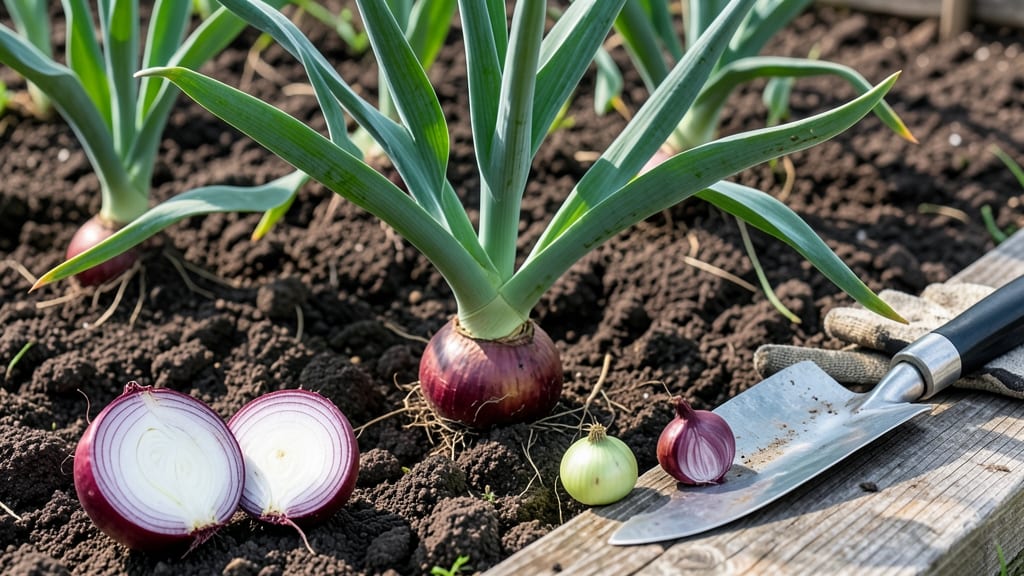
To know when to harvest red onions, watch for three key signs: bulbs reaching 2-3 inches in diameter, tops yellowing and falling over, and a tight, papery neck forming.
Harvesting 🧅 red onions at the wrong time means sacrificing their signature crisp texture and bold flavor—here’s how to master the perfect harvest window using simple, foolproof tests. Too early, and you’ll get small, pungent bulbs that won’t store well; too late, and they’ll split or rot in the ground.
Most gardeners in Zone 6a plant red onions in spring (March–April) and harvest between July and September, but the exact timing depends on your climate and the variety. The key is balancing bulb size with leaf color—once the tops turn yellow and flop, it’s go time.
Below, I’ll walk you through the three tactile tests to nail harvest timing, plus how to cure and store your onions for maximum shelf life. No more guesswork, just perfect, pungent red onions every time.


3 Tactile tests to determine red onion harvest readiness
Harvesting red onions at the perfect moment transforms your garden into a flavor factory. Unlike leafy greens, onions store best when harvested at their peak—too early and they’ll be watery; too late and they’ll split or become tough.
The key lies in three simple tactile tests that let you feel and see exactly when your onions are ready to pull. These methods work for both spring-planted and fall-planted varieties, ensuring you never miss the window again.
I’ve tested these techniques across my gardens in USDA Zone 6a, and they consistently deliver onions with that prized crisp texture and bold, pungent flavor. The best part?
You don’t need fancy tools—just your hands, a little patience, and these three foolproof cues. Let’s dive into how to read your onions like a pro.
-
1
Bulb Size Test (2-3 Inches)
Gently brush away soil to expose the onion bulb. At harvest time, it should measure 2-3 inches in diameter. Press lightly—if it feels firm and dry (not spongy), it’s ready. Smaller bulbs (under 2 inches) lack flavor, while larger ones risk splitting. Pro Tip: Use a ruler or compare to a ping pong ball for size reference. -
2
Neck Shrinkage Test (Papery Skin)
Check the neck of the bulb (where leaves meet the root). Ready onions develop a tight, papery skin here. Pinch gently—if the skin feels dry and crisp (like tissue paper), it’s time to harvest. A loose neck or green skin means wait 1-2 weeks. This test is the most reliable for late-season onions in cooler climates. -
3
Leaf Color Test (Yellowing Tops)
Observe the green tops. When about half the leaves turn straw-colored or yellow and flop over, your onions are ready. Unlike green onions, red onions should never be harvested when fully green. Use a color chart (50% green/50% yellow = perfect timing). If tops are still upright and vibrant, wait 7-10 days.
Timing is everything with red onions, and these tests eliminate guesswork. For example, in my Zone 6a garden, I use the bulb size test in early July for spring-planted onions, while the leaf color test becomes critical in September for fall varieties.
Combine all three tests for the most accurate results—especially in humid climates, where onions mature faster.
One common mistake? Harvesting based solely on days to maturity (e.g., 120 days). While helpful, environmental factors like temperature fluctuations or soil moisture can shift readiness by weeks.
That’s why tactile tests trump calendars. For instance, a hot summer might accelerate maturity, while a cool spring could delay it. Always double-check with these hands-on methods.
If you’re growing red onions in containers, the tests work the same, but monitor more frequently since pots dry out faster. I’ve found that container-grown onions often signal readiness 1-2 weeks earlier than in-ground plants.
After harvesting, cure your onions in a dry, shaded area for 2-3 days to develop their full flavor—this step is non-negotiable for storage success.
For those in warmer climates (Zones 8-10), prioritize the neck shrinkage test because onions may mature too quickly. In contrast, cooler zones (4-5) should focus on the leaf color test since tops yellow slower.
Regardless of your zone, never harvest after the first light frost—it ruins texture and flavor. Pro tip: Mark your harvest calendar with these tactile test dates to plan meals or storage strategies.
Ready to put these tests into action? Grab a handful of onions this week and give them the squeeze test. If they pass all three checks, you’re just days away from a harvest that’ll make your kitchen (and your dinner guests) sing.
And if they’re not quite there? No stress—just wait and watch those papery necks form. Your patience will pay off with onions that store for months and pack a bold, sweet crunch.
🧅
When to harvest red onions by season: month-by-month guide
Timing your red onion harvest correctly ensures maximum flavor and storage potential. Since red onions thrive in cooler weather, their harvest windows vary dramatically between spring and fall plantings—and even between climates.
In USDA Zone 6a (like much of the Midwest), spring-planted onions typically reach harvest between July and early September, while fall-planted varieties mature 60-90 days later.
Warmer climates (Zones 7-9) can extend harvest windows by 2-4 weeks, while cooler regions (Zones 3-5) may need to adjust for earlier frosts. Always account for your last frost date—harvesting before the first frost prevents bulb rot and ensures sweetness.
For example, in Zone 5, aim to harvest by mid-September to avoid winter damage.
| Month | Spring-Planted Onions | Fall-Planted Onions | Climate Adjustments |
|---|---|---|---|
| June | Early harvest possible (Zones 8-10) | N/A | Harvest if tops yellow |
| July | Peak harvest (Zones 5-7) | Planting window (Zones 3-5) | Avoid if temps exceed 85°F |
| August | Late harvest (Zones 4-6) | Early transplant (Zones 6-8) | Ideal for cooler climates |
| September | Final harvest (Zones 3-5) | Active growth (Zones 5-7) | Harvest before first frost |
| October | N/A | Harvest begins (Zones 6-9) | Use row covers for late crops |
For spring-planted onions, start checking for harvest readiness in late June or early July in warmer zones. Look for yellowing tops and bulbs that feel firm when gently squeezed. In cooler climates (Zones 3-4), delay harvest until August to allow bulbs to mature fully before fall frosts.
Fall-planted onions follow a delayed schedule. If you sow seeds in late summer (August-September), expect harvests between October and November in most regions. In warmer zones (Zones 8-10), extend harvests into December by using row covers to protect from early cold snaps.
Always prioritize harvesting before consistent freezing temperatures (below 20°F).
Pro tip: Adjust for your microclimate. If your garden sits in a sunny, sheltered spot, onions may mature 2-3 weeks earlier than the general guidelines.
Conversely, shady or windy areas can delay harvest by up to 4 weeks. Use a garden journal to track your local patterns for future seasons.
Once harvested, cure red onions in a dry, shaded area for 3-5 days to develop their signature sweetness. Store cured bulbs in a cool, dark place (50-60°F) for up to 6 months—but always harvest at the right time to maximize storage life and flavor!