
How To
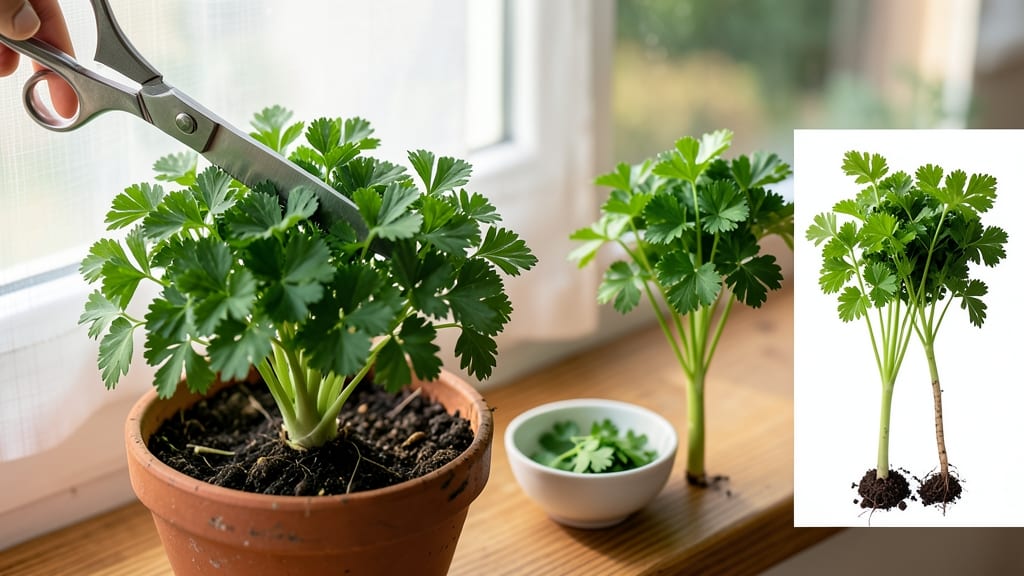
To harvest parsley without killing the plant, focus on trimming outer stems just above a leaf node—this keeps your 🌿 parsley bushy and encourages regrowth.
Harvesting parsley the wrong way can leave your plant looking ragged—or worse, dead. But with the right technique, you can snip fresh herbs all season long without sacrificing future growth. Here’s how to trim parsley like a pro while keeping your plant thriving.
Most gardeners make one of two mistakes: either they cut too much at once, shocking the plant, or they snip from the center, which stunts new growth. Instead, aim for the outer stems, leaving the inner leaves intact to keep photosynthesis going.
Below, I’ll walk you through the exact steps—from choosing the right tools to recognizing when your parsley is ready for another harvest—so you can enjoy fresh, flavorful leaves for months without harming your plant.


The right way to harvest parsley: step-by-step trimming techniques
Harvesting parsley correctly is all about precision and timing. Unlike many herbs, parsley thrives when you use selective trimming instead of aggressive cutting. The key is to remove leaves in a way that stimulates new growth while preserving the plant’s energy.
I’ve learned that cutting too much at once can shock the plant, leading to stunted regrowth or even death—especially for young plants.
Before you grab your scissors, know that parsley has two main varieties: curly-leaf and flat-leaf. Both can be harvested the same way, but flat-leaf parsley tends to be more forgiving if you make a mistake.
The right tools and technique make all the difference between a bountiful harvest and a struggling plant. Let’s dive into the steps to ensure your parsley stays healthy and productive all season.
Choose the Right Tools
Use clean, sharp pruning shears or small garden scissors. Dull tools crush stems, causing damage and inviting disease. Sterilize your tools with rubbing alcohol before use to prevent spreading pathogens.
Identify Mature Stems
Look for outer stems with 4–6 mature leaves. These are ready for harvest and won’t harm the plant’s center. Avoid cutting the innermost leaves, as they fuel new growth.
Cut at a 45-Degree Angle
Make your cut just above a leaf node (where leaves meet the stem). Angle the cut to prevent water pooling, which can rot the stem. Never cut more than 1/3 of the plant at once.
Harvest Outer Leaves First
Focus on outer leaves and stems to protect the plant’s center. This method encourages dense, bushier growth and prevents the plant from becoming leggy or woody.
Time Your Harvests
Harvest in the morning after dew dries to maximize flavor and moisture. Avoid harvesting during peak heat or late afternoon, as this stresses the plant.
Parsley is a slow grower, so patience is key. After harvesting, watch for new growth within 2–3 weeks. If your parsley isn’t regrowing, it might be nutrient-deficient or under stress.
In this case, add a balanced fertilizer (like 5-10-10) and ensure it’s getting 4–6 hours of sunlight daily. Over time, you’ll learn the perfect balance for your climate.
Seasonal timing matters too. In spring and fall, parsley grows more vigorously, so you can harvest more frequently. During summer heat, reduce harvesting to avoid shocking the plant. I’ve found that flat-leaf parsley handles heat slightly better than curly-leaf, but both benefit from partial shade in hot climates.
One common mistake I see is harvesting too close to the base. This removes the plant’s energy source and can kill it. Always leave at least 2–3 inches of stem to ensure the roots keep feeding the remaining leaves.
If you accidentally cut too much, don’t panic—just reduce future harvests and focus on watering and fertilizing to help it recover.
For container-grown parsley, the same rules apply, but monitor soil moisture more closely. Potted parsley dries out faster, so water deeply every 2–3 days during hot weather. If your parsley starts looking yellow or wilted, it’s a sign to cut back on harvesting and focus on care instead.
Pro tip: Store harvested parsley in the fridge (not the freezer) for up to 10 days to preserve freshness. Wrap stems loosely in a damp paper towel and place in a perforated bag to retain moisture. This way, you’ll always have fresh parsley on hand without overharvesting.
With these techniques, your parsley will stay lush, productive, and healthy for years. Happy harvesting! 🌿✂️💧
Common harvesting mistakes that kill parsley (and how to avoid them)
Parsley is one of those resilient herbs that rewards patience—but only if you harvest it correctly. Over-trimming, using the wrong tools, or harvesting at the wrong time can stunt growth or even kill your plant.
I’ve seen parsley plants go from lush and green to leggy and sad in just a few weeks because of these mistakes. The good news? Most of these errors are easy to spot and fix once you know what to look for.
One of the biggest red flags is yellowing leaves after harvesting. This usually means you’ve cut too aggressively or damaged the plant’s core. Another telltale sign is stunted regrowth—if your parsley takes months to bounce back after trimming, you’re likely overdoing it.
Even worse, woody stems that form too early signal stress from improper harvesting techniques.
Here’s the hard truth: 90% of parsley harvesting failures come from just five common mistakes. Recognizing these early can save your plant—and your patience. Let’s break down what’s killing your parsley and how to turn things around.
⚠️ How to Harvest Parsley Without Killing the Plant
Mistake #1: Cutting the main stem – This is the fastest way to kill parsley. Always trim outer leaves or side stems instead. The plant’s energy comes from its center, so damaging it stops regrowth.
Mistake #2: Using dull or dirty tools – Rusty scissors or knives can introduce diseases. Sanitize your tools with rubbing alcohol before and after each use, and use sharp, clean pruners for larger stems.
Mistake #3: Harvesting too early – Wait until leaves are 4-6 inches tall and fully unfurled. Smaller leaves mean less flavor and weaker regrowth.
Mistake #4: Over-trimming in one session – Never cut more than 1/3 of the plant at once. This stresses the roots and can lead to bolting (flowering prematurely).
Mistake #5: Ignoring seasonal timing – Harvest spring through early fall for best results. In cold climates, reduce harvesting in late fall to protect the plant over winter.
Let’s compare a healthy parsley plant to one suffering from harvesting mistakes. A thriving parsley has bright green leaves, firm stems, and a bushy growth habit.
In contrast, a stressed plant will show yellowing lower leaves, sparse foliage, and stems that feel brittle or hollow. The difference? Proper technique vs. neglect.
If your parsley is already struggling, don’t panic. Revive it by reducing harvests for 2-3 weeks, increasing water slightly, and adding a balanced fertilizer (like 5-10-10). Within weeks, you’ll see new growth if the roots are still healthy.
The key is consistency—harvest smart, and your parsley will reward you with fresh, flavorful leaves all season.
Next time you reach for those scissors, remember: parsley is a perennial (in mild climates) and can live for years if cared for properly. Avoid these mistakes, and you’ll enjoy a continuous harvest without sacrificing the plant’s health. Happy snipping! 🌿