
How To
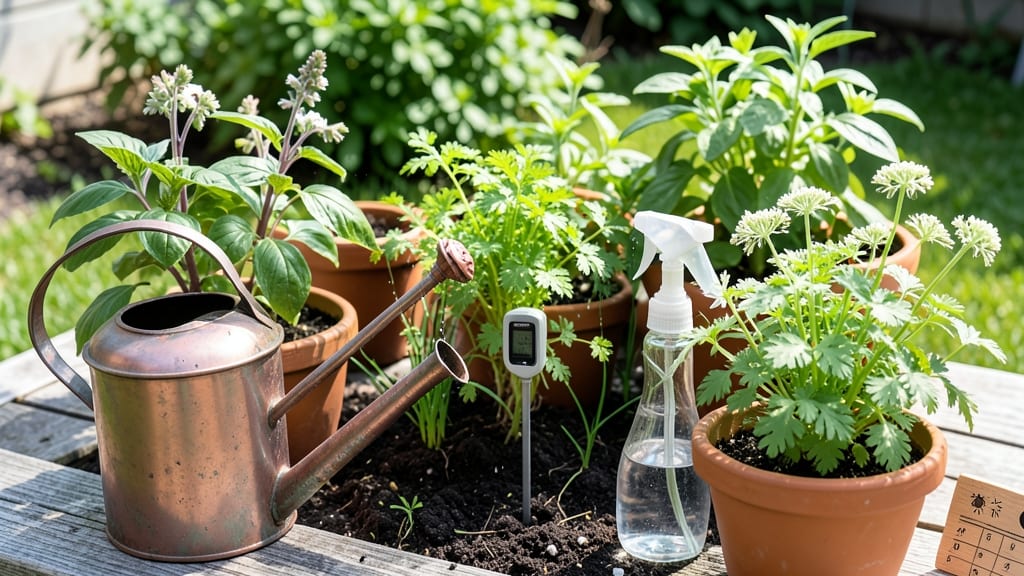
Watering your herb garden the right way keeps those 🌿 fresh leaves vibrant and flavorful—most herbs need moisture every 2 to 3 days in warm weather, but that can shift with soil, season, and herb type.
Picture this: You’re reaching for your basil to make pesto, only to find the leaves limp and sad. That’s the classic sign of watering gone wrong—too much or too little—and it happens to even the most experienced gardeners.
In this guide, I’ll break down the perfect moisture balance for your herbs, from finger-testing soil to adjusting for heatwaves. You’ll learn how often to water basil vs. rosemary, when to cut back in fall, and the 3 signs your herbs are thirsty (or drowning).
By the end, you’ll have a foolproof routine that keeps your herb garden thriving year-round, no guesswork needed.
The ideal watering frequency for different herb types (soil test guide)
Watering your herb garden isn’t a one-size-fits-all task—each herb has unique needs, and overwatering or underwatering can ruin your harvest. Basil, for example, wilts dramatically when thirsty, while rosemary thrives with less frequent but deep watering.
The key? Testing soil moisture and adjusting based on growth stages and seasonal shifts. Let’s break down the perfect watering schedule for your top herbs, using simple soil tests to guide you.
Start by sticking your finger 1-2 inches into the soil. If it feels dry, it’s time to water. For potted herbs, check daily—they dry out faster than in-ground plants.
In summer heat, most herbs need water every 1-2 days, while winter dormancy reduces this to every 10-14 days. Below, we’ll dive into specific schedules for your most-used herbs, complete with visual cues to avoid guesswork.
Young herb seedlings are the most delicate—water them daily for the first 2 weeks to encourage strong root growth. Once established, most herbs prefer morning watering to reduce evaporation and fungal risks.
Avoid wetting leaves, especially for mint and basil, which are prone to mildew in humid conditions. If your herbs start dropping leaves or looking yellow, you’re likely overwatering.
Container gardens dry out faster than in-ground beds, so monitor potted herbs closely. Add a 1-inch layer of mulch around the base to retain moisture and regulate soil temperature. For drought-prone herbs like rosemary and thyme, let the soil dry completely between waterings—these Mediterranean natives hate soggy roots.
In high humidity, reduce frequency to prevent root rot.
Climate plays a huge role—herbs in Zone 9+ may need daily watering in summer, while those in cooler zones (like Zone 5) can go longer between waterings. Pay attention to leaf color: crisp, upright leaves mean you’re nailing it, while wilted or yellowing leaves scream for adjustment.
Pro tip: Use a moisture meter for precision, especially if you’re new to gardening.
Adjust your watering routine as your herbs mature. For example, basil needs frequent watering when flowering to maintain flavor, while rosemary becomes more drought-tolerant with age. Harvesting regularly also signals your plants to produce new growth, which may require slightly more water.
Always water deeply—1-2 inches below the surface—to encourage deep root systems that can withstand dry spells.
If you’re using drip irrigation or a self-watering planter, set timers for 10-15 minutes daily in summer and reduce to 5 minutes every other day in cooler months.
For organic gardeners, avoid tap water with high chlorine—collect rainwater instead for the best results. And remember: less frequent, deeper watering always
5 Signs your herb garden needs water (and 3 signs you’re overdoing it)
Herbs like basil and cilantro thrive on consistency, but too much or too little water can spell disaster. Learning to read your plants’ signals is the key to keeping them lush and flavorful. I’ve spent years watching my herb garden whisper (or scream) its watering needs—here’s how to listen.
First, check the soil moisture with your finger. Stick it about 1-2 inches deep—if it feels dry, your herbs are thirsty. This simple test beats guessing and saves you from overwatering. I always water in the morning to let excess moisture evaporate before nightfall, reducing fungal risks.
Visual cues are your next best friends. Drooping leaves that don’t perk up after a drink? That’s a classic underwatering sign. But watch out—yellowing leaves or mushy stems mean you’re overwatering. Balance is everything, and I’ve learned the hard way that soggy soil suffocates roots faster than drought.
- Dry soil (1-2 inches deep) → Water deeply until moisture reaches roots. Most herbs need 1 cup per plant every 2-3 days in summer.
- Wilting leaves that don’t recover after watering → Increase frequency to daily in heatwaves. Basil and parsley are especially sensitive.
- Yellowing lower leaves → Check drainage. If soil stays soggy, reduce watering and add perlite to pots.
- Mushy stems or mold → Stop watering immediately and repot in fresh, dry soil. Fungal diseases thrive in wet conditions.
- Slow growth or leggy stems → Herbs like mint and dill need consistent moisture. Adjust to every other day in cooler months.
Don’t ignore the root zone—herbs like rosemary and thyme hate wet feet. If roots are exposed or soil pulls away from pot edges, it’s time to water. I’ve seen drought-tolerant herbs like oregano survive weeks with minimal water, but their leaves will curl to conserve moisture.
Overwatering is sneaky. If your herb pots feel light after watering, you’re likely overdoing it. A quick fix? Let the top inch of soil dry out between waterings. I’ve rescued many a sad herb by simply holding off for a few days and improving drainage with gravel or sand.
Adjust your routine based on the season. In summer, I water my container herbs daily, while winter slows things down to once every 10 days.
Pay attention to your local climate—humid areas need less frequent watering than dry, windy spots. Your herbs will thank you with vibrant growth and bold flavors.
Mastering watering is about observation, not rules. Start with these signs, tweak as you go, and soon your herb garden will be the envy of the neighborhood. Happy growing!