
Watering
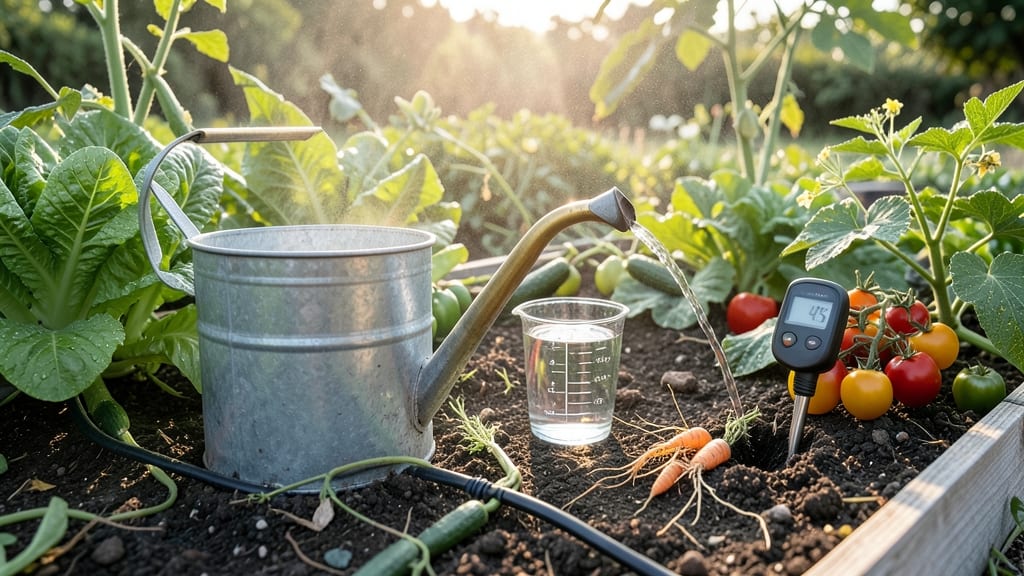
A vegetable garden needs 1 to 2 inches of water per week to thrive, but how you deliver that water makes all the difference between a thriving harvest and a sad, wilted mess.
Most gardeners either drown their plants with too much water or leave them parched, thinking more is always better.
The truth? Overwatering is just as deadly as underwatering, and your soil type, plant species, and even the time of day you water play huge roles in what your garden truly needs.
In this guide, I’ll break down the weekly water needs for common vegetables—from leafy greens to fruiting plants—plus drought-proof strategies to keep your garden lush without wasting a drop.
You’ll learn how to read your soil, adjust for heatwaves or rainy spells, and use smart irrigation methods to save time and water while keeping your 🥬 vegetable garden happy and productive all season long.
Weekly water requirements for common vegetable plants by type
Understanding weekly water needs for your vegetable garden is the key to thriving plants. Different plant types—like leafy greens, root vegetables, and fruiting plants—require distinct moisture levels. For example, lettuce and spinach need consistent moisture, while carrots and potatoes prefer slightly drier conditions.
Even herbs like basil and cilantro have unique demands. Let’s break it down by plant category to simplify your watering routine.
Most vegetables thrive with 1-2 inches of water per week, but this varies based on soil type, weather, and growth stage. Deep watering—soaking the soil to encourage strong root development—is far more effective than frequent shallow watering.
For instance, tomatoes and peppers need deep watering 2-3 times per week during hot summers, while onions and garlic prefer 1 inch of water weekly. Always adjust based on rainfall and soil drainage.
Here’s a quick reference for weekly water needs by plant type, including signs of over/underwatering to watch for:
| Plant Type | Water Needs (Weekly) | Signs of Underwatering | Signs of Overwatering |
|---|---|---|---|
| Leafy Greens (Lettuce, Spinach, Kale) | 1-1.5 inches, daily in heat | Wilted, crispy leaves | Yellowing leaves, mold |
| Root Vegetables (Carrots, Potatoes, Beets) | 1 inch, 2-3x per week | Stunted growth, dry soil | Rotted roots, soft soil |
| Fruiting Plants (Tomatoes, Peppers, Cucumbers) | 1.5-2 inches, 2-3x per week | Drooping leaves, cracked fruit | Blossom end rot, fungal spots |
| Herbs (Basil, Cilantro, Parsley) | 1 inch, 3-4x per week | Dry, brittle stems | Wilting, yellow leaves |
| Alliums (Onions, Garlic, Leeks) | 1 inch, 1-2x per week | Floppy tops, dry soil | Rotting bulbs, mold |
To test soil moisture, stick your finger 2 inches deep—if it feels dry, it’s time to water. For container gardens, check daily since pots dry out faster. Mulching with straw or wood chips retains moisture and reduces evaporation, cutting water needs by up to 30%.
Always water early in the morning to minimize fungal diseases and maximize absorption.
Young seedlings need gentle, frequent watering to establish roots, while mature plants benefit from deep, infrequent watering. For example, tomato seedlings should be watered lightly every 2-3 days, but mature plants need 1-2 gallons per plant weekly.
Adjust for clay soil (holds moisture longer) or sandy soil (drains quickly). Use a moisture meter or the finger test for accuracy.
Overwatering is just as harmful as underwatering. Signs include yellowing leaves, mold growth, or rotting roots. If your soil feels soggy or smells musty, cut back on watering and improve drainage.
For drought-prone areas, group plants with similar water needs together and use drip irrigation for precision. This method delivers water directly to roots, reducing waste and improving efficiency.
During hot summer months, increase watering by 20-30% to compensate for evaporation. Conversely, in cool spring or fall, reduce frequency to every 5-7 days. Always observe your plants—wilting leaves may signal thirst, but drooping in the morning could mean overwatering.
Adjust your routine based on these visual cues and your local climate.
For herbs like basil, avoid wet foliage to prevent disease. Water at the base and mulch to keep roots cool. Root crops like carrots need consistent moisture but hate soggy soil—aim for even moisture, not saturation.
By tailoring your watering to each plant’s needs, you’ll see healthier growth, fewer pests, and a more abundant harvest.
Pro tip: Collect rainwater in barrels for free, chemical-free irrigation. This not only saves money but also provides a gentle, natural water source that plants love. Pair this with mulch and deep watering techniques, and you’ll master the art of efficient vegetable gardening in no time.
Drought-proof watering strategies to save water without sacrificing harvests
Watering efficiently is the key to thriving vegetables without wasting precious resources. Most vegetable gardens need 1-2 inches of water weekly, but the how and when you water can make all the difference.
Drip irrigation, mulching, and strategic plant grouping are proven techniques to slash water use by up to 50% while keeping yields high.
One common mistake is watering based on a schedule rather than soil conditions. Instead, focus on deep watering sessions that encourage roots to grow deeper, making plants more drought-resistant. For example, tomatoes and peppers need consistent moisture, but a 5-minute deep watering every 3 days beats shallow daily sprinkles.
Water-Saving Methods Compared
Mulching
- ✅ Pros: Retains 30-50% more moisture, suppresses weeds, regulates soil temp.
- ✅ Effectiveness: Reduces water loss by 50%.
- ✅ Ease: Low (apply 2-4 inches of mulch).
Drip Irrigation
- ✅ Pros: Delivers water directly to roots, cuts evaporation, customizable for plant needs.
- ✅ Effectiveness: Saves 20-40% water vs. sprinklers.
- ❌ Cons: Higher upfront cost, requires setup.
Plant Grouping
- ✅ Pros: Groups with similar water needs (e.g., basil + tomatoes) for efficient irrigation.
- ✅ Effectiveness: Reduces water waste by 30%.
- ✅ Ease: Medium (requires planning).
Soaker Hoses
- ✅ Pros: Covers large areas, slow water release reduces runoff.
- ❌ Cons: Can clog, less precise than drip systems.
- ✅ Effectiveness: Saves 25-35% water.
"Mulching is the easiest way to start—it’s like giving your plants a free water-saving blanket!"
Timing matters just as much as technique. Watering in the early morning (5-9 AM) minimizes evaporation and fungal diseases like powdery mildew. Avoid evening watering, as damp foliage overnight invites pests and rot.
For container gardens, check soil moisture daily—top 1 inch dry is the rule for most herbs and greens.
Grouping plants by water needs is another game-changer. Pair high-thirst crops like cucumbers and squash with moderate-need plants such as beans and peas. This way, you can water the entire group efficiently without overdoing it for drought-tolerant varieties like Swiss chard or kale.
Don’t overlook the power of rainwater harvesting. Collecting rainwater in barrels and using it for irrigation can cut your water bill by up to 70% annually. Plus, rainwater is naturally pH-neutral and free of chlorine, which is gentler on your plants.
Finally, monitor your garden’s needs by checking soil moisture with a simple finger test. Stick your finger 2 inches deep—if it feels dry, it’s time to water. Combine these strategies, and you’ll enjoy lush vegetables while keeping your water usage sustainable. 💧