
Light Requirements
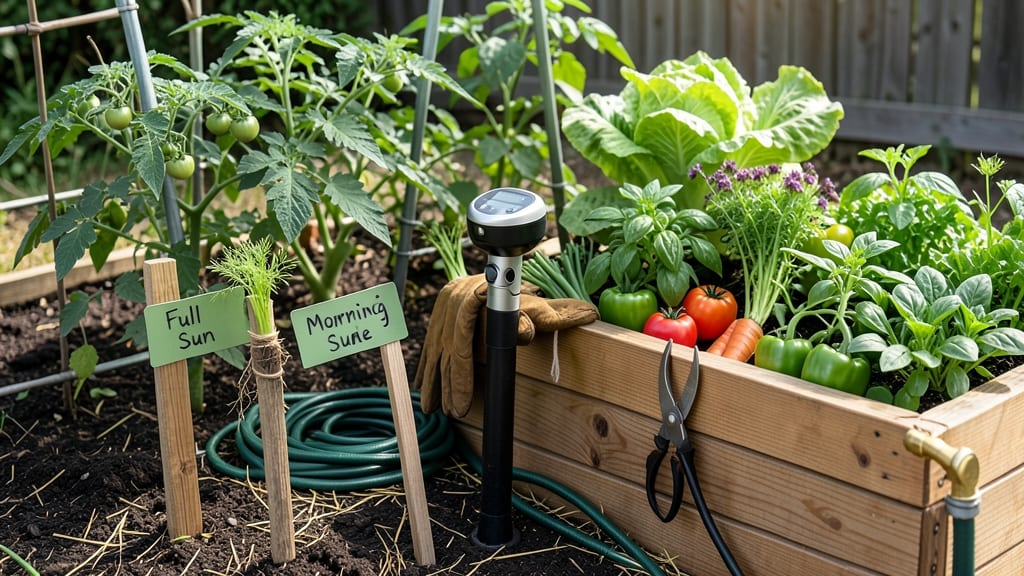
A veggie garden needs how much sun does a veggie garden need to thrive, with most plants requiring 6 to 8 hours of sunlight daily, though the exact amount depends on what you’re growing—and where you live.
Struggling to decide where to plant your veggies? The wrong amount of sunlight can mean the difference between a bountiful harvest and wilted disappointment.
Whether you’re dealing with leafy greens that tolerate shade or tomatoes that demand full sun, getting it right is key to avoiding common mistakes that kill plants.
Not all gardens get equal sun, especially if trees or buildings cast shadows. Learning how to measure sunlight in your space—and adjusting plant placement—can save you from overwatering or underproducing crops. With the right setup, even a small patch can yield a healthy, productive harvest.
In this guide, I’ll break down the exact sun requirements for popular vegetables, show you how to assess your garden’s light conditions, and share tips to maximize growth—no matter your climate zone.

Sunlight requirements by vegetable type: full sun vs partial shade explained
Understanding sunlight requirements for your veggie garden is the first step to growing a thriving harvest. Most vegetables fall into two main categories: those needing full sun (6+ hours daily) and those that tolerate partial shade (3-6 hours).
Getting this right prevents issues like sunburned leaves or leggy, weak plants. Let’s break down the exact needs for your favorite vegetables and how to match them to your garden’s light conditions.
First, clarify the difference between full sun and partial shade. Full sun means 6 to 8 hours of direct sunlight, while partial shade refers to 3 to 6 hours. Some vegetables, like leafy greens, can even thrive in light shade (2-3 hours).
Knowing these distinctions helps you avoid common mistakes, such as planting tomatoes in shady spots or basil in full afternoon sun, which can scorch the leaves.
Here’s a quick reference to help you visualize the ideal placement for your vegetables. The summary table below highlights the most common crops and their sunlight needs, along with tips for optimizing growth.
| Vegetable | Sunlight Needs | Ideal Hours | Growth Tip |
|---|---|---|---|
| Tomatoes | Full Sun | 6–8 hours | Use stakes or cages; avoid afternoon heat stress. |
| Peppers | Full Sun | 6–8 hours | Mulch to retain moisture; protect from wind. |
| Cucumbers | Full Sun | 6–8 hours | Train vines on trellises for better airflow. |
| Leafy Greens (Spinach, Lettuce) | Partial Shade | 3–6 hours | Keep soil moist; harvest outer leaves first. |
| Carrots | Partial Shade | 4–6 hours | Loosen soil to prevent forking; avoid overcrowding. |
| Basil | Full Sun (Morning) | 4–6 hours | Avoid afternoon sun; prune regularly for bushiness. |
| Radishes | Partial Shade | 3–5 hours | Harvest quickly to prevent bitterness; thin seedlings. |
| Green Beans | Full Sun | 6–8 hours | Plant in rows for easy harvesting; stake if needed. |
| Onions | Full Sun | 6–8 hours | Thin bulbs early; avoid wet foliage to prevent disease. |
For full-sun lovers like tomatoes and peppers, aim for a spot that gets morning sun and gentle afternoon shade, especially in hot climates. These plants need consistent sunlight to produce fruit and thrive, but too much midday heat can stress them.
If your garden lacks full sun, consider using reflective surfaces like white mulch or light-colored containers to bounce extra light onto plants.
On the other hand, leafy greens and
How to measure sunlight in your garden and adjust plant placement
Most gardeners assume all plants need the same amount of sunlight, but the truth is far more nuanced. Tomatoes and peppers thrive with 6-8 hours of direct sun, while leafy greens like lettuce tolerate 3-4 hours of partial shade.
Before rearranging your garden, you need to accurately measure sunlight exposure in each zone.
Start by observing your garden throughout the day, especially during peak sun hours between 10 AM and 4 PM. Use a simple sunlight tracking method: place a white board or piece of paper in different garden spots and mark the shadows every hour.
This reveals which areas receive full sun, partial shade, or deep shade.
🌱
⚠️ How Much Sun Does a Veggie Garden Need?
Full sun (6+ hours): Tomatoes, peppers, cucumbers, squash, beans, corn, eggplants, and melons. Partial shade (3-6 hours): Lettuce, spinach, kale, Swiss chard, carrots, beets, and radishes. Deep shade (<3 hours): Only hardy greens like arugula or microgreens survive here.
Warning: Overestimating sun exposure leads to heat stress or sunburn on leaves, while underestimating causes stunted growth or poor fruiting. Always verify with a sunlight tracker for 2-3 days before planting.
Next, group plants by their sunlight needs. Move sun-loving vegetables to the south-facing side of your garden (in the Northern Hemisphere) where they’ll receive the most direct light. If your space is limited, consider vertical gardening with trellises for vining plants like cucumbers or beans to maximize sun exposure.
For areas with limited sunlight, opt for shade-tolerant varieties or use reflective mulch to bounce extra light onto plants. A white gravel path or light-colored fabric can increase ambient light by up to 20%, helping struggling plants thrive in partial shade.
Don’t forget to account for seasonal changes. Trees and buildings cast longer shadows in summer but shorter ones in winter, so adjust your plant placement every 3-4 months to match the shifting sun patterns. A quick seasonal sunlight audit ensures your garden stays productive year-round.
Finally, use drip irrigation timers to water early in the morning, reducing evaporation and keeping roots cool. This small adjustment can make a big difference for sun-sensitive plants during hot afternoons.
☀️