
How To
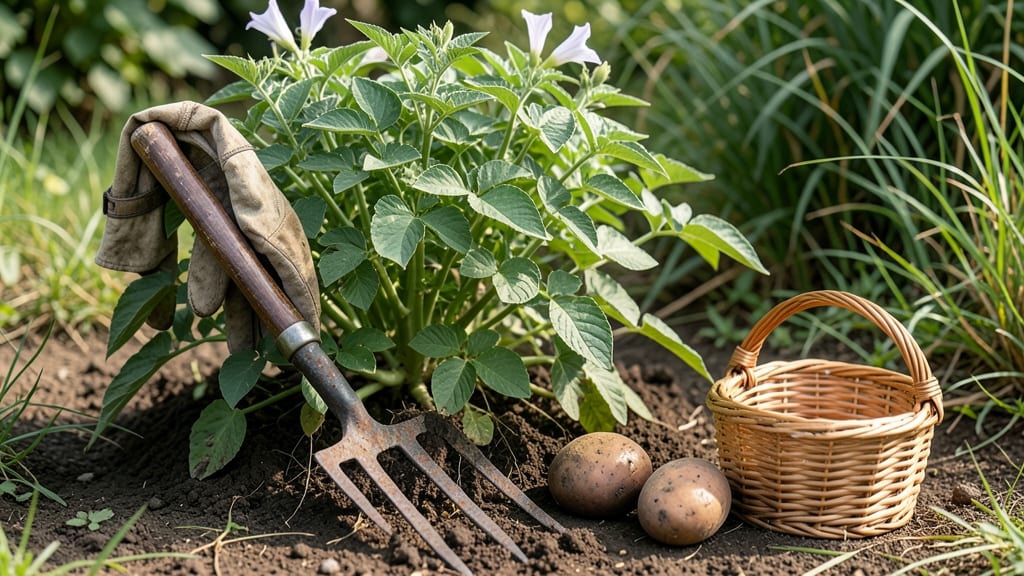
Harvesting potatoes at the right time means the difference between tender, flavorful tubers and tough, shriveled ones — and it all comes down to days after planting.
If you’ve ever dug up a potato only to find it small and green or shriveled and mealy, you know timing is everything. The key? Watching for soil color changes, tuber size, and plant signals that tell you exactly when to pull them for perfect results.
Most varieties need between 70 and 120 days to reach harvest, but early potatoes (like Red Pontiac) can be ready in as little as 60 days, while late-season types (like Yukon Gold) may take closer to 100 days.
Soil conditions and weather play a role too — dry spells or heavy rains can speed up or slow down maturity.
In this guide, I’ll walk you through how to read your potato plants for the ideal harvest window, including when to dig for new potatoes versus fully mature tubers, and how to store them for maximum freshness.

How to determine potato harvest days using soil color and tuber size
Timing your potato harvest perfectly ensures you get the best flavor, texture, and yield from your crop. One of the most reliable methods is checking the soil color around your tubers combined with tuber size and plant signals.
White soil indicates tubers are still growing, while brown soil often means they’re ready. Let’s break down these clues so you can pull your potatoes at the ideal moment.
Start by observing the foliage condition. When the leaves begin to yellow and die back naturally, it’s a strong sign that tubers are maturing. This process, called senescence, usually happens 2-3 weeks before harvest.
Pair this with soil checks to narrow down the exact timing. If your plants are still green and growing vigorously, hold off on digging.
Digging into the soil is the most accurate way to check tuber size. Use your fingers to gently feel for tubers that are 2-3 inches in diameter for most varieties. New potatoes can be harvested smaller (1-2 inches), but wait for larger tubers if you want full-sized potatoes.
The key is balancing size with soil color—white soil means more growing time is needed.
| Harvest Stage | Soil Color | Tuber Size | Days to Harvest | Plant Condition |
|---|---|---|---|---|
| New Potatoes | White | 1-2 inches | 50-70 days | Green foliage, active growth |
| Mature Potatoes | Brown/white mix | 2-3+ inches | 90-120 days | Yellowing leaves, stem drying |
| Late Harvest | Dark brown | 3+ inches | 120+ days | Dead foliage, dry stems |
For early varieties, like Red Pontiac or Yukon Gold, you can harvest as early as 50-70 days when tubers are golf-ball sized. These are often called new potatoes and have thinner skins.
If you’re growing late-season varieties, such as Russet or Kennebec, wait until the soil turns brown and tubers are larger (3+ inches).
Another trick is the "finger test". Gently press a tuber through the soil—if it feels firm but yields slightly, it’s ready. If it’s rock-hard, wait a few more days.
This method works best when combined with soil color observations. Avoid harvesting when the soil is soggy, as this can damage tubers and invite rot.
Pay attention to the stem end of the tuber. A yellow stem end indicates maturity, while a green stem end means the tuber is still growing. This visual cue is especially useful for varieties prone to greening, which can make potatoes toxic if consumed.
Harvesting at the right time ensures safe, flavorful potatoes.
If you’re unsure, do a partial harvest by digging up a few tubers to check their size and condition. This lets you monitor progress without risking the entire crop.
For example, if you harvest a test batch at 80 days and the tubers are still small, wait another 2-3 weeks for full maturity.
Once you’ve confirmed the right timing, harvest on a dry, sunny day to allow tubers to dry quickly. Use a fork or your hands to gently loosen soil around the base of the plant, then lift carefully.
Avoid dropping tubers or cutting them, as this can lead to bruising and spoilage. Let harvested potatoes cure in a dark, well-ventilated space for 24-48 hours before storing.
Remember, over-harvesting can stress the plant and reduce yield, while under-harvesting leads to shriveling or rotting tubers in the soil. By mastering soil color, tuber size, and plant signals, you’ll consistently pull potatoes at their peak—ready for the table or storage. Happy digging! 🥔
Best potato harvest timing by variety: early vs. late season potatoes
Not all potatoes mature on the same schedule, and knowing your variety's days to harvest is key to avoiding misshapen tubers or wasted effort.
Early season varieties like Red Pontiac or Yukon Gold reach peak flavor and size faster, while late-season types like Russet need more time to develop their signature textures. Even within the same variety, climate differences can shift harvest windows by 1-2 weeks.
For example, in cooler climates like USDA Zone 4, you might harvest new potatoes 50-60 days after planting, while warmer zones like Zone 8 could extend that window to 70 days. Late-season varieties often require 100-120 days to reach full maturity, making them better suited for longer growing seasons.
Let’s break down the timing for popular varieties and how to adjust for your local conditions.
Early varieties like Red Pontiac are perfect for new potato harvests—dig a few tubers when they’re 1-2 inches wide, leaving the rest to mature. Meanwhile, Russet potatoes need that extra time to develop their thick skins and fluffy interiors, so don’t rush the harvest.
If you’re growing in containers, expect harvest times to be slightly shorter due to limited root space.
Pay attention to soil temperature too—cool soils slow tuber formation, while warm soils speed it up. In Zone 5 or below, consider planting early varieties in straw mulch to warm the soil faster.
For late-season potatoes, use black plastic mulch to extend the growing period. Always prioritize tuber size over strict day counts, as environmental factors often override the calendar.
Pro tip: If you’re unsure, do a test dig by gently probing the soil with your hands. If you find firm, 2-inch tubers with a yellow stem end, it’s time to harvest.
For late-season varieties, wait until the foliage turns brown and dies back completely—this signals the tubers have fully matured and stored energy for storage.
Remember, harvest timing is a balance of variety traits, climate, and soil conditions. By adjusting for these factors, you’ll pull potatoes at their peak—neither too early (small and tough) nor too late (shriveled and woody). Happy digging! 🥔