
How To
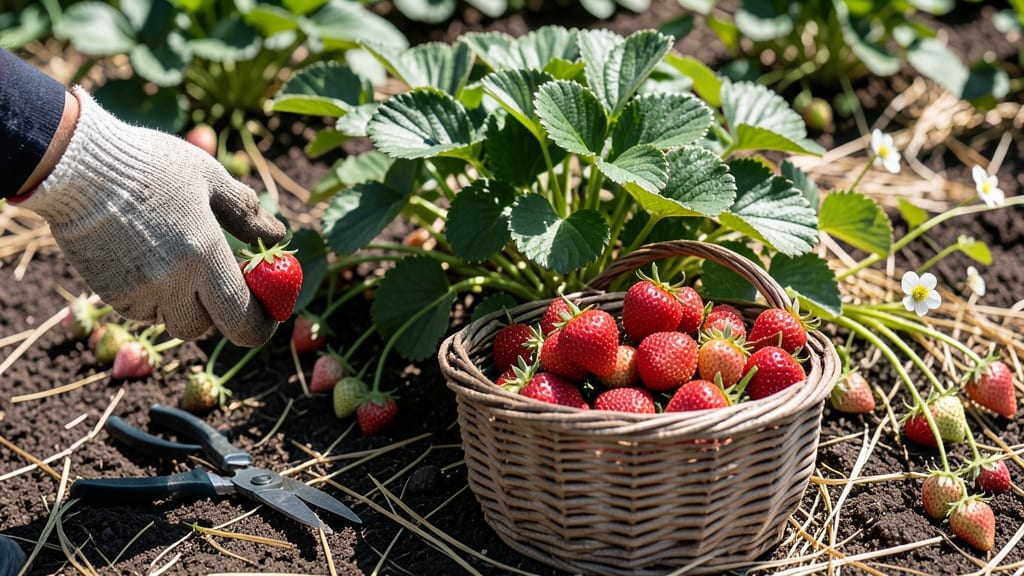
To harvest strawberries at their sweetest, time it right—typically 60 to 120 days after planting, depending on variety and climate.
Picture this: you’re reaching for a berry that’s bright red but still firm, only to find it bland and mealy. Or worse, you wait too long and end up with a mushy mess.
The difference between a juicy, perfect strawberry and a disappointing one often comes down to knowing exactly when to pick.
In Zone 6a, most strawberries ripen between June and July in their first year, with everbearing varieties stretching into early fall. But ripening isn’t just about the calendar—color, firmness, and even the time of day play a role.
A deep red hue, slight softness, and a sweet aroma are your best clues.
Below, I’ll break down the exact ripeness stages, how to spot them, and pro tips to extend your harvest—so you’re never left wondering if that berry is ready or not.


Strawberry ripeness stages by color: when to pick for maximum sweetness
Knowing exactly when to harvest strawberries by color saves you from picking bland, underripe berries or mushy overripe ones.
The color progression from green to deep red (or variety-specific hues) directly impacts flavor, sugar content, and texture. Miss the window, and you’ll end up with tart, seedy strawberries that lack that perfect summer sweetness.
Most gardeners focus only on color, but regional climate and variety types (June-bearing vs. everbearing) can drastically alter ripening timelines. For example, Albion strawberries stay white, while Seascape turns deep red—yet both reach peak ripeness at different stages. Understanding these nuances ensures you never waste a single berry.
Here’s the color-by-color breakdown of strawberry ripeness, including how each stage affects taste, storage life, and whether you should pick or leave them on the plant. Pro tip: Morning harvests always yield sweeter berries because sugars concentrate overnight.
Fully ripe strawberries (deep red, yellow, or their variety’s mature hue) are the only ones worth picking for maximum sweetness. At this stage, their sugar content peaks at 4-7%—double that of underripe berries. The skin softens slightly but doesn’t feel mushy, and the berry detaches easily from the plant when gently pulled.
Some strawberry varieties, like Albion or Pineberry, never turn fully red. Instead, they ripen to white, pale yellow, or pinkish hues. Don’t judge ripeness by color alone—always check firmness and aroma. For these varieties, the berry should be fully sized and smell intensely sweet before harvesting.
Overripe strawberries develop a dull, bruised appearance and often leak juice when squeezed. While they’re safe to eat (just bland and mealy), leaving them on the plant invites pests and disease. If you spot mold or soft spots, remove them immediately to protect your entire harvest.
Did you know? Strawberries continue ripening slightly after picking, but only if stored at room temperature for 1-2 days. Refrigeration stops ripening, so pick only when fully ripe if you plan to store them.
For everbearing varieties, like Seascape, berries ripen in waves—check plants every 2-3 days to catch the sweetest batches.
If your strawberries never fully redden, it could signal nutrient deficiency (lack of phosphorus) or shade stress.
Boost ripening by moving plants to full sun (6+ hours daily) and applying a phosphorus-rich fertilizer (like bone meal) 4-6 weeks before flowering. Patience pays off—waiting for perfect ripeness transforms your harvest from good to exceptional.
Pro tip: Harvest in the morning after dew dries but before the sun peaks. This ensures cooler temperatures preserve sweetness and reduces bruising during handling. Store picked berries in a single layer (not stacked) in the fridge to avoid crushing.
Firmness & flavor tests: the 3-Step method to avoid underripe or overripe strawberries
Color alone can’t always tell you when strawberries are truly ripe—especially if your garden faces unpredictable temperatures or you’re growing less common varieties. That’s why I rely on these three sensory tests to guarantee perfect ripeness every time.
A gentle squeeze, stem check, and aroma sniff will reveal whether your berries are ready to pick or still need time on the vine.
Temperature plays a huge role in strawberry ripeness. Cooler climates often produce firmer berries that ripen more slowly, while hot summer days can cause strawberries to soften too quickly.
Varieties like Albion or Seascape stay firmer longer, while Chandler becomes mushy faster. Understanding these differences helps you adjust your harvesting approach based on your local growing conditions.
Press lightly—ripe strawberries yield slightly but don’t dent. Overripe ones feel mushy and may leave fingerprints.
Gently tug the berry—it should detach cleanly from the plant. If it resists, it’s not ready yet.
Ripe strawberries release a sweet, tangy scent. Underripe ones smell bland, while overripe ones emit a fermented odor.
One common mistake I see is harvesting strawberries based on size alone. A large berry can still be underripe if it’s firm and lacks color, while a small one might be perfectly ripe.
Always combine the three sensory tests to avoid disappointment. For example, a Chandler strawberry might look ripe but fail the aroma test if it was picked too early.
Temperature fluctuations also affect firmness. If your mornings are cool and foggy, strawberries may feel firmer than usual—wait until midday to test ripeness. Conversely, in hot afternoons, berries soften faster, so harvest earlier.
Pro tip: Use a small notebook to track when your specific variety reaches peak ripeness based on these tests.
Overripe strawberries are just as problematic as underripe ones. They develop a fermented smell and become mealy inside, ruining flavor and texture. If you notice berries with white or gray mold on the surface, remove them immediately to prevent spreading.
The 3-step method helps you catch overripe berries before they spoil, ensuring every strawberry you pick is at its best.
For everbearing varieties like Seascape, you’ll need to repeat these tests weekly throughout the season, as they produce fruit in multiple flushes. June-bearing types, like Jewel, ripen all at once—so focus on harvesting the entire cluster when the first few pass the tests.
With practice, these sensory cues become second nature, and you’ll never miss a perfect strawberry again! 🍓