
How To
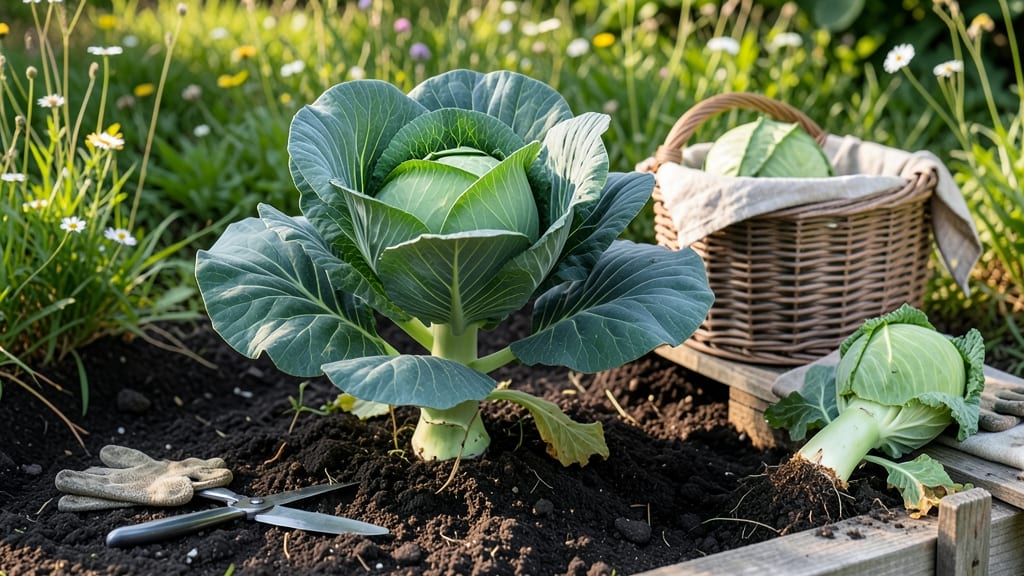
To know when to harvest cabbage 🥬, focus on three key signs: head firmness, leaf color depth, and stem thickness—each reveals whether your plant is ready for peak flavor and texture.
Picking cabbage at the wrong time means sacrificing crisp texture, vibrant color, and even flavor—but these subtle visual and tactile cues will help you harvest at peak perfection every time.
Most gardeners wait too long, letting heads split or bolt, but a simple finger press or leaf inspection can save your harvest. Below, I’ll walk you through the three tactile tests that take the guesswork out of timing.
You’ll also learn how variety and climate shift the ideal window, plus how to store your cabbage for freshness after the harvest. Let’s get started.


3 Tactile tests to check cabbage ripeness before harvesting
Harvesting cabbage at the perfect moment ensures crisp texture, vibrant color, and peak flavor. But how do you know when it's truly ready? Relying on days-to-maturity alone can lead to disappointment—especially when heat, rain, or pests alter your plants' timeline.
Instead, use these three tactile tests to confirm ripeness with your hands, not just your calendar. These methods work for green cabbage, red cabbage, and savoy varieties alike.
The key to cabbage harvesting lies in head firmness, leaf resistance, and stem integrity. A cabbage head that's too loose or too hard will disappoint in the kitchen—think mushy texture or bitter taste.
These tests help you avoid both extremes by focusing on the physical characteristics that correlate with optimal maturity. Whether you're growing early spring cabbage or fall-hardy varieties, these methods guarantee you'll pick at the right moment.
⚠️ Never harvest cabbage when the head starts to loosen or split. This signals overmaturity, and the texture becomes woody and tough. The tactile tests below help you catch cabbage at its prime eating stage—when it's still compact but fully developed.
The leaf resistance test is my favorite because it's quick and doesn't damage the plant. Simply press your thumb and index finger into the outer leaves closest to the head. If the leaves feel firm but slightly yielding, like a well-inflated balloon, your cabbage is ready.
Avoid harvesting if the leaves feel mushy or overly stiff—this indicates under- or overmaturity, respectively. For savoy cabbage, which has crinkled leaves, the test is slightly different: press gently and look for consistent resistance across the head.
Next, perform the head firmness test by pressing your thumb into the center of the head. A ripe cabbage will feel solid and dense, almost like pressing a stress ball that doesn't give way.
If your thumb sinks in or the head feels hollow, it's past its prime. Pro tip: For red or purple cabbage, the head should also feel heavy for its size—this indicates high moisture content and sweetness. Lightweight heads often lack flavor.
The stem snap test is the most dramatic but also the most reliable. Hold the main stem near the base of the plant and bend it slightly. If the stem bends but doesn't snap, your cabbage is ready to harvest.
A stem that snaps easily signals overmaturity, while one that resists bending too much means it needs more time. This test is especially useful for large cabbage varieties, like Hubbard or January King, where head size can be deceiving.
For container-grown cabbage, these tests work just as well—though you may need to use a slightly gentler touch to avoid damaging the plant's roots.
If you're growing miniature cabbage varieties, like Tokyo Bekana, the tests still apply, but the head firmness should feel slightly softer due to their smaller size. Always harvest on a dry morning to ensure the stem is sturdy and the leaves are crisp.
One common mistake gardeners make is harvesting cabbage based on size alone. A large head doesn't always mean it's ready—especially if the stem feels weak or the leaves are loose. Conversely, a small but firm and dense head can be more flavorful than a giant, floppy one.
To avoid disappointment, combine these three tactile tests for the most accurate results. If two out of three tests confirm ripeness, it's time to harvest!
After harvesting, store your cabbage in a cool, dark place with high humidity to preserve freshness. For long-term storage, wrap the head in a damp towel and place it in the crisper drawer of your refrigerator.
With these tactile tests, you'll never second-guess your cabbage harvest again—just crisp, perfect heads every time. 🥬
Visual clues that reveal cabbage maturity stages
Knowing exactly when to harvest cabbage can transform your garden bounty from meh to magnificent. The difference between a crisp, flavorful head and one that's woody or bitter often comes down to these visual maturity cues I’ve learned through years of gardening.
Start by observing the head size—it should be fully rounded and dense, not loose or spreading.
Next, check the outer leaves. They should wrap tightly around the head, forming a compact ball. If leaves are spreading outward or yellowing at the edges, your cabbage is past its prime.
The color consistency is another dead giveaway—whether it’s deep green, purple, or white, the hue should be even and vibrant, not pale or patchy.
Don’t overlook the stem thickness—a thick, sturdy stem indicates maturity, while a thin or hollow one means the head isn’t fully developed. I’ve also noticed that savoy cabbage varieties develop wrinkled leaves at maturity, while smooth-leaf types stay glossy and tight.
Pay attention to these leaf patterns—they’re your secret weapon for timing the harvest perfectly.
One pro tip I swear by? Gently squeeze the head—it should feel solid and resistant, like a tightly packed ball. If it gives slightly or feels squishy, wait a few more days.
This firmness test is my go-to for avoiding overripe cabbage, which can become bitter or stringy.
Timing is everything, especially with fall harvests. If your cabbage heads are fully formed but the weather is warm and sunny, they might bolt prematurely. In these cases, harvest as soon as possible to lock in that crisp, sweet flavor.
Conversely, if frost is looming, prioritize harvesting before temperatures drop, even if the heads aren’t perfectly round.
Mastering these visual cues will ensure you’re always harvesting cabbage at its peak. The next time you’re tempted to pull a head that’s just close enough, take a moment to check these signs—your taste buds will thank you! 🥬