
Planting
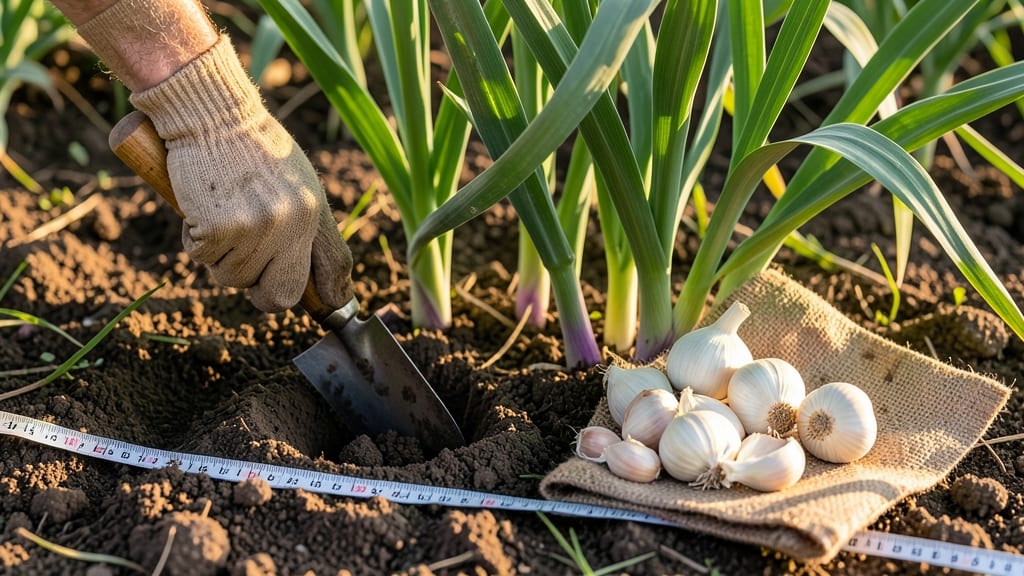
Proper garlic spacing in your garden is the secret weapon for plump bulbs and fewer pests — and most gardeners get it wrong.
Imagine planting your garlic cloves too close, only to watch them fight for space, leaving you with tiny, weak bulbs or worse, fungal rot. That’s exactly what happens when spacing is off, and it’s a mistake I’ve made more times than I’d like to admit.
In this guide, I’ll walk you through the exact spacing rules for hardneck and softneck varieties, how to adjust for your climate, and why airflow matters more than you think. You’ll also learn how to spot overcrowding early and fix it before it’s too late.
By the end, you’ll know the ideal distances between cloves, rows, and beds to grow garlic that’s healthy, pest-resistant, and ready for harvest in mid-summer.
Optimal garlic spacing by variety: cloves, bulbs & row layouts
Garlic spacing makes all the difference between tiny, weak bulbs and plump, flavorful harvests. Whether you're growing hardneck or softneck varieties, proper spacing ensures maximum airflow and sunlight exposure, which prevents disease and encourages bulb development.
I’ve planted garlic for years, and I can tell you—skipping this step is a surefire way to invite fungal infections and stunted growth.
Hardneck varieties like Rocky Mountain or German Red need slightly more room than softnecks like Artichoke or Silverskin. The key is balancing clove-to-clove distance, row spacing, and bed dimensions to match your growing conditions.
Let’s break it down so you can plan your garlic patch like a pro.
Why spacing matters: Crowded garlic plants compete for nutrients, leading to smaller bulbs and higher humidity around the foliage—perfect conditions for white rot and rust diseases. Proper spacing also makes harvesting easier and reduces pest pressure, like garlic moths and onion flies.
| Variety | Clove Spacing (inches) | Row Spacing (inches) | Bed Width (feet) | Notes |
|---|---|---|---|---|
| Hardneck (e.g., Rocky Mountain, German Red) | 4-6 | 12-18 | 2-3 | Larger bulbs; needs more airflow |
| Softneck (e.g., Artichoke, Silverskin) | 4-5 | 10-12 | 1.5-2 | Smaller cloves; tighter spacing okay |
| Organic/Heirloom | 5-6 | 14-16 | 2-3 | Prevents soil-borne diseases |
| Raised Beds | 4-5 | 10-12 | N/A (adjust rows to bed width) | Better drainage; wider beds = more rows |
| Containers | 3-4 | N/A (cluster cloves) | N/A (1-2 cloves per 5" pot) | Limited space; use dwarf varieties |
For in-ground planting, aim for 4-6 inches between cloves and 12-18 inches between rows for hardnecks. Softnecks can handle slightly tighter spacing—4-5 inches between cloves and 10-12 inches between rows—since they produce smaller bulbs.
If you’re planting in raised beds, you can squeeze rows a bit closer (10-12 inches apart) because the elevated soil drains better and reduces disease risk.
Pro tip: Plant cloves pointy-side up at a 2-inch depth for consistent germination. If you’re using container gardening, stick to 3-4 inches between cloves and limit yourself to 1-2 cloves per 5-gallon pot.
Dwarf varieties like Creole Red thrive in containers, but larger hardnecks will struggle in tight spaces.
Don’t forget to orient your rows north-south for even sunlight exposure. This prevents shading and ensures all plants get 6+ hours of direct sun daily. If your garden is shaded, opt for softneck varieties, which tolerate partial shade better than hardnecks.
I’ve also found that mulching with straw after planting helps retain moisture and suppress weeds without crowding the garlic.
One common mistake I see is overcrowding in raised beds. If your bed is only 12 inches wide, you can fit just one row of garlic down the center. Trying to squeeze two rows will lead to competition for nutrients and poor airflow.
For wider beds (2-3 feet), add a second row 12-18 inches away from the first, depending on the variety.
If you’re planting multiple varieties, group them by type to avoid confusion during harvest. For example, plant all hardnecks together and softnecks in a separate section. This makes it easier to monitor growth stages and adjust care as needed.
And remember: thin seedlings if they emerge too closely—aim to maintain the 4-6 inch spacing even after germination.
For organic gardeners, wider spacing (5-6 inches between cloves) helps prevent soil-borne diseases like white rot. I’ve also noticed that companion planting with marigolds or nasturtiums around the edges det
How garlic spacing prevents disease & boosts bulb size
Proper garlic spacing isn't just about aesthetics—it's the difference between thriving crops and disease-ridden failures. When cloves are planted too close, they compete for nutrients, moisture, and sunlight, creating the perfect storm for fungal diseases like white rot.
This airborne pathogen thrives in crowded, damp conditions, spreading rapidly through your garlic patch. Even pests like aphids and thrips find overcrowded garlic an all-you-can-eat buffet, weakening your plants before harvest.
Beyond disease prevention, spacing directly impacts bulb size. When plants are crammed together, they produce smaller, underdeveloped bulbs because their energy goes toward survival rather than storage. Imagine trying to grow a basketball in a shoebox—your garlic bulbs face the same limitations.
The right spacing gives each plant room to develop strong roots and store energy in those coveted edible bulbs you're cultivating.
🚨
Signs your garlic is too crowded: - Yellowing leaves spreading between plants - White mold on bulb necks (white rot) - Stunted growth (plants half the expected height) - Bulbs touching when harvested Action: Thin immediately to 4-6 inches between cloves
Let's talk about the science of airflow. Proper spacing creates microclimates where air circulates freely around each plant. This airflow is your first line of defense against fungal spores that cause botrytis blight and basal rot.
When humidity lingers in crowded patches, spores land on moist foliage and germinate within 24 hours. In contrast, well-spaced garlic dries quickly after watering, making it nearly impossible for pathogens to establish.
Another critical factor is light penetration. When garlic plants are spaced correctly (typically 6-8 inches apart in rows 12-18 inches apart), sunlight reaches all leaves, promoting photosynthesis. The outer leaves get full sun while inner leaves receive filtered light—creating an ideal gradient for energy production.
Crowded garlic, however, leaves inner plants in perpetual shade, forcing them to allocate energy to stretching toward light rather than bulb development.
For hardneck varieties, which produce those prized scape shoots, proper spacing is even more crucial. These varieties need extra room (up to 8 inches between cloves) because their scapes require significant energy. When crowded, scapes become weak and prone to breaking, while bulbs remain small.
Even softneck varieties, which store better but grow more slowly, benefit from 4-6 inches of space to develop their characteristic braided stems.
Remember this golden rule: "Space garlic like you're planting gold". Each clove deserves its own personal bubble of 4-6 inches in all directions. For rows, maintain 12-18 inches between them to allow for cultivation and airflow.
In raised beds, you can get away with slightly closer spacing (4 inches between cloves) since the elevated design improves drainage, but never sacrifice airflow for density.
The extra effort in spacing now pays dividends at harvest time with larger, healthier bulbs that store perfectly through winter. 🌱