
Light Requirements
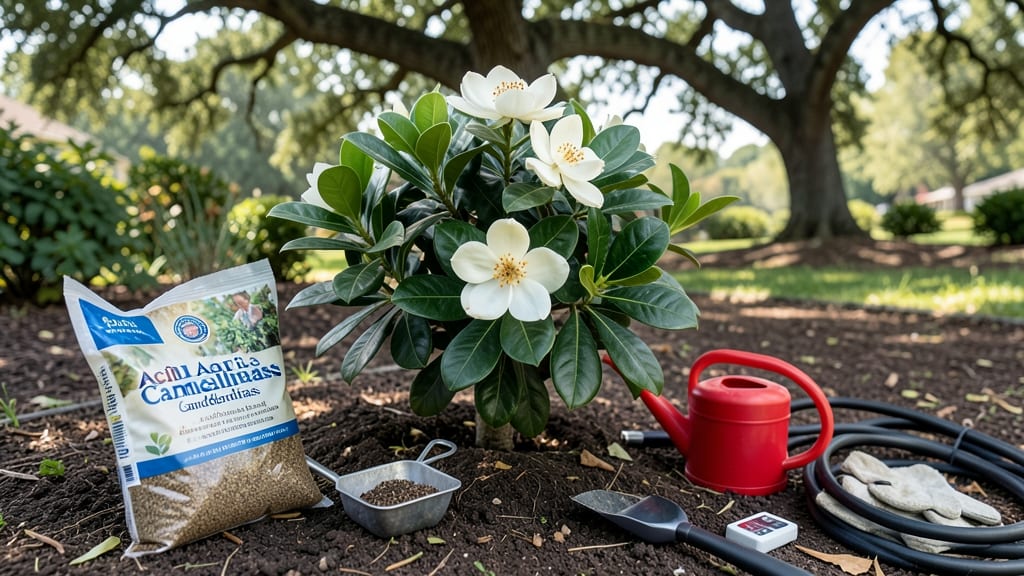
Your gardenia’s fertilizer requirements are the secret weapon for year-round blooms—and getting them wrong can leave you with sparse flowers or crispy leaves.
Picture this: you’ve watered your 🌸 gardenia just right, given it the perfect partial shade, but those fragrant blooms still refuse to show up. The issue? Most gardeners overlook the precise nutrient balance and acidity this tropical beauty demands.
Without the right feeding schedule, even the hardiest gardenia will struggle to thrive in zones 9-11.
In this guide, I’ll break down the exact nutrient ratios (including nitrogen, phosphorus, and potassium), the best organic and synthetic fertilizers, and the month-by-month feeding schedule that keeps your gardenia lush and blooming. You’ll also learn how to spot over-fertilization—because yes, even too much can kill your plant.
Ready to transform your gardenia into a fragrant, blooming powerhouse? Let’s dive into the science (and shortcuts) behind feeding this acid-loving shrub the right way.

Optimal nutrient requirements for gardenias: N-p-k ratios and micronutrients explained
Gardenias thrive when their nutrient needs are met with precision, especially since they’re acid-loving plants that demand specific N-P-K ratios and micronutrients. Unlike many shrubs, they need balanced feeding to produce those fragrant white blooms without sacrificing leaf health.
The key lies in understanding how each nutrient supports different growth stages—nitrogen for lush foliage, phosphorus for blooming, and potassium for root strength—and how to adjust seasonally.
Most gardenias perform best with a balanced fertilizer like a 10-10-10 or 8-3-9 ratio, but the magic happens when you add micronutrients like iron, magnesium, and calcium.
These trace elements prevent yellowing leaves, weak stems, and poor flowering—common issues when gardenias don’t get what they truly need. Let’s break down the science behind these ratios and how to spot deficiencies before they derail your plant’s health.
📊 Gardening Summary Table: Optimal Nutrient Requirements for Gardenias
| Nutrient | Role in Growth | Ideal Ratio (N-P-K) | Seasonal Focus | Signs of Deficiency |
|---|---|---|---|---|
| Nitrogen (N) | Leaf growth, chlorophyll production | 10 (spring/summer) | Spring (new growth) | Yellowing leaves (chlorosis) |
| Phosphorus (P) | Bloom production, root development | 10 (late spring/early summer) | Pre-bloom (May-June) | Purple stems, few buds |
| Potassium (K) | Root health, disease resistance | 10 (fall/early winter) | Fall (root strengthening) | Weak stems, leaf edges burn |
| Iron (Fe) | Chlorophyll synthesis, leaf color | Micronutrient supplement | Year-round (especially alkaline soils) | Yellow leaves with green veins |
| Magnesium (Mg) | Enzyme activation, leaf structure | Micronutrient supplement | Spring (new growth phase) | Yellow patches between veins |
| Calcium (Ca) | Cell wall strength, bud formation | Micronutrient supplement | Fall (pre-dormancy) | Blossom end rot, weak stems |
For nitrogen, focus on spring feeding to fuel new leaf growth. A 10-10-10 fertilizer applied in early spring (March-April) ensures your gardenia develops the dark green foliage it’s known for.
However, too much nitrogen in late summer can delay blooming, so taper off by July to shift energy toward flower production. I’ve seen gardenias with overly lush leaves but no blooms—a classic sign of nitrogen overload.
When it comes to phosph
Monthly acid-loving plant feeding schedule for gardenias: when and how to fertilize
Gardenias thrive on a consistent feeding schedule that matches their natural growth cycles. Unlike many plants, they demand acid-loving fertilizer with balanced nutrients to produce those coveted fragrant blooms. The key? Timing—feed too little, and you’ll miss the bloom phase; overdo it, and you’ll burn their delicate roots.
Let’s break down the seasonal fertilizer plan that keeps your gardenia lush and blooming year-round.
Your gardenia’s fertilizer needs shift with the seasons. In spring and early summer, focus on root and foliage growth with a balanced feed. As summer peaks, switch to a lower-nitrogen, phosphorus-rich formula to support blooming.
Fall is for light feeding to prep roots for dormancy, while winter means no fertilization at all. Potted gardenias need slightly more frequent feeding than in-ground plants due to limited soil volume.
For organic gardeners, try compost tea or worm castings every 4 weeks in spring/summer. Mix with cottonseed meal (high in nitrogen) or bone meal (for phosphorus). Synthetic fertilizers like Miracle-Gro Azaleas or Jobe’s Acid-Loving Plants are fast-acting but require more frequent applications.
Pro tip: Always water deeply before and after fertilizing to prevent root burn. If your gardenia’s leaves curl or drop, flush the soil with water to reduce salt buildup.
Adjust your schedule based on your plant’s growth response—more blooms? You’re on track! Fewer blooms? Reduce phosphorus and increase potassium.
🌸