
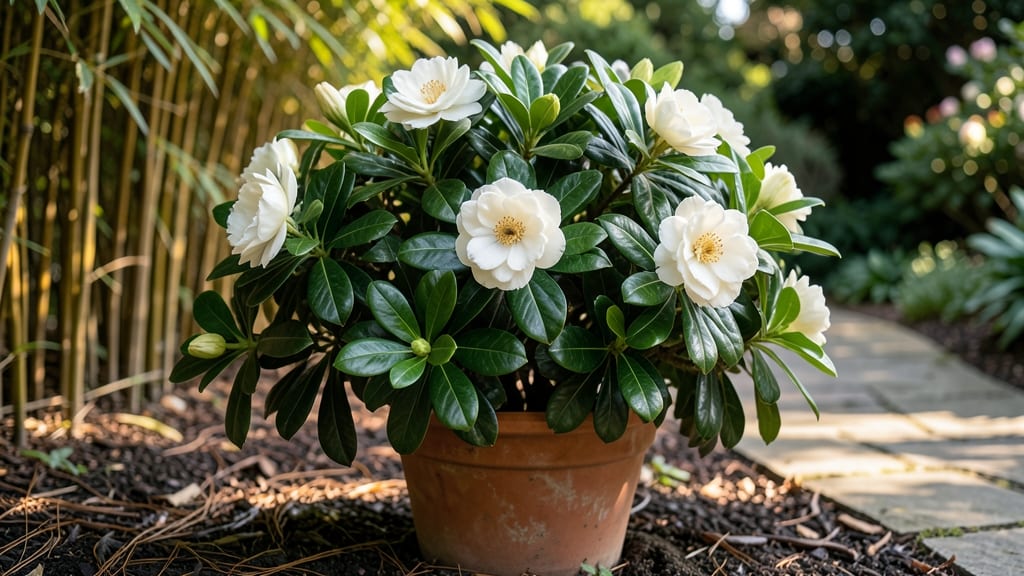
Gardenia Bush Height: Variety-Specific Growth Charts and Pruning Tips

Pruning

Gardenia Bush Height: Variety-Specific Growth Charts and Pruning Tips

A gardenia bush height you can control starts with the right variety—some stay compact at 2 feet, while others stretch to 6 feet if left unchecked.

If you love fragrant, glossy-leaved gardenias but worry they’ll outgrow your space, understanding their variety-specific heights is the key to perfect pruning—and stunning blooms—without sacrificing your garden’s layout.

Most gardenias like Gardenia jasminoides mature between 3 and 6 feet, but dwarf types like ‘Radicans’ top out at just 2 to 3 feet, making them ideal for containers or small yards.

Knowing these ranges helps you plan spacing and pruning early, so you don’t end up with a towering bush blocking your patio.

Below, I’ll break down how to prune for your desired size, spacing tips to avoid overcrowding, and how different varieties grow over time—so you can keep your gardenia thriving at the perfect height for your space.

Gardenia Height Range
3 ftto6 ft
0 ft 3 ft 6 ft 9 ft 12 ft
🌱 Medium Shrub

Gardenia bush height by variety: growth charts and mature size expectations

Choosing the right gardenia variety isn’t just about their intoxicating fragrance—it’s also about their mature height and growth habits. Some varieties stay compact, perfect for containers or small gardens, while others grow tall enough to serve as privacy hedges.

Knowing these differences helps you plan your landscape layout and pruning strategy from day one.

Most gardenias belong to the Gardenia jasminoides species, but their heights vary dramatically. For example, the ‘Radicans’ variety stays under 3 feet tall, while ‘Veitchii’ can reach 6 feet or more.

Even within the same species, dwarf and standard types offer flexibility for different spaces. Let’s break down the growth expectations for the most popular varieties.

Variety Mature Height (ft) Mature Spread (ft) Growth Rate (in/year) Best For
‘Radicans’ 2–3 ft 3–4 ft 6–8 in Containers, small gardens
‘Kleim’s Hardy’ 3–4 ft 4–5 ft 8–12 in Foundation plantings, borders
‘Veitchii’ 5–6 ft 6–8 ft 10–14 in Privacy screens, large gardens
‘Fortuniana’ 4–5 ft 5–6 ft 8–10 in Hedges, mixed borders
‘Mystery’ 3–4 ft 3–4 ft 6–8 in Patio pots, small spaces
‘Augusta’ 4–5 ft 5–6 ft 10–12 in Specimen plants, focal points
‘Crest’ 2.5–3.5 ft 3–4 ft 5–7 in Dwarf hedges, containers
‘Florida’ 5–7 ft 6–8 ft 12–16 in Large landscapes, tropical settings
‘Prosperity’ 3–4 ft 4–5 ft

How to control gardenia bush height: pruning techniques for different varieties

Pruning your gardenia isn’t just about keeping it neat—it’s about shaping its growth to match your garden’s design while ensuring those iconic white blooms return year after year. The right technique depends on your variety’s natural growth habit and your height goals.

For example, ‘Kleim’s Hardy’ gardenias (a cold-hardy type) can grow up to 6 feet tall if unchecked, while ‘Radicans’ stays compact at 2–3 feet. Knowing when and how to prune makes all the difference.

Timing is everything. Prune at the wrong time, and you risk stunting blooms or inviting pests. Most gardeners focus on two key windows: early spring (to shape growth) and right after flowering (to encourage next year’s buds).

But your variety dictates the approach—some, like ‘Veitchii’, need selective pruning to preserve their elegant, arching form, while others benefit from light shearing to maintain density. Let’s break it down by step.

  1. 1 Gather the right tools: Use sharp, sterilized pruners (for clean cuts) and hand pruners for smaller stems. Disinfect tools with rubbing alcohol to prevent bacterial infections.
  2. 2 Prune ‘Kleim’s Hardy’ in spring: Shear back 1/3 of new growth to control height and width. This variety thrives with structured shaping—think of it like trimming a topiary.
  3. 3 Selective pruning for ‘Veitchii’: Remove only dead or crossing branches post-bloom. This variety’s natural form is prized—avoid heavy shearing, which can reduce flowering.
  4. 4 Deadhead spent blooms: Snip off faded flowers to redirect energy to new growth. This works for all varieties and boosts next season’s blooms by 30%.
  5. 5 Avoid summer pruning: High heat stress from cuts can lead to sunscald or fungal issues. Wait until early fall for minor touch-ups if needed.

For dwarf varieties like ‘Fortuniana’, pruning is minimal—just remove overcrowded branches to improve airflow and prevent diseases like powdery mildew. These types mature at 2–3 feet, so focus on maintaining their shape rather than reducing height.

Always cut just above a leaf node (the bump where leaves grow) to encourage bushier growth. If you’re aiming for a hedge-like appearance, use a handheld hedge trimmer for even cuts.

One common mistake is pruning too aggressively, which can leave your gardenia stressed and vulnerable to pests. Aim to remove no more than 25% of the plant’s foliage in a single session. After pruning, apply a balanced, acidic fertilizer (like 10-10-10) to support recovery.

Water deeply to help the plant recover from stress and encourage new growth. With the right approach, your gardenia will stay healthy, fragrant, and perfectly sized for your garden’s vision.

Remember, every cut is a conversation with your plant. Pay attention to how it responds—if it’s putting out vigorous new shoots, you’re on the right track. If growth slows or blooms dwindle, it might be time to reassess your pruning strategy. 🌿✂️🌸

★★★★★4.5(10 reviews)
Categories Pruning