
Picking
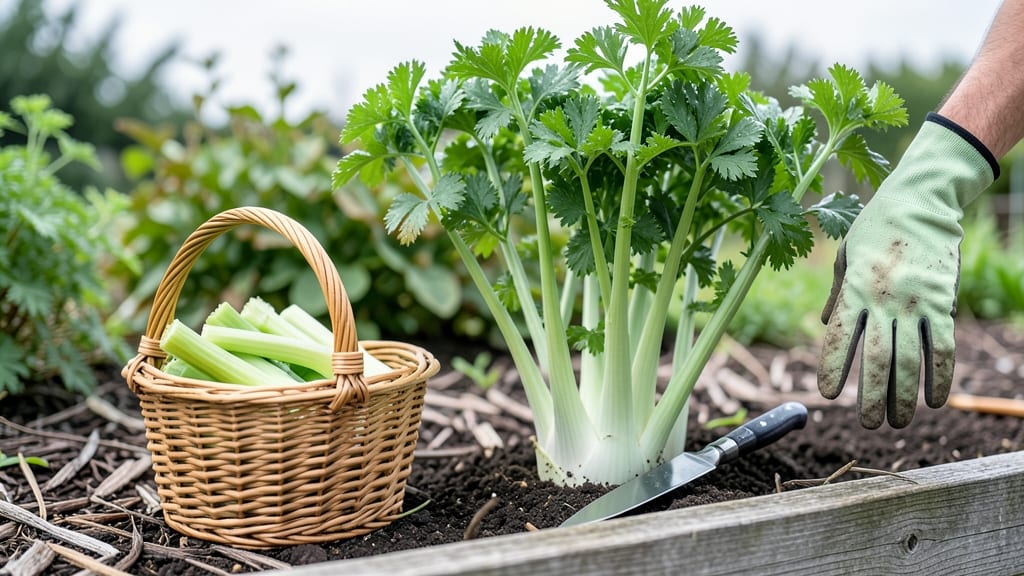
Harvesting garden celery at the right time turns your backyard into a crisp, flavorful treasure 🥬—but timing is everything.
Nothing beats the fresh, crisp crunch of homegrown celery—except the disappointment of bitter, woody stalks. Many gardeners pull too early or too late, ruining their crop. The key is knowing when stalks reach 10-12 inches and leaves turn deep green, signaling peak flavor and texture.
If you’ve ever wondered why your celery tastes bland or turns stringy, it’s likely because you missed the optimal harvest window. Celery thrives in cool weather, and harvesting too late can make stalks tough and less enjoyable.
With the right techniques, you’ll enjoy crisp, sweet celery straight from your garden.
In this guide, I’ll walk you through when to harvest, how to spot readiness, and best practices for cutting or pulling celery to keep it fresh. You’ll also discover storage tips to extend freshness and creative ways to use your harvest.


Optimal harvest timing for crisp garden celery stalks
Timing your garden celery harvest correctly transforms your homegrown crop from bland to extraordinary. Celery thrives on patience—harvesting too early yields thin, bitter stalks, while waiting too long results in woody, tough textures.
The key lies in understanding your celery's day-length requirements and stalk maturity, which vary by seasonal variations and variety.
Most home gardeners plant celery in early spring or late summer, aiming for harvests in late spring or fall. However, the ideal harvest timing depends on your USDA hardiness zone and local climate.
For example, in Zone 6a, spring-planted celery typically reaches harvest readiness in May or June, while fall crops mature by October or November.
Celery requires 120-150 days to mature, but this window shifts based on daylight hours. Celery is a long-day plant, meaning it grows best with 14-16 hours of daylight.
In shorter-day climates, you may need to supplement with grow lights or choose quick-maturing varieties like 'Tall Utah' or 'Golden Self-Blanching'.
For peak flavor and texture, aim to harvest when celery stalks reach 10-12 inches tall and measure 1-1.5 inches in diameter. The stalks should feel firm but slightly yielding when gently squeezed.
If the outer leaves begin to yellow slightly, it's a sign your celery is nearing perfect harvest readiness.
One common mistake is waiting until celery becomes over-mature, which causes the stalks to develop a woody core. Over-mature celery also tends to split at the base and lose its crispness.
To avoid this, monitor your plants closely and harvest before the stalks exceed 14 inches in height.
Seasonal variations play a crucial role in harvest timing. In cool-season climates, spring-planted celery benefits from longer daylight hours in late spring, accelerating maturity. Conversely, fall crops may mature faster due to cooler temperatures, which slow growth slightly but improve flavor.
If you're growing celery in tropical or warm climates, expect slightly faster growth due to consistent warmth. However, these conditions can also lead to bolting if temperatures exceed 85°F. To prevent bolting, provide partial shade during peak afternoon heat and harvest when stalks reach 12-14 inches.
Pro tip: Use a sharp knife to cut celery at the base, leaving 1-2 inches of stalk attached. This encourages regrowth for a second harvest, though the quality may not be as crisp. For the best flavor, prioritize the first harvest and allow the plant to bolting naturally afterward.
Remember, harvest timing is just as important as plant care. Consistent watering, fertile soil, and proper spacing set the stage for a successful harvest. By following these guidelines, you'll enjoy crisp, flavorful celery straight from your garden all season long. 🥬
Signs your celery is ready to harvest (and when to wait)
Knowing when to harvest your garden celery can make the difference between sweet, crisp stalks and bitter, fibrous disappointment. The key lies in observing three primary indicators: stalk thickness, leaf color, and overall plant structure.
Celery plants typically reach harvest readiness after 120 days from sowing, but environmental factors can shift this timeline.
First, check the stalk thickness. Ready-to-harvest celery should have stalks that are at least 10-12 inches tall and feel firm when gently squeezed. Thin stalks (under 6 inches) are a clear sign your crop needs more time in the ground.
The stalks should also be tightly clustered rather than spreading outward.
Next, examine the leaf color. Healthy, mature celery leaves should be a vibrant deep green, not pale or yellowing. While the outer leaves may show slight yellowing at the edges, this is normal and indicates maturity.
Avoid harvesting if the entire plant looks wilted or the leaves appear dull—this suggests stress or disease.
⚠️ Common Mistake: Over-Maturity
Waiting too long to harvest can turn your crisp celery into tough, woody stalks. Over-mature celery loses flavor and texture, making it unpalatable. If your stalks exceed 14 inches or develop a hollow core, they've passed their prime. Harvest promptly when stalks hit 10-12 inches for the best results.
Don't rely solely on days-to-maturity—seasonal variations play a huge role. In cooler climates, celery may mature slower, while warm weather can speed up the process.
For example, a spring crop planted in February might be ready by May, while a fall crop planted in July could be harvested as early as October.
When harvesting, use a sharp knife or pruners to cut the stalks about 1 inch above the base. Avoid pulling the entire plant, as this can damage the roots.
If you're harvesting individual stalks for gradual use, leave the outer leaves intact to protect the inner stalks from sunburn and maintain moisture.
After harvest, store your celery in the crispest drawer of your refrigerator, wrapped in a damp paper towel. This mimics the high-humidity conditions celery thrives in while growing. For long-term storage, consider blanching and freezing the stalks to preserve their texture and flavor for up to 8 months.
With practice, you'll develop an eye for the perfect harvest window. Pay attention to these visual and tactile cues, and you'll enjoy homegrown celery that's sweeter and crunchier than anything from the store. Happy harvesting! 🥬