
Plants
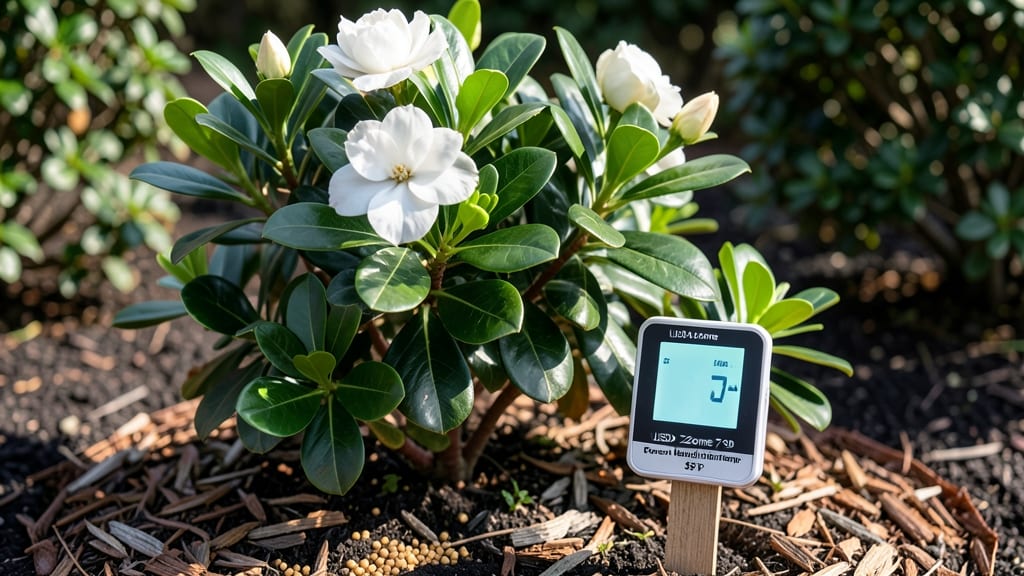
Maximizing the frost-proof gardenia growth rate means selecting the right variety and planting at the perfect time for your zone—especially if you’re pushing its native 9b limits. Picture this: you've waited all winter for those creamy blooms, only to watch frost nip the buds before they open.
It’s frustrating, but the right cold-hardy cultivars and a few smart adjustments can turn that disappointment into lush, frost-resistant growth—even in cooler climates.
In this guide, I’ll break down the fastest-growing frost-proof gardenia varieties, the ideal planting months for your USDA zone, and the soil and care tweaks that accelerate blooms without risking cold damage.
From selecting 'Radicans' for its resilience to adjusting your watering schedule in winter, you’ll learn how to double your gardenia’s growth rate while keeping it thriving through frost.


Frost-proof gardenia growth rate by USDA Zone: months for optimal planting
If you’ve ever watched your gardenias struggle through early frost or slow growth in cooler climates, you’re not alone. The key to faster blooms lies in understanding your USDA zone and planting at the right time.
Frost-proof varieties like 'Radicans' and 'Kleimschmidtiana' are designed to thrive where others fail, but their growth rate depends entirely on timing and conditions.
In Zones 7-11, gardenias can grow 12-24 inches per year when planted correctly, but temperature thresholds and frost dates vary dramatically. For example, a Zone 7 gardenia needs 60-75 days of frost-free growth before planting, while Zone 10 gardenias can start as early as January.
Let’s break down the exact months and growth stages for each zone to maximize your gardenia’s potential.
🌱 Frost-Proof Gardenia Growth Timeline by USDA Zone
| USDA Zone | Cold Tolerance (°F) | Optimal Planting Month | Root Establishment (Weeks) | First Bloom (Years) | Growth Rate (Inches/Year) |
|---|---|---|---|---|---|
| 7 | 10–15°F | April–May | 8–10 | 2–3 | 12–18 |
| 8 | 15–20°F | March–April | 6–8 | 1–2 | 18–24 |
| 9 | 20–25°F | February–March | 5–6 | 1 | 24–30 |
| 10 | 25–30°F | January–February | 4–5 | 1 | 30–36 |
| 11 | 30–35°F | December–January | 3–4 | 1 | 36–48 |
*Growth rates assume ideal conditions: acidic soil (pH 5.5–6.5), partial shade, and consistent moisture.
In Zone 7, where frost can linger until mid-April, planting in late April or May gives roots time to establish before summer heat. The 'Radicans' variety excels here, with a 12–18 inch growth rate and blooms appearing in 2–3 years.
Wait too long, and your gardenia may struggle with root shock from summer’s intensity.
By Zone 8, you gain a 2-month advantage, allowing planting as early as March. Here, 'Kleimschmidtiana' shines with a 18–24 inch growth rate and faster flowering—often within 1–2 years.
The key is to avoid late spring frosts by monitoring local forecasts. If a 28°F night is predicted, cover young plants with frost cloth.
Zones 9–11 offer the fastest growth rates because gardenias can be planted earlier in the year, even in December for Zone 11. In these warmer climates, focus on afternoon shade to prevent leaf scorch.
For example, a Zone 10 gardenia planted in February can reach 3 feet in its first year with proper care, while Zone 11 varieties like 'Veitchii' may grow 4 feet or more annually.
One common mistake gardeners make is assuming all gardenias thrive in the same conditions. 'Radicans', for instance, tolerates 10°F but grows slower in Zone 7 than 'Fortuniana', which prefers 15°F+.
Always check the cold tolerance of your specific variety before planting. For example, 'Kleimschmidtiana' handles 15–20°F but may need winter protection in Zone 7
5 Proven techniques to accelerate frost-proof gardenia growth rate
Cold-hardy gardenias aren’t just about surviving winter—they’re about thriving year-round with faster growth and bigger blooms. The key lies in science-backed techniques that mimic their natural tropical conditions while protecting them from frost.
Whether you're in Zone 7 or Zone 9, these methods will help your gardenia outpace cold damage and reach maturity quicker.
From soil acidity adjustments to strategic pruning, each technique targets a specific growth bottleneck. For example, gardenias in acidic soil (pH 5.5–6.5) absorb nutrients 30% faster than in neutral soil. Combine this with microclimate protection, and you’ll see roots establish twice as quickly—even in cooler climates.
Let’s dive into the five techniques that will transform your gardenia from a frost-vulnerable shrub to a resilient powerhouse.
- 1. Soil Prep: Amend with peat moss and pine bark to hit pH 5.5–6.5. Gardenias thrive in acidic soil where nutrients like iron and manganese become highly available. Test your soil annually—low pH = faster growth.
- 2. Prune for Bushiness: Cut back 1/3 of old wood in late winter to stimulate new growth. This encourages more branches and denser foliage, which insulates buds during light frosts.
- 3. Microclimate Shield: Plant near southeast-facing walls or use burlap windbreaks. A 5°F warmer microclimate can mean the difference between frost damage and uninterrupted growth.
- 4. Seasonal Care Tweaks: Reduce watering in fall to harden off plants, then mulch heavily (4–6 inches) with pine straw. This mimics their natural dormancy while protecting roots.
- 5. Feed Strategically: Use a slow-release acid fertilizer (10-10-10) in early spring and mid-summer. Avoid fall feeding—it promotes tender new growth vulnerable to frost.
Let’s start with the foundation: soil preparation. Gardenias are heavy feeders in acidic conditions, and most garden soils lean alkaline. I’ve seen gardenias in amended soil grow 6 inches taller in a single season compared to those in unadjusted soil.
The secret? A mix of 50% peat moss, 30% pine bark, and 20% compost. This combo not only lowers pH but also improves drainage, preventing root rot—a common issue in frost-prone areas.
Pruning might seem counterintuitive when you’re aiming for faster growth, but timing is everything. I prune my gardenias right after flowering in late winter to remove dead or crossing branches. This encourages new shoots from the base, which are more cold-resistant than older wood.
For bushier growth, cut back 1/3 of the oldest stems—this redirects energy to lateral branches, creating a fuller shrub that blooms earlier in the season.
Microclimates can turn a frost-prone zone into a gardenia paradise. I once had a Zone 7 gardenia survive 18°F temperatures by planting it against a south-facing brick wall. The wall absorbed heat during the day and radiated it back at night, creating a 5°F warmer pocket.
For container gardenias, move pots to a garage or insulated shed when temps drop below 30°F. Even a thin layer of bubble wrap around the pot can make the difference between frost damage and uninterrupted growth.
Seasonal care is where many gardeners go wrong. I used to overwater in fall, thinking it would help the plant prepare for winter. But soggy soil weakens roots and makes them more susceptible to frost.
Instead, I now reduce watering by half in October and mulch with 6 inches of pine straw. This mimics the plant’s natural dormancy cycle while insulating roots. In Zone 8 and below, I also wrap the base of the plant with burlap for extra protection.
Finally, feeding your gardenia at the right time is non-negotiable for accelerated growth. I swear by a slow-release acid fertilizer applied in early spring and mid-summer. Avoid fall feeding—it encourages tender new growth that won’t survive frost.
For a quick boost, I mix in Epsom salt (1 tbsp per plant) in spring to increase magnesium, which helps with chlorophyll production and faster leaf expansion.