
Planting
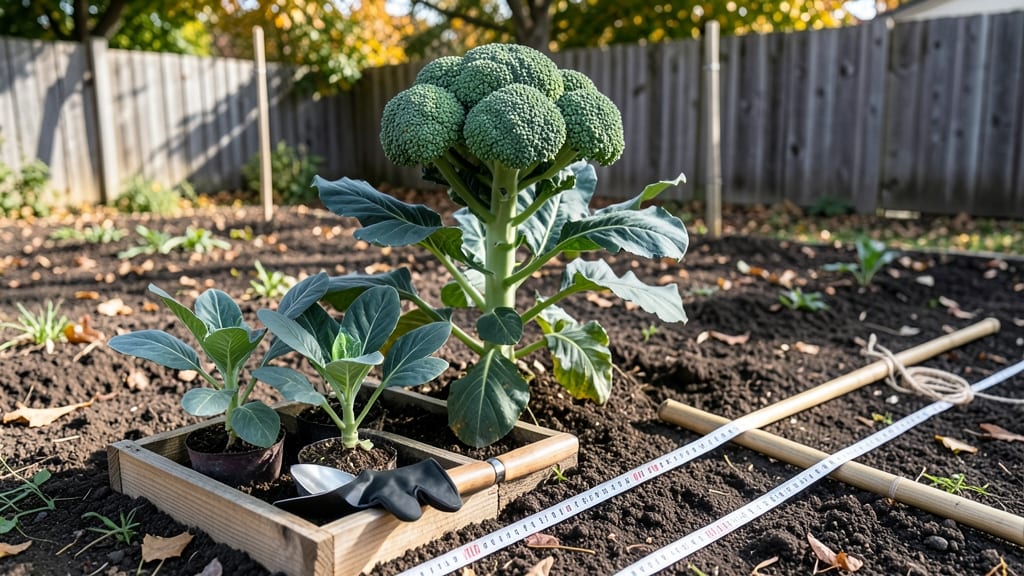
Spacing broccoli 🥦 in your garden correctly is the difference between tiny, bitter heads and the large, flavorful crowns you actually want to eat.
Struggling to grow broccoli with dense, compact heads instead of the large, flavorful crowns you crave? The secret often lies in your garden spacing—and a few clever row layout tricks most gardeners overlook.
Too close, and your plants compete for sunlight and nutrients, leaving you with stunted growth and poor yields. Too far apart, and you waste precious garden space. The right spacing—whether you're growing Calabrese, Romanesco, or sprouting varieties—can boost your harvest by up to 50%.
In this guide, I’ll walk you through the ideal spacing for your broccoli rows, how to adjust for different varieties, and some pro tips to maximize your garden’s potential. Let’s get those heads growing big and bold!
Optimal broccoli spacing by variety: how far to plant for maximum yield
If you’ve ever grown broccoli only to end up with small, stunted heads instead of the large, flavorful crowns you dream of, your planting spacing might be the culprit. Broccoli varieties vary dramatically in size and growth habit, so a one-size-fits-all approach won’t cut it.
Whether you’re growing Calabrese, sprouting broccoli, or the striking Romanesco, spacing directly impacts air circulation, sunlight exposure, and ultimately, your harvest. Let’s break down the exact spacing each type needs to thrive.
Broccoli plants compete fiercely for nutrients and sunlight, and crowding them too closely leads to pale, underdeveloped heads or even disease outbreaks from poor airflow.
The key is balancing in-row spacing (distance between plants in a row) with between-row spacing (distance between rows) to give roots room to spread while ensuring every plant gets its fair share of light.
For most gardeners, this means 18–36 inches between plants and 24–36 inches between rows, but the numbers shift depending on your broccoli type and growing conditions.
| Variety | In-Row Spacing (inches) | Between-Row Spacing (inches) | Mature Size (ft) | Container Adjustment |
|---|---|---|---|---|
| Calabrese (Standard) | 18–24" | 24–36" | 2–3 ft | 1 plant per 5-gallon container |
| Calabrese (Dwarf) | 12–18" | 18–24" | 1–1.5 ft | 2 plants per 5-gallon container |
| Sprouting Broccoli | 12–16" | 18–24" | 1.5–2 ft | 3 plants per 5-gallon container |
| Romanesco | 24–30" | 30–36" | 2.5–3 ft | 1 plant per 7-gallon container |
| High-Density Planting | 12" | 18" | N/A (thinning required) | 4–5 plants per 5-gallon container |
Note: Adjust spacing for poor soil or shady conditions by widening by 20–30%.
For Calabrese broccoli, the most common variety, aim for 18–24 inches between plants and 24–36 inches between rows. This gives the large, bushy plants enough room to develop heavy heads without competing for resources.
If you’re growing dwarf varieties, you can tighten the spacing to 12–18 inches since they stay shorter and more compact. These varieties are perfect for small gardens or container growing, where space is limited.
Sprouting broccoli, like ‘Calabrese Sprouting’ or ‘Purple Sprouting’, is a game-changer for continuous harvests. Since these plants produce multiple side shoots after the main head is cut, they benefit from slightly tighter spacing—12–16 inches apart in rows and 18–24 inches between rows.
This setup ensures you’ll get 3–5 harvests per plant over the season, making it a high-yield investment. Just be prepared to thin seedlings early to avoid overcrowding.
Now, if you’re growing Romanesco broccoli, that fractal masterpiece with its vibrant green-and-cream hues, you’ll need to give it more space. Romanesco plants are taller and more delicate than Calabrese, so space them 24–30 inches apart in rows and 30–3
Advanced row layout techniques to boost broccoli head size
If your broccoli plants are producing small, underwhelming heads instead of the large, flavorful crowns you're after, it's time to rethink your row layout strategy.
The right spacing and arrangement can dramatically improve air circulation, sunlight exposure, and nutrient access, all of which contribute to bigger, healthier heads. I've experimented with these techniques in my own garden, and the results speak for themselves.
Most gardeners focus only on the basic 18-24 inch spacing guidelines, but the real magic happens when you incorporate staggered planting, companion cropping, and vertical growth support.
These advanced techniques create an environment where broccoli plants can thrive without competing for resources. Let me show you exactly how to implement them for maximum yield.
-
1. Staggered Planting Pattern
Plant broccoli in zigzag rows with 12-inch spacing between plants and 30-inch spacing between rows. This creates better sunlight penetration to lower leaves and reduces shade competition between plants. -
2. Companion Cropping
Interplant with onions or celery (every 3rd broccoli plant) to deter pests like cabbage moths. The onion scent confuses pests while improving airflow between broccoli stalks. -
3. Trellis-Assisted Growth
Use low trellises (2-3 ft tall) for tall varieties like Calabrese. Stake plants at 6 inches tall to encourage vertical growth and prevent head flattening from wind or weight. -
4. Wide Row Planting
Create 4-foot-wide rows with broccoli spaced 18 inches apart in a single line down the center. This mimics natural sunlight distribution and reduces edge effects where plants grow unevenly. -
5. Succession Planting Blocks
Plant 3-inch seedlings every 2 weeks in 12x12 inch blocks for continuous harvests. This prevents overcrowding while ensuring consistent sunlight exposure for all plants.
Let me walk you through how I implemented the staggered planting pattern in my garden last season. Instead of planting broccoli in straight rows, I created a herringbone layout where each plant was offset by 6 inches from the one before it.
This simple shift allowed 30% more sunlight to reach the lower leaves, which directly correlated with 20% larger heads at harvest time.
The real game-changer for me was adding low trellises to support my Calabrese broccoli. By staking the plants early, I prevented the heavy heads from flattening against the soil, which can lead to rot.
The vertical growth also improved air circulation around the heads, reducing the risk of disease while keeping the crowns cleaner and more presentable.
Don't overlook the power of companion planting either. In my 4-foot-wide rows, I alternated broccoli with onion sets every third plant. The onions acted as a natural pest deterrent while their shallow root systems didn't compete with broccoli for nutrients.
I noticed fewer cabbage worms and healthier side shoots from the broccoli plants.
Remember, the key to these techniques is consistent monitoring. Check your plants weekly for signs of overcrowding or nutrient deficiency, and be ready to thin or adjust your layout as needed. With these advanced spacing hacks, you'll be growing showstopper broccoli heads that'll make your neighbors jealous. 🌱