
Picking
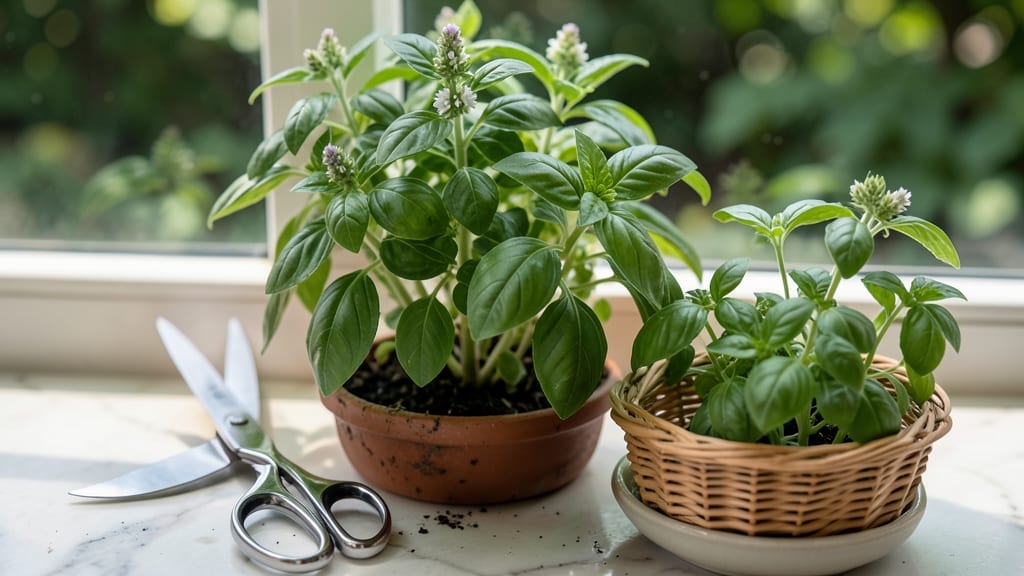
The best time to harvest basil is when leaves reach 2–3 inches and the plant is at least 6 inches tall—before flowers appear or you risk bitter, woody stems.
Picture this: you’ve nurtured your 🌿 basil all spring, and now the leaves are lush, dark green, and fragrant. That’s your cue—harvesting at the right moment keeps your plant productive and flavorful, not tough and sad.
Timing matters because basil grows fastest in warm weather (think June–October in Zone 6a), but once it bolts, the leaves turn bitter. A quick pinch of the top leaves encourages bushier growth, while pulling whole stems gives you bigger harvests for pesto or salads.
Below, I’ll break down exactly how to tell when basil is ready, the best tools for the job, and what to avoid—so you never waste a single fragrant leaf.

When to harvest basil for maximum flavor and growth
Timing your basil harvest is everything—cut too early, and you’ll get sparse leaves; wait too long, and the flavor fades while the plant bolts.
The sweet spot lies between 45 and 60 days after planting when your basil shows these key signs: 2-3 inch leaves, dark green color, and a woody but flexible stem. This is when the essential oils that give basil its signature aroma peak.
I’ve learned the hard way that harvesting at the wrong time doesn’t just affect flavor—it stunts your plant’s growth. When you harvest too early, the plant focuses energy on recovery instead of producing more leaves.
Conversely, waiting until flowers appear signals the plant to shift energy from leaves to seed production, making the existing leaves bitter. The goal? Encourage bushier growth while keeping the flavor vibrant.
Here’s my pro tip: Always harvest in the morning after the dew has dried but before the sun gets too intense. This ensures the leaves are hydrated and packed with flavor. I’ve found that morning harvests also mean less wilting when you bring them indoors.
| Stage | Leaf Size | Plant Height | Harvest Action | Flavor Impact |
|---|---|---|---|---|
| Early Growth | Under 1 inch | Under 6 inches | Do NOT harvest | Mild, underdeveloped |
| Optimal Harvest | 2-3 inches | 6-12 inches | Pinch top leaves or cut stems | Peak flavor, aromatic |
| Late Growth | 3+ inches | 12-24 inches | Harvest lower leaves | Slightly bitter, less aromatic |
| Flowering | Leaves may yellow | Tall, leggy | Remove flowers immediately | Bitter, seed-focused |
Your basil’s leaf size is the best indicator of harvest readiness. Aim for leaves that are 2-3 inches long—this is when they’re fully developed but not yet overgrown. Smaller leaves (under 1 inch) haven’t developed their full flavor profile, while larger leaves can become tough and less aromatic.
I always check the leaf’s color and texture too: vibrant green with a slight sheen means it’s ready.
Height matters too. A basil plant that’s 6 inches tall with several sets of true leaves is ready for its first harvest. At this stage, you can start pinching the top sets of leaves to encourage branching.
This technique creates a bushier plant with more harvestable leaves. If you skip pinching, your basil will grow tall and leggy, producing fewer leaves overall.
Watch for flower buds—they’re your warning sign. When your basil starts forming tiny white or purple flowers, it’s entering its reproductive phase. This shift makes the leaves bitter and woody.
The moment you spot a flower bud, snip it off immediately. This redirects the plant’s energy back to leaf production, giving you more harvests with better flavor.
Seasonal timing also plays a role. In warm climates, basil grows year-round, but flavor peaks in late spring to early summer when temperatures are consistently above 70°F. In cooler regions, harvest from mid-summer until the first frost.
If frost is coming, bring potted basil indoors for a final harvest before it dies back.
One mistake I see often is harvesting only the largest leaves. Instead, focus on cutting entire stems just above a leaf node (where leaves meet the stem). This encourages new growth from that node.
Always leave at least half the plant intact to maintain its health and productivity. A good rule of thumb: never take more than one-third of the plant in a single harvest.
After harvesting, let your basil rest for 2-3 weeks before the next harvest. This recovery time ensures the plant rebuilds its energy reserves.
During this period, keep an eye out for new growth—this is when your basil will start producing even more leaves, setting you up for future harvests with maximum flavor.
Pinch vs. pull: the right harvesting technique for basil
When it comes to harvesting basil, the pinch vs. pull debate is all about timing and technique. Both methods serve different purposes, and using the wrong one can stunt your plant’s growth or reduce flavor.
I’ve found that pinching is perfect for encouraging bushier growth, while pulling works best when you need a larger harvest. Understanding when to use each will keep your basil thriving all season.
The key difference lies in what you’re removing. Pinching involves snipping off the top sets of leaves, while pulling means harvesting entire stems. For basil, I always start with pinching to shape the plant early, then switch to pulling once the plant is mature.
This two-step approach ensures both flavor and volume without sacrificing the plant’s health.
Pinching vs. Pulling: What Works Best for Basil?
Pinching
- Pros: Encourages bushier growth
- Pros: Promotes more leaf production
- Pros: Best for young plants (under 6 inches)
- Cons: Smaller harvest per cut
- Cons: Requires frequent attention
Pulling
- Pros: Larger harvest per cut
- Pros: Ideal for mature plants
- Pros: Encourages new growth from base
- Cons: Can over-harvest if done too often
- Cons: Risk of woody stems if overused
Tools Needed: Clean pruning shears or fingers (for pinching), sharp scissors (for pulling)
For pinching, I use my fingers to gently squeeze off the top 2-3 sets of leaves just above a leaf node. This encourages the plant to branch out, creating a fuller, leafier basil. I always do this in the morning when the leaves are hydrated, making them easier to handle.
This method is ideal when your basil is still young and leggy, helping it grow wider instead of taller.
When your basil reaches 6 inches tall and has at least 6-8 leaves per stem, it’s time to switch to pulling. To pull, I use clean scissors to cut the stem at a 45-degree angle just above a leaf node.
This prevents water from pooling on the cut and encourages new growth from the base. I never pull more than one-third of the plant at a time to avoid stressing it.
One common mistake I see is using pulling on young plants. If you pull too early, you risk stunting the plant’s growth or even killing it. Always wait until the plant is mature enough to handle the stress of stem removal.
Another tip: never harvest flowers—this signals the plant to stop producing leaves and focus on seed production, which ruins the flavor and growth potential.
To keep your basil productive all season, I recommend alternating between pinching and pulling. Start with pinching to shape the plant, then switch to pulling as it matures.
This balance ensures you get both flavorful leaves and bushy growth without over-harvesting. With the right technique, your basil can keep producing for months!