
Pests
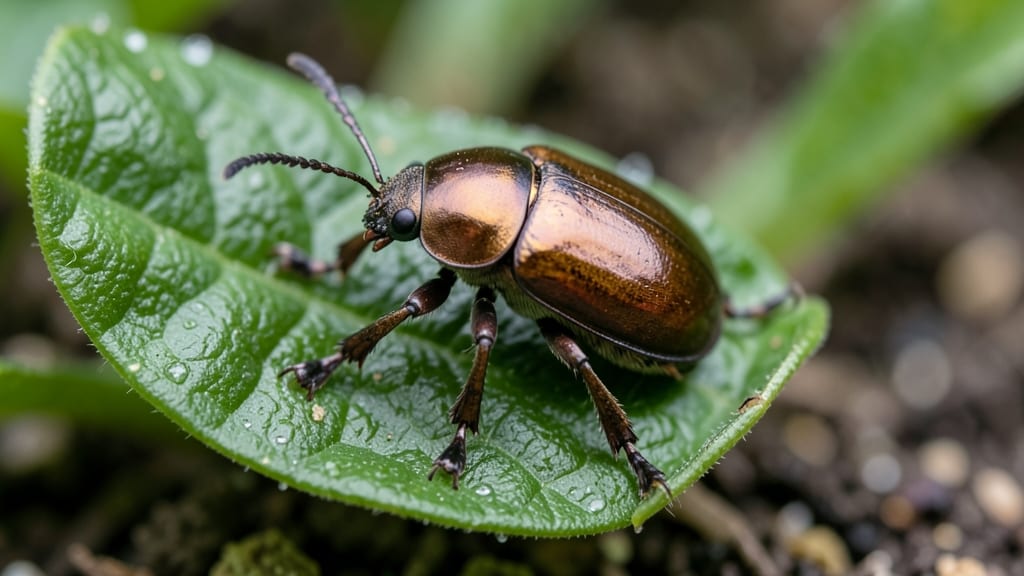
The Asiatic garden beetle is a relentless leaf-muncher that can strip your garden bare in days, turning vibrant plants into skeletal remains before you even notice.
You might think your roses or potatoes 🥔 are safe—until you wake up to chewed edges and scattered beetles glistening in the morning dew. These invasive pests thrive in warm weather, and once they arrive, they multiply fast, making early action the key to saving your hard work.
But here’s the good news: with the right identification tricks and control methods, you can stop them before they take over. I’ll walk you through how to spot their damage, disrupt their lifecycle, and protect your plants—naturally or with targeted treatments—so your garden stays lush and thriving.
From larval grubs hiding in the soil to adult beetles feasting at dawn, understanding their habits is your first line of defense. Let’s get started with proactive strategies that work.
Identifying Asiatic garden beetles: key visual clues and life cycle stages
The Asiatic garden beetle (Anomala orientalis) is a nighttime marauder that can devastate your garden if left unchecked. Unlike daytime feeders like Japanese beetles, these pests emerge at dawn and dusk, making them harder to spot.
Their life cycle includes both a larval (grub) stage and an adult beetle stage, each with distinct damage patterns and appearances.
One of my first encounters with these beetles left my roses skeletonized overnight—only the leaf veins remained! This is a classic sign of Asiatic garden beetle activity. They also target grapes, vegetables, and ornamental plants, often leaving behind irregular, jagged edges on leaves.
Let’s break down how to identify them at every stage to protect your garden.
| Feature | Adult Asiatic Garden Beetle | Larval (Grub) Stage | Japanese Beetle (Comparison) |
|---|---|---|---|
| Size | 1/2 inch long | Up to 1 inch (white, C-shaped) | 1/2 inch (metallic green) |
| Color | Black with orange legs | White with brown head | Bronze-green with copper wings |
| Active Time | Dawn/dusk (nocturnal) | Daytime in soil | Midday (full sun) |
| Feeding Pattern | Irregular, jagged edges | Roots and organic matter | Smooth, circular patterns |
| Seasonal Activity | June-September (adults) | Spring-Summer (grubs) | June-August (adults) |
| Host Plants | Roses, grapes, veggies | Grass roots, compost | Linden trees, beans, grapes |
The adult Asiatic garden beetle is easily confused with Japanese beetles, but there’s a key difference: their orange legs and black body stand out against the metallic green of Japanese beetles.
Both pests target similar plants, but Asiatic beetles are more active at dawn and dusk, while Japanese beetles prefer full sunlight.
When you spot grubs in your soil, check for their white, C-shaped bodies with brown heads. These larvae feed on grass roots and organic matter, weakening lawns and young plants.
Unlike chafer beetle grubs, Asiatic grubs are less aggressive on roots but still cause significant damage if populations explode.
Timing is critical for control. Adult Asiatic garden beetles emerge in late June and remain active through September, while their grubs overwinter in the soil. I’ve found that monitoring garden edges and mulch piles during these months helps catch infestations early.
Their preferred host plants—like roses, grapes, and vegetables—are often the first to show signs of stress.
One tell-tale sign of Asiatic garden beetle damage is the uneven, ragged holes they create in leaves. Japanese beetles leave smooth, circular patterns, while Asiatic beetles create irregular, jagged edges.
This difference is crucial for targeting the right control methods. For example, neem oil works well for both pests, but trap cropping with marigolds is more effective for Asiatic beetles.
If you’re dealing with grubs in your lawn, look for brown patches that pull up easily. These grubs can survive for 2-3 years in the soil, so early intervention is key.
I’ve had success using beneficial nematodes (like Heterorhabditis bacteriophora) to target grubs without harming beneficial insects. Apply them in early spring when grubs are most active.
To distinguish Asiatic beetles from other pests, pay attention to their feeding habits. They often start feeding at the edges of leaves and work
Natural and chemical control methods to eliminate Asiatic garden beetles
When Asiatic garden beetles strike, your first instinct might be to reach for the strongest chemical weapon in your arsenal. But before you grab that bottle, let’s explore both natural and chemical control methods to protect your garden effectively.
These beetles target vegetables, flowers, and lawns, so choosing the right approach depends on your priorities—whether it’s organic safety or rapid eradication.
Natural methods like neem oil and beneficial nematodes are excellent for long-term prevention and gardens with kids or pets. Chemical options, such as carbaryl or pyrethrin-based insecticides, offer faster results but require careful handling.
The key is timing—apply treatments early in the season or when you first spot larval activity in the soil.
Natural Methods
Pros
- 🌱 Pet-safe when applied correctly
- 🌿 Environmentally friendly
- 🔄 Prevents future infestations
Cons
- ⏳ Slower results (may take weeks)
- 🌧️ Rain can reduce effectiveness
- 🔍 Requires repeated applications
Chemical Methods
Pros
- ⚡ Fast-acting (kills on contact)
- 🛡️ Strong residual protection
- 🌱 Works on larvae too
Cons
- 🚫 Toxic to pets and children
- 🌍 Environmental impact (harms beneficial insects)
- 📜 Requires protective gear
For organic control, start with neem oil—a natural insecticide that disrupts beetle feeding and reproduction. Mix 2 tablespoons of neem oil with a gallon of water, add a drop of dish soap as an emulsifier, and spray infested plants thoroughly in the early morning or evening.
Reapply every 5-7 days during active beetle seasons (spring through summer).
Diatomaceous earth is another powerful tool. This fine powder kills beetles by dehydrating them—just sprinkle a thin layer around plant bases and lawn edges. Avoid applying it when windy or rainy, as it loses effectiveness when wet. For larval control, introduce beneficial nematodes like Steinernema carpocapsae into the soil. These microscopic worms seek out and kill grubs without harming plants or beneficial insects.
If natural methods fall short, chemical treatments like carbaryl (Sevin) or pyrethrin can provide rapid knockdown. Always follow label instructions—wear gloves, long sleeves, and a mask—and avoid spraying when bees are active.
For long-term prevention, use floating row covers over vulnerable plants or plant trap crops like marigolds to lure beetles away from your prized vegetables.
Remember, the best defense is a combined approach. Start with preventive measures like healthy soil and diverse plantings, then monitor for early signs of infestation. With the right strategy, you can keep your garden thriving without letting these beetles take over. 🌿