
Tools
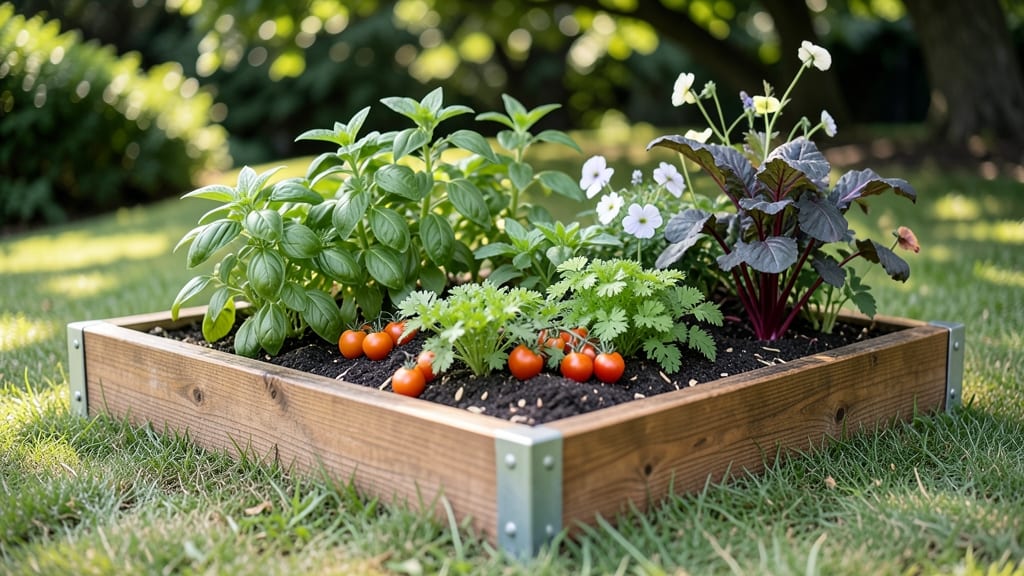
An 8x8 raised garden turns even the smallest yard into a productivity powerhouse—packing in more veggies, herbs, and flowers than you’d expect from just 64 square feet.
If you’ve ever stared at a postage-stamp backyard and wondered how to grow your own tomatoes, lettuce, and basil without sacrificing your lawn, this is your solution. The key? Smart spacing, vertical tricks, and crops that play well together.
Below, I’ll walk you through space-saving layouts, the best crops for your zone, and how to avoid the 5 biggest mistakes that turn raised beds into disappointment.
Ready to grow more in less space? Let’s get started with a design that works as hard as you do.
Optimal 8x8 raised garden layouts for small spaces
An 8x8 raised garden gives you a 64-square-foot growing space—perfect for maximizing yield in tight areas. By using square-foot gardening principles and companion planting, you can grow more food in less space while improving plant health.
The key is balancing plant spacing, growth habits, and nutrient needs to avoid competition.
I’ve designed layouts that prioritize high-density crops like leafy greens, herbs, and compact vegetables while leaving room for vining plants to climb trellises. Whether you’re growing for salad greens, herb blends, or tomatoes and peppers, these layouts ensure every inch works for you.
Let’s dive into the science-backed strategies that make the most of your 8x8 footprint.
Comparison Table: Top 3 Layout Strategies for an 8x8 Raised Garden
| Layout Type | Key Features | Best For | Yield Potential | Maintenance Level |
|---|---|---|---|---|
| Square-Foot Grid | 12" x 12" squares; plants spaced per Mel Bartholomew’s method; mix of greens, herbs, and root veggies | Beginners, urban gardeners, salad lovers | High (6-8 plants/sq ft) | Moderate (requires thinning) |
| Vertical + Trellis | Trellises for cucumbers, beans, peas; ground space for tomatoes, peppers, carrots | Space-saving, high-yield veggies, small backyards | Very High (3D growth) | High (pruning, training) |
| Companion Planting Blocks | Group tomatoes with basil, carrots with onions, peppers with marigolds; maximizes pest control | Organic gardeners, pest management, flavor enhancement | High (synergistic growth) | Moderate (rotating crops) |
The square-foot grid is ideal if you love variety—think 16 lettuce plants, 9 radishes, and 4 onions per square foot. This method minimizes wasted space by fitting 16 plants into a single square foot for fast-growing crops like bush beans or spinach.
For a 64-square-foot bed, that’s 1,024 plants of high-yield crops!
If you’re growing vining plants, the vertical trellis layout is a game-changer. Dedicate two sides of your 8x8 bed to trellises for cucumbers, pole beans, or peas, freeing up ground space for tomatoes, peppers, and carrots.
This setup can double your yield by utilizing vertical space—imagine 20 pounds of cucumbers from just 16 square feet!
For organic gardeners, companion planting blocks are a must. Pair tomatoes with basil to repel pests, carrots with onions to deter flies, and marigolds with almost everything to boost pollinators.
This layout isn’t just about space—it’s about healthier plants with fewer chemicals. I’ve seen 30% fewer pests in companion-planted beds compared to random arrangements.
Pro tip: Use dwarf varieties like bush beans or compact tomatoes to save space. For example, ‘Patio’ tomato plants stay under 3 feet tall and produce 10+ tomatoes per plant—perfect for an 8x8 bed. Pair them with basil to improve flavor and deter pests naturally.
Don’t forget to rotate crops annually to prevent soil depletion and disease buildup. For example, plant heavy feeders like tomatoes in one corner one year, then swap them with light feeders like lettuce the next. This keeps your 8x8 raised garden productive for years without needing costly soil replacements.
For herbs and greens, interplant slow growers like thyme or oregano with fast growers like lettuce or radishes. The herbs will spread slowly, while the greens provide quick harvests.
This layered approach ensures you’re always harvesting something, even in a small space. I’ve used this trick to harvest fresh herbs every 2 weeks year-round!
Finally, add mulch to retain moisture and suppress weeds. A 2-inch layer of straw or wood chips keeps soil temperatures stable and reduces watering by 30%. In my 8x8 bed, mulching cut my watering time in half—from
Best crops for an 8x8 raised garden by season
An 8x8 raised garden offers incredible flexibility for year-round growing, but selecting the right seasonal crops is key to maximizing your 64 square feet of space. Cool-season crops like leafy greens thrive in early spring and fall, while warm-season vegetables dominate summer months.
By rotating crops strategically, you can enjoy fresh harvests from March through October—or even extend into winter with cold-hardy varieties.
For example, bush beans and peppers love summer heat, while kale and spinach flourish in cooler temperatures. Each crop has unique spacing needs and growth habits, so planning ahead ensures your raised bed layout remains productive without overcrowding.
Let’s break down the best crops for each season, including spacing requirements, yield estimates, and companion planting tips to make the most of your compact space.
🌱 Spring (March–May): Start with cool-season crops like lettuce, radishes, and peas. These fast-growing plants mature quickly, allowing you to harvest before summer heat sets in. Spinach and kale can even tolerate light frosts, extending your growing window. Pair these with onion sets or carrots for a balanced early-season bed.
☀️ Summer (June–August): Shift to heat-loving crops like tomatoes, peppers, and cucumbers. Use trellises for vining plants (e.g., cucumbers, beans) to save space and improve airflow. Basil and oregano thrive in summer heat, while bush beans mature in just 50–60 days, making them ideal for quick harvests.
🍂 Fall (September–November): Return to cool-season crops like broccoli, Brussels sprouts, and garlic (planted in fall for spring harvest). Lettuce and radishes can be sown again in late summer for a fall harvest. Use row covers to protect tender crops from early frosts and extend your growing season.
To maximize your 8x8 raised garden, prioritize vertical growing with trellises for cucumbers, pole beans, or indeterminate tomatoes. This frees up valuable floor space for root crops like carrots or beets.
For example, a single 6-foot trellis can support 3–4 cucumber plants, while bush beans (planted in rows) yield just as well in tight spaces.
Don’t forget to rotate crops annually to prevent soil depletion and disease buildup. For instance, plant heavy feeders like tomatoes in one corner in summer, then follow with light feeders like lettuce in fall. This keeps your soil balanced and your raised bed productive year after year.
With the right seasonal rotation and spacing strategy, your 8x8 raised garden can produce enough fresh produce for a family of four—all while keeping your space organized and efficient. Start with these high-yield crops, and you’ll be harvesting homegrown goodness in no time! 🌿