
Planting
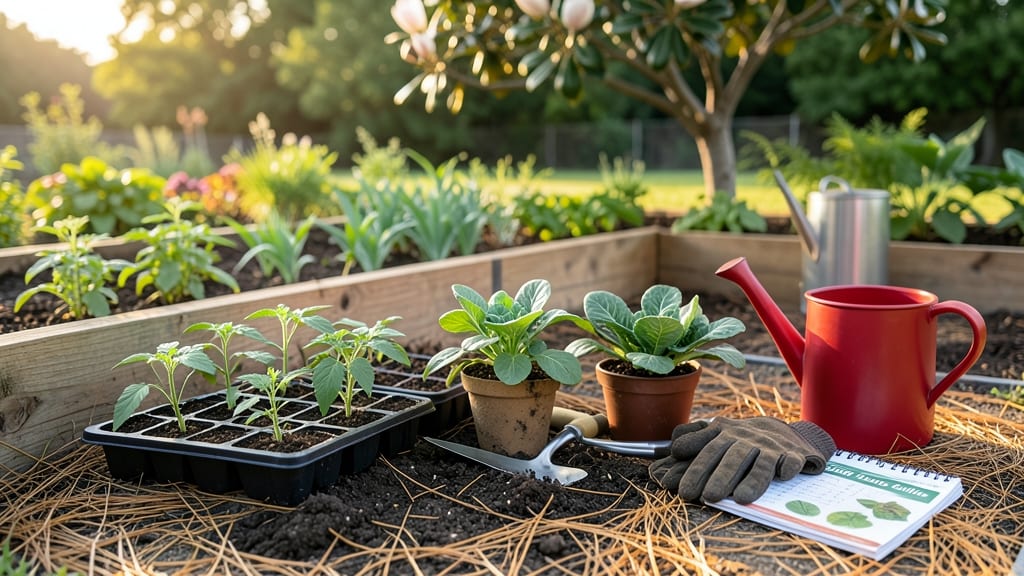
Planting a vegetable garden in Mississippi means timing your crops for 200-240 frost-free days—one wrong move, and you’re staring at bolted lettuce or stunted tomatoes.
Mississippi’s long, hot summers and mild winters create unique planting windows—getting your vegetable garden timing wrong can mean wilting crops or missed harvests. The key is knowing when to start cool-season greens and when to rush in heat-loving tomatoes before the dog days hit.
In USDA zones 8a-9a, your planting schedule shifts dramatically from North Mississippi’s cooler hills to the Gulf Coast’s balmy winters. Cool-season crops like broccoli and spinach thrive in late February, while warm-season favorites like peppers and okra wait until April—after soil warms to 60°F—to avoid stunted growth.
Below, I break down the exact month-by-month schedule for your region, plus succession planting tricks to stretch harvests and avoid common pitfalls like planting too early or too late.
Mississippi planting zones & heat-tolerant vegetable timelines by month
Mississippi spans USDA zones 7a-8b, creating distinct planting windows between North Mississippi (like Jackson) and the Gulf Coast. The last spring frost typically arrives by March 15 in the north and February 28 in the south, while the first fall frost hits around November 15 statewide.
These dates separate your cool-season crops (like lettuce) from heat-loving vegetables (like okra) that thrive in summer's intensity.
For North Mississippi gardeners, focus on early spring plantings (February-March) for cool crops and late summer (August-September) for warm-season vegetables. Meanwhile, Gulf Coast growers can start warm crops 2-3 weeks earlier thanks to milder winters.
The key? Soil temperature—wait until it hits 60°F for tomatoes and peppers to prevent stunted growth.
🌱
My biggest mistake as a Mississippi gardener? Planting cool-season crops like spinach in late summer—they bolted within weeks. Instead, I now use succession planting for fast growers like radishes every 2 weeks from February to October.
For heat-loving crops, I prioritize late spring plantings after the last frost, even if it means waiting until May in North Mississippi.
Don't overlook fall planting—it's when I get my most reliable harvests. Start broccoli and kale in August for fall/winter production, and green beans in September to beat the first frost. The Gulf Coast has a slight edge here, with 2-3 extra weeks of growing season before frost hits.
For container gardening, stick to compact varieties like bush beans or cherry tomatoes. These thrive in 5-gallon pots and can be planted 2 weeks later than in-ground crops since containers warm up faster. Just ensure pots have drainage holes to prevent root rot in Mississippi's humid summers.
Pro tip: Use a soil thermometer to track when your garden bed hits 60°F—this is your cue to plant warm-season crops. In North Mississippi, this often means waiting until mid-April, while Gulf Coast gardeners can start as early as late March.
The 10-day temperature forecast becomes your best friend during these transition periods.
If you're new to Mississippi gardening, begin with easy heat-tolerant crops like okra or sweet potatoes. These forgive planting mistakes better than tomatoes or peppers, which demand precise timing. For cool-season crops,
Succession planting strategies for Mississippi’s short growing seasons
Mississippi’s short growing season means every week counts when it comes to harvesting fresh vegetables. By using succession planting, you can extend harvests and avoid the frustration of crops bolting or rotting before you get to enjoy them.
The key is selecting fast-growing crops like bush beans and radishes that mature in just 30-50 days, then planting new batches every 2-3 weeks.
This strategy works especially well in Mississippi’s fall microclimates, where temperatures drop more gradually than in northern states. Crops like kale, carrots, and garlic can thrive even when nighttime temps dip into the 30s°F, as long as they’re planted at the right time.
The goal is to keep your garden producing well into November or even December in milder southern regions.
🌱 Succession Planting Timeline for Mississippi
- March 15: Start radishes and bush beans every 2 weeks until May 1 for continuous harvests.
- April 15: Plant lettuce and spinach for late spring harvests before summer heat sets in.
- July 1: Begin fall succession plantings with kale and carrots for October-November harvests.
- August 15: Plant garlic and onions for next spring’s harvest (they overwinter well).
- September 1: Sow turnips and collard greens for winter harvests before first frost.
For fast-growing crops, focus on bush beans, radishes, and turnips, which mature in 30-50 days. These are perfect for weekly plantings because they won’t overwhelm your space.
For example, if you plant 5 rows of radishes every 2 weeks starting in March, you’ll have a fresh harvest every 4 weeks without gaps.
In fall, prioritize cool-season crops like kale, carrots, and spinach, which tolerate light frosts and even improve in flavor after a light freeze. Plant these 8-10 weeks before your average first frost (typically mid-November in North Mississippi and late November in the South).
Use row covers or cold frames to extend harvests into December.
Don’t forget about garlic and onions, which are planted in fall for a spring harvest. These overwintering crops thrive in Mississippi’s mild winters and require minimal care.
Plant cloves in late September or October, about 2 inches deep, and they’ll be ready to harvest in late April or May.
To maximize space, consider intercropping fast-growing crops like radishes with slower-maturing plants like carrots. Radishes mature in 3-4 weeks, so you can pull them up once harvested, leaving room for the carrots to grow.
This multi-layered approach keeps your garden productive year-round, even in Mississippi’s short growing season. 🌱