
How To
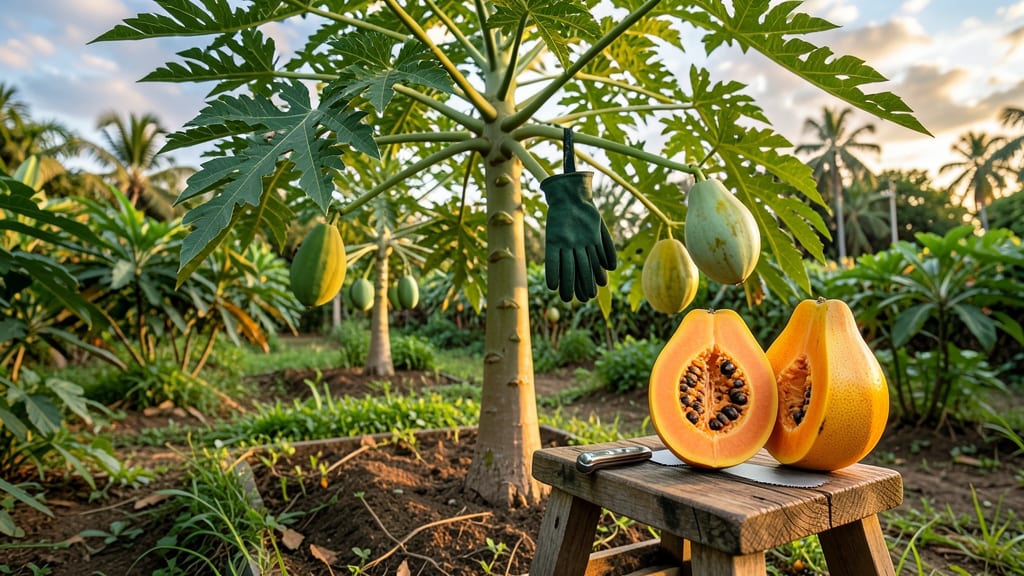
Harvesting papaya at the right time means catching that perfect balance of sweetness and texture—when the fruit yields to gentle pressure and the color shifts from green to vibrant yellow, orange, or red 🍈.
Picking too early means a bland, fibrous mess, while waiting too long risks overripe mush. I’ve seen gardeners miss the window by days, only to end up with fruit that’s either rock-hard or falling apart in their hands.
Below, you’ll learn the three foolproof tests to nail ripeness—no guesswork required. We’ll cover color cues, shape changes, and even how to tell when the stem is ready to release the fruit with a simple twist.
Master these tricks, and you’ll go from second-guessing every harvest to pulling perfectly ripe papayas straight off the tree, every single time.


3 Visual tests to determine when papaya is ready for harvesting
Harvesting papaya at the right moment ensures the best flavor, texture, and nutritional value. Unlike some fruits, papayas don't ripen well after picking, so timing is everything. The key lies in three simple visual cues: color transformation, shape changes, and skin texture.
Mastering these will help you avoid bitter, underripe fruit or overly mushy, overripe papayas.
First, pay attention to the color shift from green to mature hues. Papayas can ripen to orange, yellow, or red, depending on the variety. This change signals the fruit's sugars have fully developed, creating that signature sweetness we all love.
Ignoring this visual cue often leads to harvesting too early, when the fruit is still tart and firm.
Next, examine the shape and size of your papaya. A ripe papaya will feel slightly bulging and heavy for its size, indicating juicy flesh inside. If it's still elongated or pointed, it needs more time on the tree.
This test is especially useful for varieties like 'Solo' or 'SunUp,' which can vary in final shape.
Finally, check the skin texture by gently pressing the papaya. A ripe fruit will yield slightly under pressure, almost like pressing a ripe avocado. If the skin feels hard and resists, it's not ready.
Overripe papayas become too soft and may even feel mushy—this is your last chance to harvest before the fruit spoils.
| Test | Ready Signs | Not Ready Signs |
|---|---|---|
| Color Change | Fully orange/yellow/red with no green patches | Mostly green or partially colored |
| Shape & Size | Bulging and heavy for size | Still elongated or pointed |
| Skin Texture | Yields slightly to gentle pressure | Feels hard or resists pressure |
For orange-fleshed varieties like 'Honey Dew,' the color shift is more dramatic, moving from deep green to a vibrant orange. In contrast, yellow-fleshed types such as 'Kapoho Solo' transition from green to a bright yellow.
Always check the stem end too—it should turn brown or yellow when ripe, another clear signal it's harvest time.
One common mistake is harvesting based on size alone. A papaya can be large but still underripe if it hasn't changed color. Always combine size, color, and texture for accurate results.
For example, a 'SunUp' papaya might reach harvest size in 8-10 months, but it won't be ready until it passes all three visual tests.
If you're growing multiple varieties, keep a harvest journal to track color patterns. Some papayas, like 'Red Maradol,' ripen to a deep red, while others stay yellow.
Documenting these differences helps you spot ripe fruit faster in future harvests. This small step can save you from missing perfectly ripe papayas hidden among unripe ones.
Remember, papayas don't ripen well off the tree, so timing is critical. Once you master these three visual tests, you'll consistently harvest papayas at their peak—sweet, juicy, and packed with flavor.
The next time you spot a papaya changing color, take a closer look at its shape and texture to confirm it's ready for the kitchen.
Pro tip: Harvest in the morning when temperatures are cooler. This reduces bruising and helps preserve the fruit's quality during transport or storage. A gentle twist usually detaches the fruit cleanly—if it doesn't, use pruning shears to avoid damaging the tree.
How to check papaya ripeness without cutting it open
Harvesting a papaya too early means bland, seedy fruit, while waiting too long risks overripeness and spoilage. The good news? You can check ripeness without cutting it open using simple, non-destructive methods. These tricks help you time your harvest perfectly for the sweetest, most flavorful papayas.
Start by examining the stem end. A ripe papaya’s stem will separate easily from the fruit with a gentle twist—this is your first clue. If it resists, the fruit needs more time.
Next, look for a color change from green to yellow, orange, or red, depending on the variety, as this signals sugar development.
⚠️ WARNING: Common Mistakes That Ruin Your Harvest
❌ Harvesting when still green – Leads to bitter, underripe fruit with poor texture. Always wait for full color change.
❌ Ignoring stem separation – A stubborn stem means the fruit isn’t ready. Never force it—this damages the tree and the fruit.
❌ Overlooking scent cues – A ripe papaya emits a sweet, tropical aroma. No smell? It’s not ready yet.
✅ Pro Tip: Combine all three tests—color, stem separation, and scent—for 100% accuracy.
Next, perform the gentle pressure test. Press your thumb lightly against the papaya’s skin. If it yields slightly (like a ripe avocado), it’s ready. A hard fruit needs more time, while an overly soft one is overripe.
This test works best on fully colored fruit—don’t rely on it if the papaya is still green.
Use your nose! A ripe papaya releases a distinct sweet fragrance, almost like a mix of honey and tropical flowers. If you don’t smell anything, the fruit isn’t ready. This scent test is especially useful for hidden or shaded papayas where color changes might be harder to spot.
For container-grown papayas, check the fruit’s shape. Ripe papayas develop a slight bulge at the bottom and may feel heavier for their size. Compare it to unripe fruit, which stays elongated and lightweight. This trick is handy if you’re growing dwarf varieties in pots.
Once you’ve confirmed ripeness, harvest by twisting gently until the fruit detaches cleanly. If it doesn’t come off easily, it’s not ready—wait another 2-3 days and check again.
Store ripe papayas at room temperature to ripen further, or refrigerate to slow the process if you’re not ready to eat them yet.