
How To
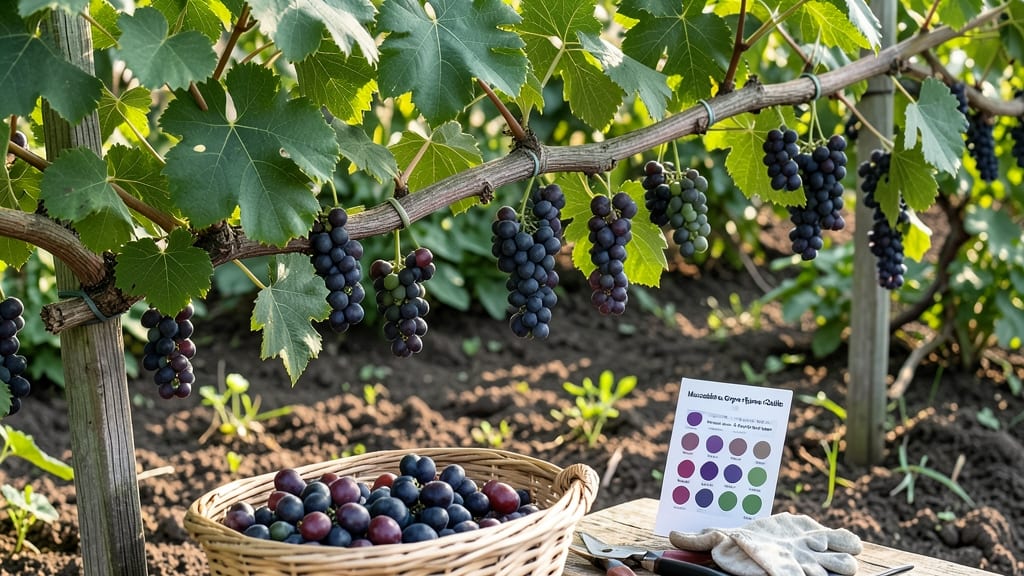
Harvesting muscadine grapes at the right time means the difference between bursting sweetness and tart, mealy clusters that taste more like disappointment than dessert.
Picture this: you’ve spent months tending to your 🍇 muscadine vines, pruning, fertilizing, and watering—only to pick fruit that’s either too sour or already splitting on the vine. That’s why timing matters so much, especially in USDA Zones 7-9 where late-summer heat can rush the ripening process.
Below, I’ll walk you through the three foolproof ways to nail the perfect harvest: color cues, the skin-slip test, and a simple sugar check that takes under 30 seconds. No guesswork, just science-backed tips to ensure every cluster is at its peak.
You’ll also learn how to spot the two biggest mistakes growers make—harvesting too early or waiting too long—and how to fix them before they ruin your crop.


How to determine muscadine grape ripeness using berry color and skin slip tests
Harvesting muscadine grapes at the perfect moment transforms tart clusters into sweet, juicy treats. Unlike table grapes, muscadines rely on visual and tactile cues rather than uniform size. Berry color shifts from green to bronze, purple, or black depending on the variety, while the skin slip test reveals internal ripeness.
These methods ensure you avoid both underripe tartness and overripe mushiness.
Start by observing the berry color changes—this is your first clue. Most muscadine varieties transition from green to deep bronze, purple, or black as they ripen.
For example, Scuppernong grapes darken to a rich bronze, while Carlos turn deep purple. Note the uniformity of color across the cluster; uneven hues may signal uneven ripening or stress.
Next, perform the skin slip test, a foolproof way to check ripeness without damaging the fruit. Gently grasp a grape between your thumb and forefinger, then pull the skin away from the flesh. If the skin slips easily (like a ripe peach), the grape is ready.
If it resists or tears, wait 3-5 more days. This test works best in the morning after dew dries, when grapes are firmest.
The cluster tightness also matters. Ripe muscadine grapes should feel plump but firm, with berries that detach easily from the stem when given a slight twist.
Overripe clusters may have shriveled or cracked berries, while underripe ones stay tightly clustered. Check 2-3 clusters per vine for consistency before harvesting.
Regional climate plays a role too. In warmer USDA Zones 8-9, grapes may ripen earlier (late August), while cooler Zone 7 vines often peak in September or October. Track your local frost dates—harvest at least 2-3 weeks before the first expected frost to avoid damage.
Now, let’s break down the key indicators in an easy-to-follow table for quick reference during your harvest:
Pro tip: Harvest in the early morning when temperatures are cooler. Grapes are firmer and less prone to bruising, and the skin slip test is most accurate. Use clean pruning shears or sharp scissors to cut clusters, leaving 1-2 inches of stem attached to preserve freshness.
For large-scale harvests, pick grapes in batches over 2-3 days to avoid overwhelming your storage space. Sort immediately—discard any cracked, shriveled, or moldy berries to prevent spoilage. Store harvested grapes in a single layer in a cool (40-50°F), humid (85-90%) environment, like a root cellar or refrigerator.
Remember, overripe muscadines lose flavor and texture quickly. If you miss the window, the grapes will shrink, wrinkle, and develop a mealy texture. Trust your senses: color, slip, and taste are your best tools for a perfect harvest every time.
The sugar test method: how to use a refractometer for perfect muscadine ripeness
For the most accurate way to determine muscadine grape ripeness, I rely on a refractometer to measure sugar content—a game-changer for home growers. This tool translates sweetness into Brix levels, helping you avoid tart or overripe fruit.
Unlike guesswork, a refractometer gives you a precise sugar reading that matches professional standards.
Muscadines typically reach peak flavor between 18° and 22° Brix, but this can vary slightly by variety and climate. For example, Scuppernong grapes often hit 20-22° Brix, while Carlos may peak at 18-20° Brix.
Testing a few grapes from different clusters ensures you capture the full range of ripeness on your vine.
To use your refractometer, start by squeezing a grape into the tool’s sample well—no need for seeds or stems. Close the lid and hold it up to a light source (or use the built-in light).
The prism inside refracts light, creating a shadow line that aligns with your Brix reading on the scale. For best results, test grapes in the morning after dew dries, as nighttime moisture can dilute sugar readings.
If your refractometer shows low Brix readings (below 18°), your grapes may need more time on the vine. Check for sun exposure—muscadines need full sun (6+ hours daily) to develop full sweetness.
Alternatively, water stress can reduce sugar content, so ensure your vines receive 1-2 gallons of water weekly during fruit development. If readings are consistently low, consider light pruning to improve airflow and sunlight penetration.
On the flip side, high Brix readings (above 22°) signal overripe grapes that may split or ferment on the vine. Harvest immediately if you see cracked berries or a fermented aroma.
To delay harvest if readings are too high, try shading clusters with lightweight fabric to slow sugar accumulation. Monitor daily and harvest when readings stabilize in the 18-22° Brix range.
Pro tip: Keep a harvest journal to track Brix readings, weather conditions, and variety performance. Over time, you’ll notice patterns—like how hot summers accelerate ripening or how rainy seasons dilute sugar content. This data helps you predict future harvests and adjust your pruning or irrigation strategies accordingly.