
How To
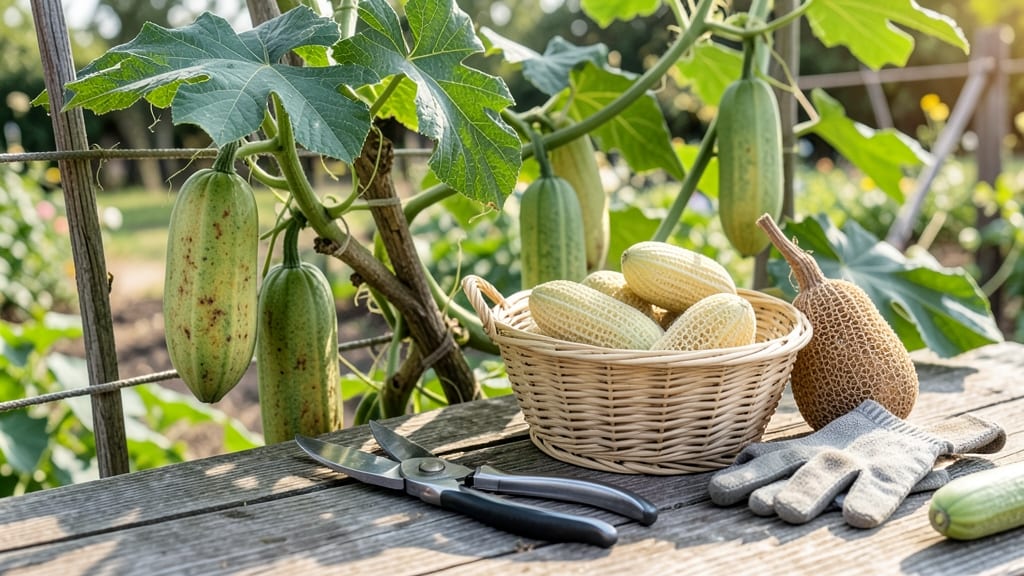
Harvesting loofah at the right time turns a tough gourd into a luxurious sponge—and missing the window means wasted effort.
Picture this: you’ve nurtured your 🌿 loofah vine all summer, watching those gourds swell, only to crack one open too soon and find it still mushy inside. Or worse, you wait too long, and the vine yellows before the gourds are ready.
The difference between a perfect harvest and a flop comes down to three simple tactile tests.
Timing matters because loofahs need 90 to 150 days to mature, and in Zone 6a, that window closes fast as frost looms by mid-October. Too early, and the sponge won’t develop; too late, and the cold snaps ruin everything.
Below, I’ll show you exactly how to check for readiness—no guesswork, just feel, color, and a little patience.
You’ll learn the three key signs to pull when the gourds are firm, fibrous, and ready, plus how to dry them for that signature loofah texture. No more second-guessing—just a foolproof method to turn your vine’s bounty into something useful.


3 Tactile tests to determine loofah harvest readiness
Knowing when to harvest loofah is all about feel and sight, not just days since planting. A loofah harvested too early becomes a mushy mess, while waiting too long turns it into a hard, unusable gourd.
The key? Three simple tactile tests that let you feel the difference between perfect sponge texture and disappointment.
I’ve spent years growing loofahs, and these tests have saved me from ruined harvests time and again. The first test focuses on skin color changes, the second checks stem separation, and the third looks at seed development. Master these, and you’ll never second-guess harvest time again.
-
1
Test 1: Skin Color Shift
Look for dull, matte yellow instead of green. Press gently—ripe loofah skin feels thick and papery. -
2
Test 2: Stem Separation
Twist the stem gently. If it snaps cleanly (not tears), the loofah is ready. No snap? Wait 3-5 days. -
3
Test 3: Seed Development
Shake the loofah—seeds should rattle loudly. Cut open a test fruit; seeds should be hard and brown, not soft.
Start with the skin color test first—it’s the easiest visual cue. A green loofah is underripe, while a fully yellowed one is perfect. I always check this in the morning when the light is brightest, making color differences easier to spot.
The stem separation test is my favorite because it’s foolproof. A loofah ready for harvest will detach cleanly from the vine with just a twist. If the stem resists or tears, give it another week.
Pro tip: Use a sharp pruner to avoid damaging the vine if the stem won’t snap naturally.
Lastly, the seed development test ensures you’re not harvesting too early. A mature loofah will have fully developed seeds that rattle when shaken. If you’re unsure, cut one open—brown, hard seeds mean it’s time to harvest, while white or soft seeds signal more waiting.
Timing matters because loofahs continue ripening off the vine. Harvest too early, and you’ll end up with a squishy, unusable gourd. Wait too long, and the fibers toughen, making them impossible to soften into a sponge.
Aim for 90-120 days after planting, but always trust the tactile tests over the calendar.
Once you’ve confirmed readiness, harvest on a dry, sunny day to prevent mold. Use pruning shears to cut the loofah from the vine, leaving a 1-inch stem attached. This helps with drying and prevents rot during the curing process.
After harvesting, let the loofah cure in sunlight for 2-3 weeks. Turn it daily to ensure even drying. The goal is to soften the fibers naturally—no rushing! Once fully dried, the skin sloughs off, leaving behind your luxurious loofah sponge.
Remember, every loofah plant is unique. Some varieties mature faster, while others need extra time. Pay attention to your local climate—cooler temperatures slow ripening, so adjust your timeline accordingly. With these tests, you’ll never guess again—just feel, twist, and shake your way to the perfect harvest.
Loofah harvest timeline: month-by-month growth stages
Understanding the loofah growth stages helps you time the harvest for the perfect sponge texture. From seedling to mature vine, each month brings critical changes influenced by temperature and sunlight exposure.
In warmer climates (USDA Zone 8+), the cycle shifts earlier, while cooler zones may extend it into late fall.
Loofah plants need 90-150 days to mature, depending on variety and growing conditions. Start tracking progress from the moment female flowers appear—these signal the beginning of fruit development. The key is balancing harvest timing with environmental cues like daylight hours and soil warmth.
🌱 Month 1-2 (April-May): Seedlings emerge and vines climb trellises. Focus on support structures and consistent watering to encourage rapid growth. By late May, male and female flowers will appear—identify female flowers by their small fruit base at the stem junction.
In August, loofahs enter the critical maturation phase. The skin transitions from green to pale yellow or tan, and the seeds rattle when shaken. This is when I perform my first harvest readiness test: gently twist the gourd at the stem.
If it separates with minimal force, it’s nearly ready.
By September, the vines yellow and die back, signaling peak harvest time. Aim to pick loofahs before the first frost (October 15 in most zones). If temperatures drop below 50°F, the gourds won’t develop properly. In Zone 10+, extend harvesting into November.
After harvest, loofahs need 2-4 weeks of drying in a well-ventilated area to develop their signature sponge texture. Hang them upside-down in full sun or under a fan to speed up the process. Avoid premature drying indoors—high humidity can cause mold.
🌿 Pro Tip: Mark your calendar 120 days after planting as your harvest deadline. Adjust for your climate: cooler areas may need 150 days, while hotter regions can harvest in 90 days. Always prioritize skin hardness over calendar dates for the best results.