
Picking
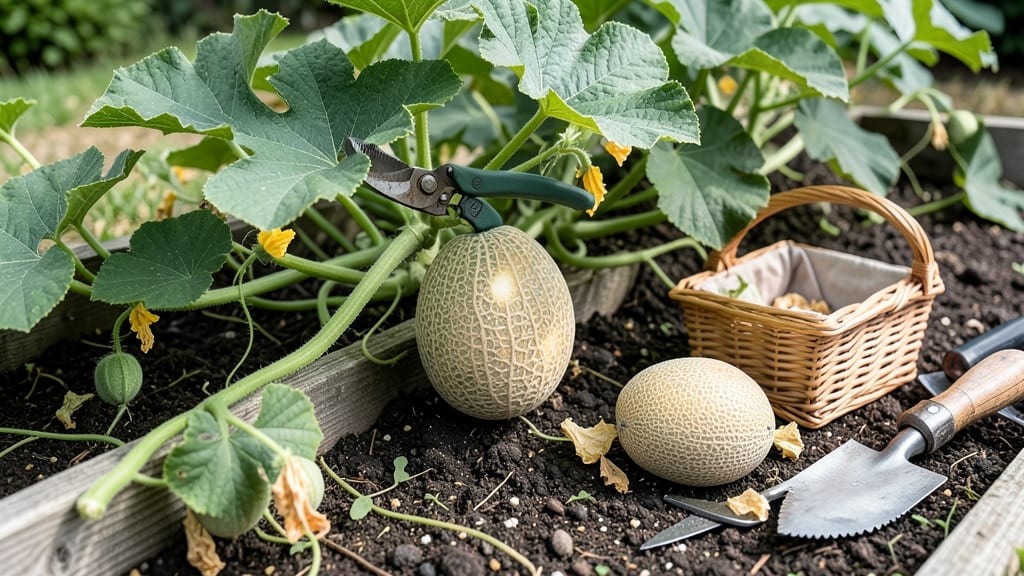
Harvesting when to harvest cantaloupe from the garden at the right time means capturing that perfect balance of sweetness and texture—before the fruit turns mealy or falls victim to pests.
Picture this: you’ve nurtured your 🍈 vines all season, and now the moment of truth arrives. One wrong move, and you’re left with bland, seedy disappointment instead of juicy perfection. The key? Knowing the exact signs—from color shifts to stem separation—that scream "pick me now!"
Most gardeners miss the window because they rely on days-to-maturity estimates or guesswork. But cantaloupes don’t ripen evenly, and environmental factors like heat waves or inconsistent watering can throw off timing.
Below, I’ll walk you through the three foolproof cues to harvest at peak ripeness, plus how to test for sweetness without cutting into the fruit.
Ready to avoid the "too early" or "too late" trap? Let’s dive into the visual, tactile, and scent-based clues that guarantee your cantaloupe harvest is a flavor-packed success.


3 Visual and physical signs your cantaloupe is ripe for harvesting
Harvesting cantaloupe at the perfect moment transforms your garden into a treasure trove of sweet, juicy rewards. The key lies in recognizing three unmistakable signs that signal peak ripeness—color shifts, stem separation, and texture changes.
Ignore these cues, and you risk picking fruit that’s either too hard or overly mushy, both of which ruin the flavor experience.
Many gardeners make the mistake of harvesting based on days after flowering alone, but cantaloupes mature at different rates depending on variety, temperature, and soil conditions. That’s why relying on visual and physical clues is your best strategy for consistent success.
Let’s break down what to look for when your cantaloupes are ready to be picked.
The rind color is your first clue—ripe cantaloupes develop a cream, tan, or yellowish hue on the side facing the sun, while the blossom end (opposite the stem) often turns a golden yellow.
Some varieties, like Hale’s Best, may show darker net patterns, which become more defined as they ripen. Pro tip: Check the blossom end first—it’s the most reliable indicator of ripeness.
Next, test the stem separation by gently twisting the fruit near where it connects to the vine. A ripe cantaloupe will slip free with minimal effort, almost as if it’s detaching on its own.
This happens because the abscission layer (a natural separation zone) develops as the fruit matures. If the stem resists or snaps cleanly, the cantaloupe isn’t ready yet.
Don’t overlook the texture test, which is often the most overlooked but most accurate method. Press your thumb near the stem end—ripe cantaloupes will feel slightly soft or spongy, almost like pressing a ripe avocado.
If the fruit feels rock-hard, it’s underripe, and if it’s mushy or dented, it’s overripe. Aim for that just-right firmness that gives way gently.
Finally, trust your nose. A ripe cantaloupe emits a sweet, musky, or honey-like aroma near the blossom end—this is your final confirmation of ripeness. If you’re unsure, take a deep sniff: the scent should be pleasantly strong, not overpowering.
Unripe fruit has little to no smell, while overripe cantaloupes may smell fermented or sour.
Timing your harvest correctly also depends on weather conditions. Cantaloupes ripen faster in hot, dry weather (like 85°F+ temperatures) and may take longer in cool or cloudy periods.
If your cantaloupes aren’t ripening on the vine, consider hand-pollinating flowers with a small brush or harvesting slightly underripe fruit to finish indoors at room temperature (70-75°F).
Once you’ve confirmed all three signs—color change, stem slip, and sweet aroma—use a sharp knife or pruners to cut the stem, leaving a 1-inch stem attachment to preserve freshness.
Handle the fruit gently to avoid bruising, and store it at room temperature (not in the fridge) until ready to enjoy.
Mastering these three key signs ensures you’ll never miss the peak sweetness window again. The next time you’re eyeing your cantaloupe patch, take a moment to inspect, sniff, and test—your taste buds will thank you for the perfectly
How to test cantaloupe ripeness beyond the basics: the nose knows
Even when your cantaloupe looks perfect—cream-colored rind and all—it might still need 2-3 more days on the vine. That’s why I rely on two secret tests most gardeners overlook: the blossom-end sniff test and the vine behavior check. These final checks separate peak sweetness from disappointment.
Start by examining the blossom end (the flat, stem-free side where the flower once bloomed). A ripe cantaloupe releases a powerful, sweet, musky aroma—like a mix of honey and fresh-cut grass.
If it smells mild or slightly fermented, wait another day. This scent is your most reliable clue because sugar development happens fastest near the blossom end.
If the blossom end smells sharp or overly fermented, your cantaloupe is past its prime. The fruit will be seedy, watery, and bland—a common mistake when relying only on color. Harvest immediately if the vine itself starts yellowing or wilting near the fruit, as this signals the plant is redirecting energy away from the melon.
Next, check the vine’s behavior. Gently wiggle the cantaloupe while holding the stem. If it slips free with light pressure (like unscrewing a jar lid), it’s ready. But if the stem resists or snaps off cleanly, the fruit is underripe.
I’ve learned this the hard way—overharvesting leads to bitter, fibrous flesh that ruins even the best recipes.
Pay attention to the vine’s overall health. Healthy cantaloupe vines produce new leaves and tendrils near the fruit. If the vine stops growing or the leaves yellow and drop, the plant is signaling it’s done feeding the melon.
This often happens 1-2 days before the fruit reaches peak ripeness, so check daily during your final harvest window.
For container-grown cantaloupes, these tests are even more critical because limited root space can delay ripening. I’ve found that sniffing first and then testing the stem helps me avoid harvesting too early—a common issue in pots.
If the blossom end smells sweet but the stem won’t budge, leave it one more day; container melons often need that extra time.
Pro tip: Harvest in the morning when temperatures are cooler. This preserves the fruit’s natural sugars and makes the stem-slip test more accurate. I’ve noticed that afternoon heat can make stems feel softer than they are, leading to premature picking.
Always double-check with the sniff test before cutting the fruit from the vine.