
How To
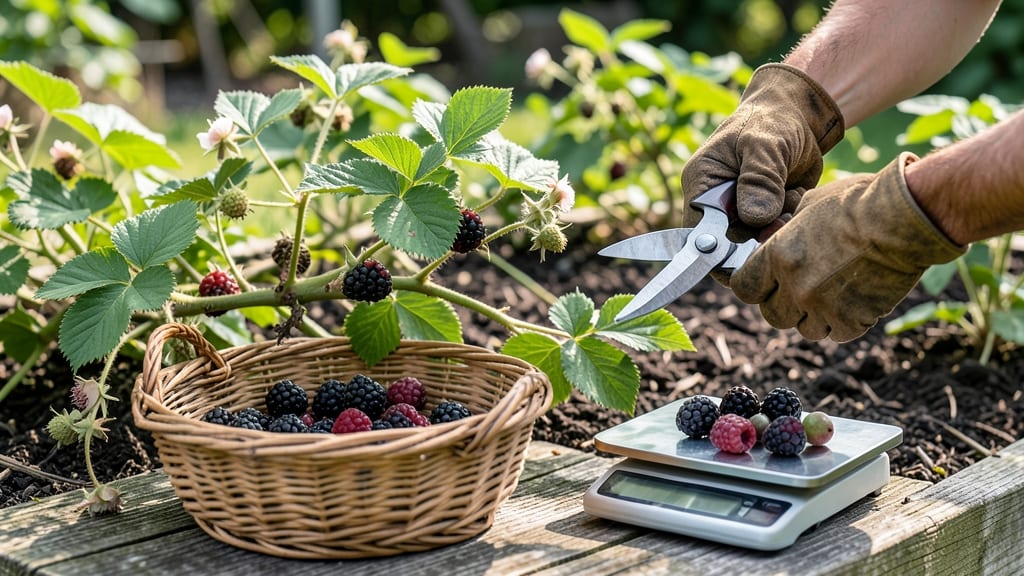
Harvesting blackberries at the right time ensures sweet, juicy fruit 🫐—and missing the window means tart, mealy disappointment.
Picking too early or too late can turn your labor into frustration, but there’s a simple trick: the berries should be fully colored, slightly soft when gently squeezed, and ready to twist free from the stem.
Timing also depends on your climate zone—blackberries in Zone 6a typically ripen between July and September, but early varieties may be ready as soon as late June.
Below, I’ll walk you through the three tactile tests that guarantee perfect ripeness, plus the best times of day to harvest for maximum flavor.


3 Tactile tests to determine perfect blackberry ripeness
There’s nothing worse than biting into a blackberry that’s still tart and underripe—or worse, finding your prized harvest has turned mushy overnight. The secret to perfectly ripe blackberries lies in your hands, not just your eyes.
These three tactile tests will help you pick berries at their peak, ensuring sweetness and juiciness every time. Trust me, your taste buds will thank you!
The key to harvesting blackberries at the right moment is understanding their physical cues. Unlike some fruits that rely solely on color, blackberries need a combination of firmness, color consistency, and detachment ease to signal they’re ready.
Ignore these signs, and you risk either underripe disappointment or overripe mush. Let’s break down the foolproof method I’ve used for years in my garden.
- 🫐 Gentle Squeeze Test: Press a berry lightly—it should yield slightly but not squish like overripe jelly.
- 🟣 Uniform Color: Look for even, deep color (black, purple, or red) with no green patches.
- ✂️ Easy Detachment: A ripe berry should twist off the stem with minimal force—no tugging required!
First up is the gentle squeeze test, my go-to method for determining ripeness. Grab a blackberry and give it a light squeeze between your thumb and forefinger. If it feels firm but yields slightly, like a ripe peach, it’s ready to pick.
Be careful—if it’s rock-hard, it’s underripe, and if it’s mushy, it’s past its prime. This test is especially critical for thornless varieties, which can be trickier to judge visually.
Next, check for color uniformity. A perfectly ripe blackberry should be deep and even in color, whether that’s glossy black, deep purple, or rich red, depending on the variety. Look for no green patches or streaks—these are telltale signs the berry isn’t fully mature.
I always compare a few berries on the same cane to ensure consistency. If one berry is darker or softer than its neighbors, it’s likely the ripest and should be picked first.
The final test is the detachment ease trick, which I’ve found to be the most reliable. A ripe blackberry should twist off the stem with a slight tug, almost like it’s begging to be picked. If you’re pulling hard and the berry resists, it’s not ready yet.
This test is especially useful for floral cane varieties, where berries can ripen unevenly. Pro tip: Hold the berry between your fingers and give it a quarter-turn twist—if it comes off easily, it’s harvest-ready!
But what if you’ve missed the window? Overripe blackberries can be a gardener’s nightmare, turning soggy and seedy overnight. To avoid this, I recommend harvesting every other day during peak season, especially if birds are a problem in your garden.
If you do find a few overripe berries, don’t toss them—use them immediately in jams, smoothies, or baked goods to salvage their flavor. Trust me, even slightly past-prime blackberries can still shine in the right recipe!
One common mistake I see is relying too much on color alone. Some varieties, like the Cheyenne blackberry, might look ripe but still taste tart if they haven’t passed the squeeze test. That’s why I always use all three tests together.
Another pro tip: Harvest in the morning when temperatures are cooler. Berries are firmer and less likely to bruise, making them easier to transport and store. Plus, the flavor is often more concentrated after a cool night.
For those growing multiple blackberry varieties, keep a small notebook nearby to track ripening patterns. I’ve noticed that early-season varieties like ‘Arapaho’ ripen faster and may need harvesting every 48 hours, while late-season types like ‘Navaho’ can stretch out over weeks.
Pay attention to your plants’ unique ripening rhythms, and you’ll always know exactly when to reach for your clippers. Happy harvesting!
Remember, the best blackberries are those picked at the peak of ripeness, not a moment before or after. With these tactile tests in your gardening toolkit, you’ll never second-guess whether a berry is ready again.
And when you bite into that perfectly sweet, juicy blackberry, you’ll know you’ve mastered the art of harvesting like a pro. Now go enjoy the fruits of your labor—literally! 🫐
Best time of day and season for blackberry harvesting
Timing your blackberry harvest correctly ensures you enjoy the sweetest, juiciest berries possible. The optimal time of day is early morning, when temperatures are cooler and berries are fully hydrated after overnight dew. This reduces risk of crushing delicate fruit and maximizes flavor retention.
Seasonal timing varies dramatically by climate zone and variety type. Early-season varieties like 'Chester' ripen in late June to July, while late-season types such as 'Natchez' extend harvests into September or October. In warmer southern zones, harvesting may begin as early as May.
Here's a quick reference for ideal harvesting windows across different conditions:
| Factor | Northern Zones (5-7) | Southern Zones (8-10) | Early Varieties | Late Varieties |
|---|---|---|---|---|
| Season | July-August | May-June | Late June | September |
| Time of Day | Early morning | Early morning | Early morning | Early morning |
| Sun Exposure | Full sun | Full sun | Full sun | Full sun |
| Ripeness Cues | Firm but yielding | Firm but yielding | Firm but yielding | Firm but yielding |
| Temperature | 55-75°F | 65-85°F | 55-70°F | 60-80°F |
For early varieties, watch for the first fully colored berries in late June. These typically ripen 2-3 weeks ahead of main-season varieties. Late varieties often produce a second flush of fruit in late summer, extending your harvest window significantly.
In cooler climates, blackberries may need additional sunlight exposure to ripen properly. If your plants receive partial shade, berries might stay tart or fail to fully color. Consider pruning nearby trees or relocating plants to a sunnier spot if needed.
Always harvest on cool, dry days to prevent bruising and extend storage life. Avoid picking after rain when berries are slippery and more prone to damage. With the right timing, you'll enjoy peak flavor and maximum yield from your blackberry bushes.