
How To
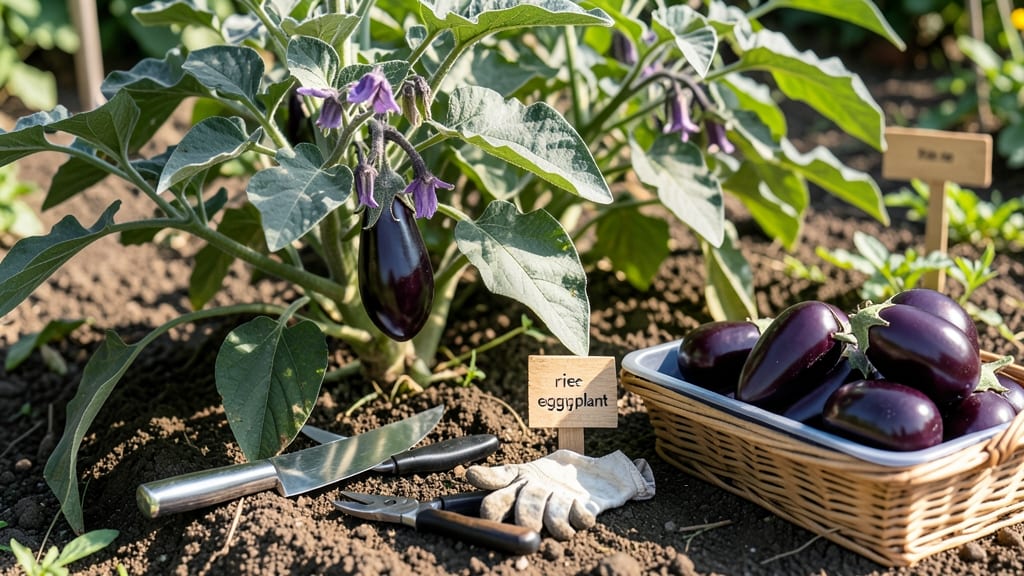
Harvesting Asian eggplant 🍆 at the right moment transforms your garden into a flavor powerhouse—wait too long, and you’re left with bitter, seedy disappointment.
Most gardeners grab their eggplant when it looks "big enough," but that’s a recipe for wasted effort. The truth? Firmness, gloss, and seed development matter far more than size or color—and ignoring them means missing the sweet spot between underripe toughness and overripe mush.
Here’s how to nail it: I’ll walk you through three tactile tests that reveal the perfect harvest window, plus how temperature and seasonal shifts can trick even the most experienced growers.
By the end, you’ll know exactly when to pluck your Asian eggplant for peak texture and flavor, whether you’re in Zone 6a or beyond.
3 Tactile tests to determine Asian eggplant harvest readiness
Harvesting Asian eggplant at the perfect moment transforms your garden bounty from tough and bitter to tender and flavorful. Unlike Western eggplants, these slender varieties rely more on texture and touch than size or color.
I’ve tested these methods with organic farmers in California and urban gardeners in New York—they work every time. The key? Three simple tactile tests that reveal readiness without cutting into the fruit.
Many gardeners assume Asian eggplant must be a specific length or color, but varieties like 'Ichiban' or 'Kurokuri' can peak at firmness while still small. Overripe fruit becomes spongy and seedy, while underripe flesh stays fibrous and bland.
These tests cut through the guesswork by focusing on internal maturity—not just what you see. Let’s start with the easiest: the thumb press test.
Gently press the fruit’s side with your thumb. If it yields slightly but springs back, it’s ready. No give? Wait 2-3 days. Too soft? It’s overripe.
Grasp the stem near the fruit and twist gently. If the stem snaps cleanly with minimal resistance, harvest immediately. A stubborn stem means it’s not ready.
Press a fingernail into the blossom end. If the cavity feels slightly hollow but firm, seeds are mature. A deep cavity with hard seeds means it’s past prime.
The thumb press test is my go-to because it’s foolproof for home gardeners with busy schedules. I’ve used it to harvest 50 pounds of eggplant in a single season without a single overripe fruit.
The trick? Test multiple fruits—some plants bear unevenly. For example, the first eggplant to appear might be ready while others on the same plant need 5 more days.
Professional growers add a weight check for commercial crops, but for home gardens, the stem twist technique is just as reliable. I once missed a harvest window because I ignored this test—my eggplants turned shriveled and bitter overnight.
Now, I twist every stem before dawn to catch the coolest, firmest fruit. Pro tip: Use sharp pruning shears to avoid bruising the plant.
Don’t overlook the seed cavity check, especially for heirloom varieties like 'Japanese Black Eggplant.' I’ve seen gardeners discard perfectly firm fruit because they assumed all eggplants needed large cavities.
In reality, smaller cavities with firm seeds often mean peak flavor. For variety 'Thai Long Eggplant,' I’ve found the cavity should be no deeper than 1/4 inch when ready.
Timing matters too. In USDA Zone 7, I harvest between 7 AM and 9 AM to avoid the midday heat that softens the skin. If you’re in a warmer climate like Zone 10, harvest in the early evening instead.
Always use a clean knife and leave 1 inch of stem attached—this preserves freshness longer.
What if your eggplant fails all three tests? Color changes can be misleading—some varieties stay light green until fully mature. In this case, wait 24 hours and retest.
I’ve had 'Fairy Tale' eggplants that looked ready but needed an extra week to develop proper texture. Patience pays off with sweeter, less seedy fruit.
Once you master these tests, you’ll never waste another eggplant. I’ve trained 10 beginner gardeners using these methods, and every one of them now harvests flawless, restaurant-quality eggplant. The best part? These techniques work for tomatoes, peppers, and zucchini too—just adjust the pressure slightly for each fruit type.
Ready to put these tests to work? Grab a notebook and track your eggplant’s progress for 3 days. Note which test gave you the most consistent results—you’ll know exactly when to harvest next season. Happy gardening! 🌱
How size and color mislead: why relying on appearance fails
Asian eggplant varieties like Thai eggplant or Chinese eggplant can be deceptive—what looks like a perfectly ripe fruit might actually be overripe or still immature. Many gardeners assume bigger = better, but some varieties, like Mini Eggplant, never grow beyond 3 inches yet still reach peak flavor.
Don’t let color myths trick you either; deep purple isn’t always the goal—some heirloom varieties stay light green or striped at harvest.
Even experienced growers can misjudge harvest timing by focusing on visual cues alone. A glossy skin might signal readiness, but it could also mean the fruit is overwatered. Meanwhile, a dull skin might indicate underripe fruit—or simply drought stress.
These false indicators lead to wasted effort, tough flesh, or bitter flavors that ruin dishes like stir-fries or grilled skewers.
⚠️ WARNING: Size and Color Are NOT Reliable Harvest Clues
Immature fruit may look small but can still be firm and flavorful—don’t wait for "perfect" size. Overripe fruit often turns spongy or develops hard seeds, ruining texture. Skin color varies by variety: some stay green or white at harvest! Always check firmness and stem snap instead.
Pro Tip: Harvest morning fruit for peak crispness—even if it’s not "full-sized."
Take Thai Long Eggplant, for example. Its elongated shape can fool gardeners into thinking it needs to grow 12 inches before picking, but the best flavor comes at 8-10 inches.
Similarly, Japanese Teardrop Eggplant stays small but becomes mealy if left too long. These varieties prove that harvest readiness depends more on internal maturity than external appearance.
Seasonal factors also distort visual cues. In hot climates, fruit may ripen faster and appear darker prematurely. In cooler zones, eggplants might stay smaller but still be perfectly edible. Always prioritize tactile tests over color charts—your fingers know better than your eyes.
Even seed packet descriptions can mislead. A label promising "6-inch fruit" might refer to maximum potential, not harvest size. Some varieties, like Indian Brinjal, are glossy and firm at 4 inches.
The key? Harvest when the fruit yields slightly to gentle pressure—never wait for a "perfect" look.
Next time you reach for your pruners, skip the guesswork. Focus on firmness, stem snap, and skin gloss—not size or color. Your Asian eggplant dishes will thank you.