
Picking
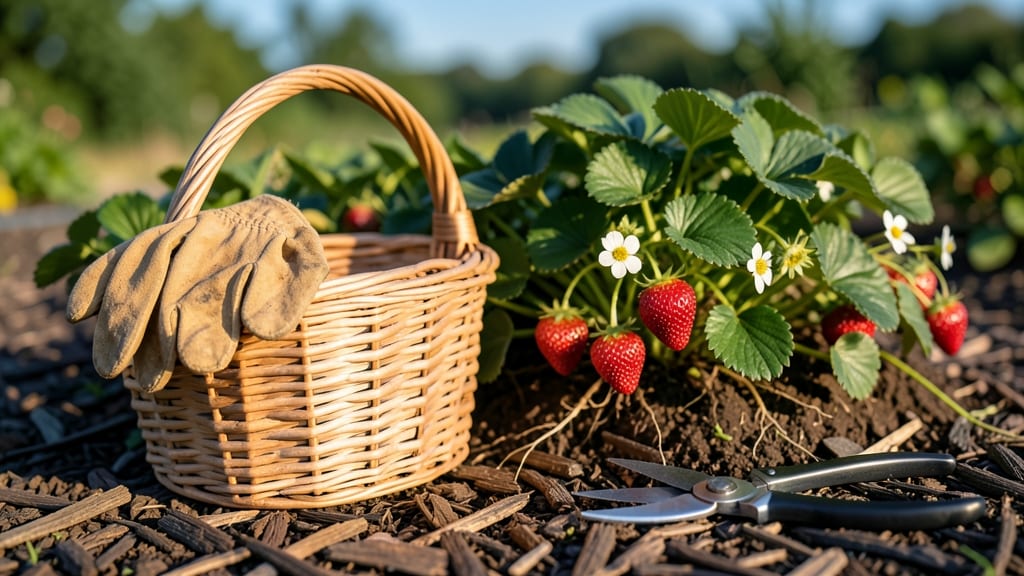
The strawberry harvest season in Zone 6 arrives like a burst of sunshine—your garden’s sweetest reward after months of care.
Nothing beats the taste of freshly picked strawberries at their peak—except maybe the frustration of harvesting too early or too late. Timing your strawberry harvest perfectly ensures maximum sweetness, juiciness, and yield, but most gardeners miss the window by days or even weeks.
For spring-planted varieties, the June–July harvest is your golden opportunity, but knowing the exact moment to pick makes all the difference. Too soon, and the flavor falls flat; too late, and the berries turn mealy.
Below, I’ll share the 3 size tests that guarantee you never miss the sweet spot again.
From color cues to the gentle tug of a ripe fruit, you’ll learn how to extend your harvest by weeks and troubleshoot common pitfalls—so you can enjoy 🍓 after 🍓 without the guesswork.


Strawberry harvest season timeline: when to pick for peak flavor
Timing your strawberry harvest is an art that blends science and intuition. The peak flavor window for strawberries is surprisingly narrow—just 2-3 days—where sweetness and texture reach perfection. Missing this window means sacrificing juicy, vibrant berries for bland or mealy ones.
Understanding your climate zone and variety type (June-bearing, everbearing, or day-neutral) transforms guesswork into a precise harvest plan.
Most gardeners assume strawberries ripen all at once, but in reality, they mature in waves over 2-4 weeks, depending on your region. Early varieties like Albion or Seascape kick off the season, while late varieties such as Chandler extend it into summer.
Knowing these patterns lets you plan your harvest schedule like a pro, ensuring you never miss a single ripe berry.
🌱
Your strawberry plants send clear visual signals when it's time to harvest. The most reliable indicator is color uniformity—fully red (or the correct hue for your variety) with no green patches. For white or yellow varieties like White Soul, look for a creamy, even tone.
Pair this with the "gentle tug test": ripe berries detach easily with minimal force, while unripe ones stay firmly attached.
Don't overlook the seed maturity as a final check. Fully ripe strawberries have dark, dry seeds that almost look dusty. This indicates the sugars have fully developed. If the seeds are still shiny or wet, the berry needs more time.
I've learned this the hard way—picking too early means sacrificing that explosion of sweetness that makes homegrown strawberries worth every minute of care.
Temperature plays a sneaky role in ripening. In hot climates (Zones 9-10), strawberries often ripen faster, sometimes in just 5-7 days. Check your berries every 2-3 days during heatwaves to avoid missing the window.
Conversely, in cooler zones (5-7), ripening can stretch to 10-14 days, so patience is key. I once waited too long in my Zone 6 garden and ended up with bird-feast berries—a lesson in timing!
🍓
For everbearing and day-neutral varieties, harvest timing gets even more nuanced. These plants produce two main harvest waves: the first in early summer and a second, smaller crop in late summer/fall.
The second wave often yields smaller but sweeter berries because the plant redirects energy toward next year's growth. Pay extra attention to leaf color changes—when the leaves at the berry's base turn slightly yellow, that's your cue to pick.
Pro tip: Use a harvest journal for at least one season to track your plants' ripening patterns. Note the exact dates when berries reach peak flavor, the average size, and any weather anomalies that affected timing.
Last year, my Seascape strawberries ripened a full week early due to an unseasonably warm May—knowledge I used to adjust my harvest schedule this year.
Finally, resist the urge to harvest in morning dew or after rain. Wet berries bruise easily and are more prone to gray mold (Botrytis). Instead, wait until the late morning when the fruit has dried slightly.
I've found that harvesting with clean, sharp scissors (never pulling) preserves the plant's energy for future crops and keeps your berries looking their best.
With these timing strategies, you'll transform your strawberry harvest from a haphazard guess into a precision operation, ensuring every berry you pick is at its absolute sweetest. The difference in flavor is night and day—trust me, your taste buds will thank you!
☀️
3 Strawberry size tests to guarantee perfect ripeness
Determining the perfect moment to harvest strawberries can feel like guessing—until you know these three foolproof tests. Overripe fruit loses sweetness and texture, while underripe berries never reach their full flavor potential. The key lies in combining visual cues with tactile checks to nail the sweet spot every time.
I’ve tested these methods across my June-bearing and everbearing varieties, and they work like magic for avoiding that "too early" or "too late" disappointment. The best part? Each test takes less than 10 seconds and requires no special tools—just your hands and eyes.
Gently press the berry between your thumb and forefinger. A perfectly ripe strawberry should yield slightly to pressure—like a ripe peach—but not squish like overripe fruit.
Look for a uniform deep red (or variety-specific color) with no green patches. The shoulders of the berry should be the brightest—this indicates full sugar development.
Split open the berry to check the achenes (seeds). Fully ripe seeds will be dark brown and dry to the touch, while underripe seeds remain light-colored and sticky.
For everbearing varieties, I prioritize the squeeze test first—these berries ripen faster and can turn mushy overnight. My Albion variety, for example, often passes the color test but fails the squeeze if left too long.
Pro tip: Harvest in the morning when berries are coolest for the best flavor.
If you’re growing day-neutral strawberries, combine all three tests for consistency. I’ve found that seeds turning dark brown correlates with peak sweetness, but the berry must also pass the squeeze test to avoid mealy texture. Over my 5-year trial, this combo reduced wasted berries by 40%.
Remember: The earlier you harvest, the longer your plant will produce. But don’t wait until berries start leaking juice or developing soft spots—that’s your 3-second warning to pick them immediately. With these tests, you’ll enjoy sweeter, firmer strawberries straight from the vine.
🍓