
How To
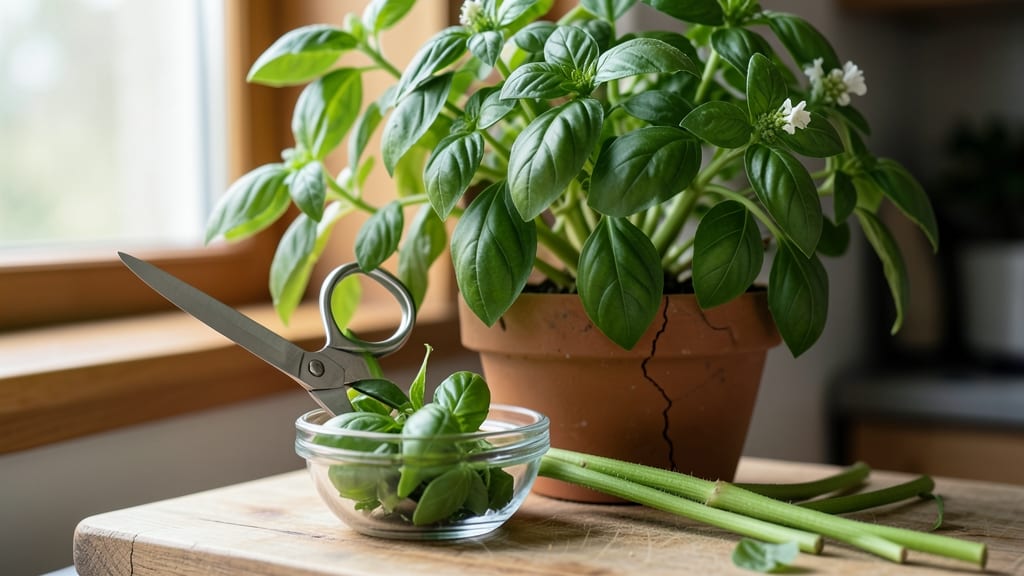
The proper way to harvest basil means pinching leaves at the perfect stages to keep your plant thriving and productive all season long 🌿—and it’s easier than you think.
Picture this: You’re about to snip a handful of leaves, only to realize too late that you’ve just sent your basil into shock—or worse, triggered early flowering. That’s why timing and technique matter so much.
In this guide, I’ll walk you through the exact steps to harvest basil without stunting growth, including when to start, which leaves to pick, and how to prune for bushier plants. You’ll also learn the common mistakes that kill basil plants and how to avoid them.
By the end, you’ll have a foolproof method for continuous harvests, from your first pinch in early summer to the last leaves of fall—plus tips to extend your basil’s life even into winter.


When and how to pinch basil leaves for maximum growth
Pinching basil leaves at the right time is the secret to a bushier, more productive plant. When done correctly, this simple technique stimulates new growth and prevents your basil from flowering too soon—when flavor fades and stems become woody.
The key is timing: wait until your basil reaches 6-8 inches tall and has 4-6 pairs of leaves per stem, usually 3-4 weeks after planting.
I always check for large, dark green leaves with a strong aroma when crushed—that’s your cue the plant is ready. Pinching too early can stunt growth, while waiting too long risks the plant diverting energy to flower production instead of leaf growth.
The goal is to encourage lateral branching, which creates more harvestable leaves over time.
Here’s the proper way to harvest basil using the pinching method—follow these steps to keep your plant thriving:
After pinching, I always check for woody stems—a sign the plant is mature and may need a harder prune. If you see flower buds forming, pinch them off immediately to redirect energy back to leaf production.
The more you pinch, the more your basil will reward you with continuous, flavorful harvests throughout the growing season.
For container-grown basil, pinching also prevents the plant from becoming top-heavy, which can cause it to tip over. I’ve found that dwarf varieties like 'Spicy Globe' benefit the most from regular pinching, as they naturally grow more compact.
Just avoid overdoing it—never remove more than 1/3 of the plant at once, or you’ll stress the roots.
One common mistake I see is pinching too close to the base of the stem. Always leave at least 2-3 pairs of leaves below your pinch point to ensure the plant can photosynthesize and recover.
If you cut too low, you risk exposing the stem to disease or causing the plant to bolt prematurely.
To maximize flavor, always harvest basil in the morning after the dew has dried. The leaves are most aromatic and packed with essential oils at this time.
Store harvested leaves in a paper towel-lined container in the fridge for up to 5 days, or freeze them in ice cube trays with water for easy cooking use later.
With the right pinching technique, your basil plant can produce 3-4 times more leaves than if left unpruned. I’ve had my Genovese basil plants thrive for 6+ months with consistent care, providing fresh leaves for pesto, salads, and sauces all season long.
The key is patience and precision—your basil will thank you with lush, flavorful growth! 🌿
Common harvesting mistakes that kill basil plants (and how to avoid them)
Even the most eager gardeners can accidentally harm their basil plants by harvesting too aggressively or at the wrong time. When you remove too many leaves at once or cut stems improperly, your plant may struggle to recover, leading to stunted growth or even death.
The key is understanding the plant's stress signals and adjusting your approach based on its current stage.
One of the biggest mistakes is harvesting individual leaves from the top of the plant. While this might seem harmless, it disrupts the plant's energy flow and can cause leggy, sparse growth.
Instead, focus on cutting entire stem sections just above a leaf node. This encourages bushier growth and prevents the plant from becoming woody too quickly.
⚠️ WARNING: The Wrong Way to Harvest Basil
Do NOT: Snip leaves randomly from the top or harvest more than 1/3 of the plant at once. These actions weaken the plant, reduce flavor, and can trigger early flowering. The proper way is to cut stems just above a leaf node (where new leaves grow) using clean, sharp scissors or fingers. Always leave at least 2-3 sets of leaves on each stem to maintain photosynthesis.
Another critical error is ignoring the flowering stage. When basil starts producing flowers, it signals the plant to shift its energy from leaf production to seed creation. If you let it flower, the leaves become bitter and growth slows dramatically.
To prevent this, regularly inspect your plants and remove any flower buds as soon as they appear. Pinching these off redirects energy back to leaf growth, keeping your basil productive for weeks longer.
Seasonal changes also play a role in harvesting mistakes. In hot summer months, basil grows rapidly and can handle more frequent harvesting—up to twice weekly if needed. However, during cooler weather or early spring, the plant recovers more slowly.
Adjust your harvesting frequency based on the season: spring and fall require gentler harvesting to avoid stressing the plant as it adjusts to temperature shifts.
Overlooking the morning harvest rule is another common pitfall. Basil leaves contain essential oils that give them their signature flavor, and these oils are most concentrated in the morning. Harvesting in the afternoon or evening can result in less flavorful leaves.
Plus, morning harvests give your plant the entire day to recover and photosynthesize before nightfall. Always aim to harvest between 7 AM and 10 AM for the best results.
Finally, never harvest from woody stems. If your basil's stems have thickened and turned hard, it's a sign the plant is past its prime. At this stage, the leaves will be tough and lack flavor.
Instead of harvesting, focus on propagating cuttings from healthy stems and starting fresh. This ensures you always have flavorful basil while giving your mature plant a chance to rest.