
How To
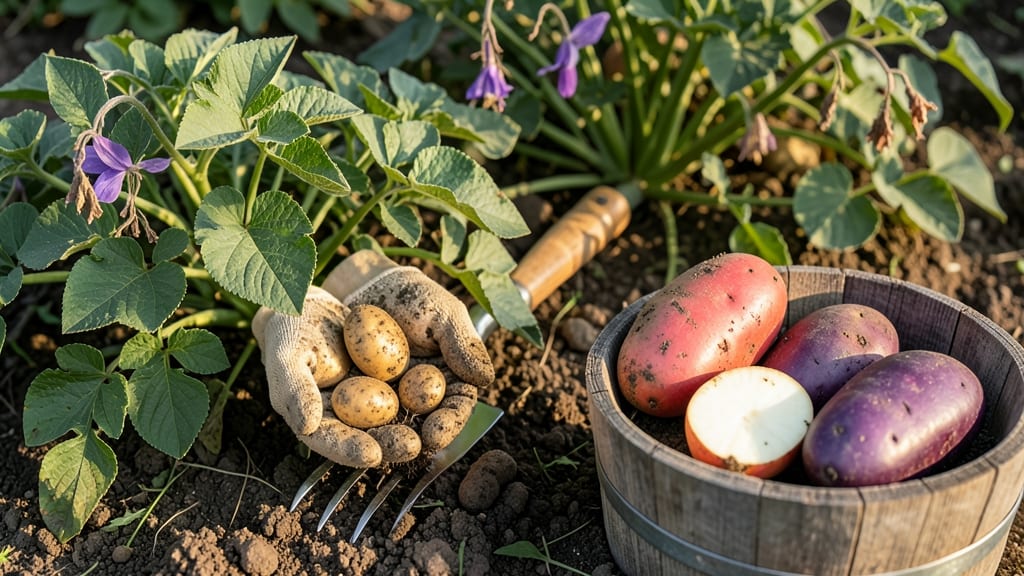
Telling when to harvest potatoes means checking for three key signals: yellowing foliage, firm tubers, and soil readiness — a process that guarantees you dig up perfectly sized spuds every time.
Digging up potatoes too early means small, underdeveloped tubers, while waiting too long risks splitting or disease. The secret to perfect harvest timing lies in a simple 3-step soil check that even beginner gardeners can master.
For USDA Zone 6 gardeners, timing matters most between 70–120 days after planting, depending on your variety. Early-season fingerlings may be ready in 60 days, while russets need the full 120 days.
Below, I’ll walk you through how to read your plants, when to pull the trigger, and how to handle post-harvest care so your 🥔 stay fresh and ready to cook.


The 3-Step soil check for perfect potato harvest timing
Potatoes are ready to harvest when they’ve reached their ideal size—but digging too early or too late ruins your crop. The key lies in a simple soil check that reveals tuber maturity without guessing.
I’ve used this method for years to avoid small, green potatoes or split, diseased tubers, and it works every time. The best part? You don’t need fancy tools, just your hands and a little patience.
Most gardeners focus on the foliage when checking harvest readiness, but the real clues are hidden below the soil surface.
By combining soil inspection, plant signals, and flower cues, you’ll pinpoint the perfect moment to harvest both new potatoes (small, tender tubers) and mature potatoes (fully developed storage potatoes). Let’s break it down into three foolproof steps.
🌱 The 3-Step Soil Check for Harvest Timing
Check for New Potato Sprouts
Look for tiny potato sprouts poking through the soil surface. These indicate new potatoes (size: 1–3 inches) are ready to harvest. Gently brush away soil to spot them—harvest within 1–2 weeks to avoid overgrowth.
Test Tuber Firmness in Soil
Dig down 6–8 inches into the soil and gently feel for firm tubers. Press with your thumb—if the skin resists pressure and feels thick (not papery), they’re ready. For storage potatoes, aim for 3–5 inches in diameter.
Observe Flower and Foliage Cues
For new potatoes, harvest when flowers appear (usually 4–6 weeks after planting). For mature potatoes, wait until foliage yellows and dies back (about 90–120 days after planting). If leaves turn brown and crispy, harvest within 1–2 weeks.
✅ Pro Tip: Early varieties (like Yukon Gold) may need harvesting before foliage dies, while late varieties (like Russet) can wait longer.
Timing is everything when harvesting potatoes, and these three steps eliminate guesswork. The soil check ensures you’re not digging too soon for new potatoes (which stay small and green) or too late for mature potatoes (which risk splitting or rotting).
I recommend marking your planting date on a calendar—most varieties reach maturity between 70–120 days, depending on the type.
If you’re growing early-season varieties, like Red Pontiac or Kennebec, you can harvest as soon as you spot 1-inch tubers with sprouts. For late-season varieties, such as Idaho Russet, wait until the foliage has completely died back.
This ensures maximum storage life and flavor development. Pro tip: Avoid harvesting in wet soil—wait for a dry day to prevent bruising the tubers.
One common mistake is relying solely on foliage color without checking the soil. Yellowing leaves signal maturity, but dry, crispy foliage means you’re already a week too late. That’s why the soil inspection is critical—it confirms tuber readiness before you dig.
I’ve seen gardeners miss the window entirely because they waited for the plants to look “dead,” only to find split or rotting potatoes.
For new potatoes, harvest when the tubers are 1–3 inches in diameter and the sprouts are visible. These are best used fresh and won’t store well. For storage potatoes, aim for 3–5 inches in diameter with a thick, rough skin.
Store them in a cool, dark place (like a basement) with good air circulation to prevent sprouting or rot.
Remember, potatoes continue to grow until the plant dies back. If you harvest too early, you’ll end up with small, underdeveloped tubers. If you wait too long, the tubers may split or rot
When to harvest potatoes by variety: early vs. late season differences
Not all potatoes follow the same harvest schedule—early varieties like Yukon Gold or Red Pontiac mature in just 60-80 days, while late-season russets need 100-120 days to reach full size.
Understanding these differences prevents you from digging too soon or missing peak flavor. The key lies in flower color and vine health, which act as natural timers for each type.
For early-season fingerlings, harvest begins when flowers fade and leaves yellow—usually 2-3 weeks after blooming. These small, tender tubers are perfect for quick cooking. Late varieties, however, signal readiness when foliage turns brown and dies back completely, often 4-6 weeks after flowering.
This delay gives russets time to develop their signature thick skins and starchy texture.
Pro tip: New potatoes from early varieties can be harvested as soon as sprouts appear above soil, but wait for full maturity if you want storage-worthy tubers.
For russets, stop watering 2 weeks before harvest to toughen skins and prevent splitting. This trick works especially well in humid climates where russets are prone to cracking.
Climate plays a role too—cool-season varieties like Kennebec mature faster in Zone 5 than in Zone 8, where heat slows growth. Always adjust harvest timing by 1-2 weeks if your summer runs hotter or cooler than average.
Pay attention to soil temperature: tubers stop growing when soil drops below 50°F.
One common mistake? Harvesting russets when flowers are still open. This guarantees small, underdeveloped tubers. Instead, wait until 90% of flowers have fallen—this ensures maximum starch development. For early varieties, harvest in stages every 10-14 days after flowering for a continuous supply of baby potatoes.
Remember: Skin thickness is your final check. A mature russet should have paper-thin skin that resists your thumbnail, while early varieties can be harvested when skin is still slightly green but firm.
Store russets in a cool, dark place for up to 6 months, but enjoy early potatoes fresh within 1-2 weeks for peak flavor.