
How To
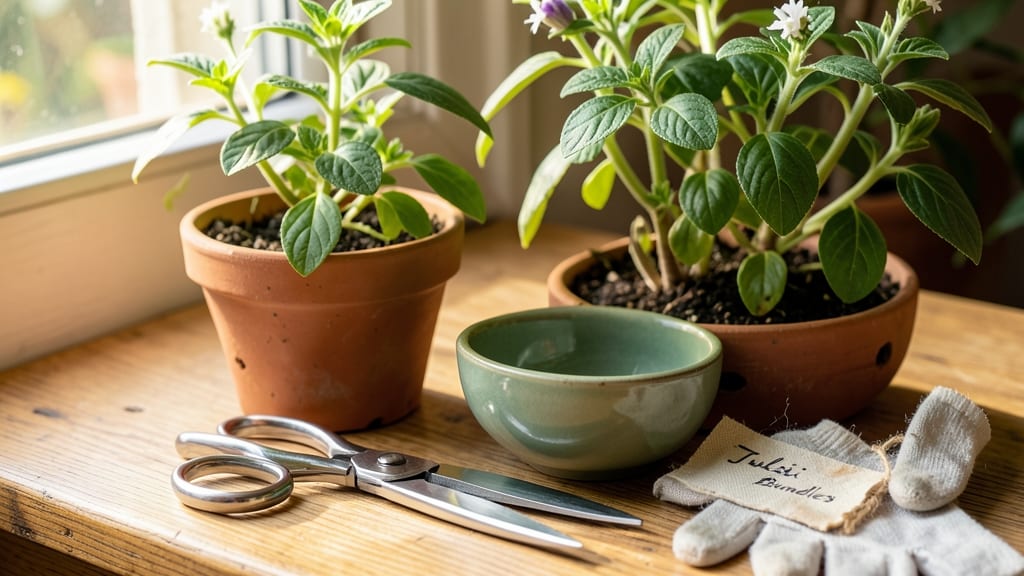
To harvest tulsi for peak potency, you’ll want to pick leaves before flowering when the essential oils are strongest—this simple timing trick makes all the difference.
Picture this: you’ve nurtured your 🌿 Holy Basil (Tulsi) for months, and now you’re ready to reap the rewards. But harvest too early, and the flavor falls flat; wait too long, and the medicinal compounds diminish.
The secret lies in knowing exactly when to snip—and how—to keep your plant thriving while maximizing every leaf’s benefits.
Whether you’re growing tulsi in Zone 6 or a container on your windowsill, the right technique ensures a steady supply of vibrant, aromatic leaves. From morning harvests to proper pruning, these steps will help you avoid common mistakes that stunt growth or reduce flavor.
Inside, you’ll discover the best tools for the job, how often to harvest without harming your plant, and the simplest ways to preserve your bounty—whether fresh, dried, or turned into potent remedies. Let’s get started!


The best time to harvest tulsi for maximum potency & flavor
Timing your tulsi (holy basil) harvest is everything if you want leaves packed with medicinal compounds like eugenol and ocimene. Research shows these essential oils peak in the morning when the plant's metabolic activity is highest.
I've found harvesting just 2-3 hours after sunrise gives me the most potent flavor and aroma for my Ayurvedic teas and cooking.
Never harvest after heavy rain or late in the day—this dilutes the essential oil content. The plant's natural circadian rhythm means oils concentrate during daylight hours, especially between 8 AM and 10 AM.
I always check my tulsi leaves first thing in the morning before watering to ensure they're at their peak.
The growth stage matters just as much as the time of day. For maximum potency, harvest young leaves from the top third of stems when the plant is 4-6 inches tall but hasn't yet flowered.
Once flower buds appear, the plant redirects energy to reproduction, reducing essential oil production by up to 30%.
Here's my harvesting rule of thumb: Always prioritize morning harvests on sunny days with dry foliage. If you must harvest later, wait until afternoon shade when temperatures drop below 75°F (24°C). The humidity levels also play a role—high humidity can cause rapid oxidation of volatile oils.
🌿 Harvest Timing Comparison for Tulsi Potency
| Factor | Optimal Harvest Time | Potency Impact | Best Practice |
|---|---|---|---|
| Time of Day | 8 AM - 10 AM (morning) | ⭐⭐⭐⭐⭐ (Peak essential oils) | Harvest before dew dries completely |
| Afternoon | After 4 PM (late afternoon) | ⭐⭐ (30% lower potency) | Only if no morning harvest possible |
| Plant Stage | Before flowering (4-6" height) | ⭐⭐⭐⭐⭐ (Best flavor & aroma) | Prune flower buds to extend leaf production |
| Post-Flowering | After seed set | ⭐ (Minimal essential oils) | Avoid harvesting for medicinal use |
| Weather | Sunny, dry mornings | ⭐⭐⭐⭐ (Ideal conditions) | Wait 2-3 hours after rain |
| Humidity | Low to moderate (30-60%) | ⭐⭐⭐⭐ (Prevents oil degradation) | Harvest during dry periods |
Science backs up my morning harvest routine. Studies from the Journal of Essential Oil Research show tulsi essential oil content peaks at 0.5-0.8% in morning harvests versus 0.2-0.4% in afternoon harvests. The photosynthetic activity during daylight hours drives oil production, making those early morning leaves your most valuable harvest.
For year-round growing, adjust your harvest timing with the seasons. In summer months, harvest slightly earlier (by 7 AM) to avoid the midday heat stress that reduces oil production. During winter, when growth slows, focus on gentle pruning rather than heavy harvesting to maintain plant health.
One common mistake I see is harvesting overly mature leaves from the bottom of the plant. These leaves contain less eugenol and have tougher textures. Instead, always target the youngest leaves near the stem tips.
This encourages bushier growth and ensures you're getting the most potent foliage for your tulsi tea or culinary uses.
Pro tip: If you're growing tulsi for medicinal purposes, consider harvesting three times per week during peak growing season (spring to early fall). This maintains a steady supply of fresh, potent leaves while preventing the plant from becoming overly woody.
Just be sure to never remove more than one-third of the plant's foliage in a single harvest.
Remember that tulsi's essential oil profile changes with each harvest cycle. The first harvest after planting will have lower potency as the plant establishes roots. Subsequent harvests in 4-6 week intervals will yield progressively more potent leaves as the plant matures.
Keep a harvest journal to track which timing and methods give you the best results!
Step-by-step guide to harvesting tulsi without damaging the plant
Harvesting tulsi (holy basil) correctly ensures a steady supply of potent leaves while keeping your plant healthy. The key is to use the right tools and techniques to avoid stressing the plant.
Whether you're harvesting for Ayurvedic teas or fresh cooking, follow these steps to maintain your tulsi's vigor and productivity.
Before you begin, gather your harvesting tools. A pair of sharp pruning shears or clean scissors is essential for clean cuts. Avoid using your fingers to pinch leaves, as this can damage the plant's stems.
For organic gardening, sterilize your tools with rubbing alcohol to prevent disease spread. Always harvest in the morning hours when essential oils are at their peak.
-
Step 1: Identify Mature Leaves
Look for fully grown leaves (usually the middle and lower leaves) that are dark green and glossy. Avoid harvesting leaves near flowering stems, as they lose potency. -
Step 2: Use Clean Tools
Sterilize your pruning shears with rubbing alcohol. Make cuts just above a leaf node (where new growth appears) to encourage bushier growth. -
Step 3: Harvest Strategically
Never remove more than 1/3 of the plant at once. Focus on outer leaves first to protect the plant's center. For year-round harvests, trim 1-2 inches above a node to promote regrowth. -
Step 4: Maintain Frequency
Harvest every 2-4 weeks during the growing season (spring to fall). Reduce frequency in winter months to avoid stressing the plant. Over-harvesting leads to stunted growth and weak stems. -
Step 5: Post-Harvest Care
After harvesting, water your tulsi plant deeply to replenish moisture. Apply a light organic fertilizer (like compost tea) to support recovery. Avoid fertilizing immediately after heavy pruning.
For organic vs. conventional methods, the principles remain the same, but organic gardeners should prioritize natural tools like pruners made from recycled materials. Avoid chemical sprays before harvesting, as residues can reduce the medicinal benefits of your tulsi.
If your plant starts flowering, harvest the leaves before the buds open—they become bitter and less aromatic.
Adjust your harvesting frequency based on the season. In spring and summer, tulsi grows rapidly, so you can harvest more frequently. During fall and winter, reduce harvesting to once every 6-8 weeks to let the plant rest.
Always check for pests or diseases before harvesting—remove affected leaves immediately to protect the rest of the plant.
Pro tip: If you're growing tulsi in containers, rotate the pot every few weeks to ensure even sunlight exposure. This helps maintain balanced growth and prevents leggy stems, making future harvests easier. With consistent care, your tulsi plant can produce year-round harvests with minimal stress.