
How To
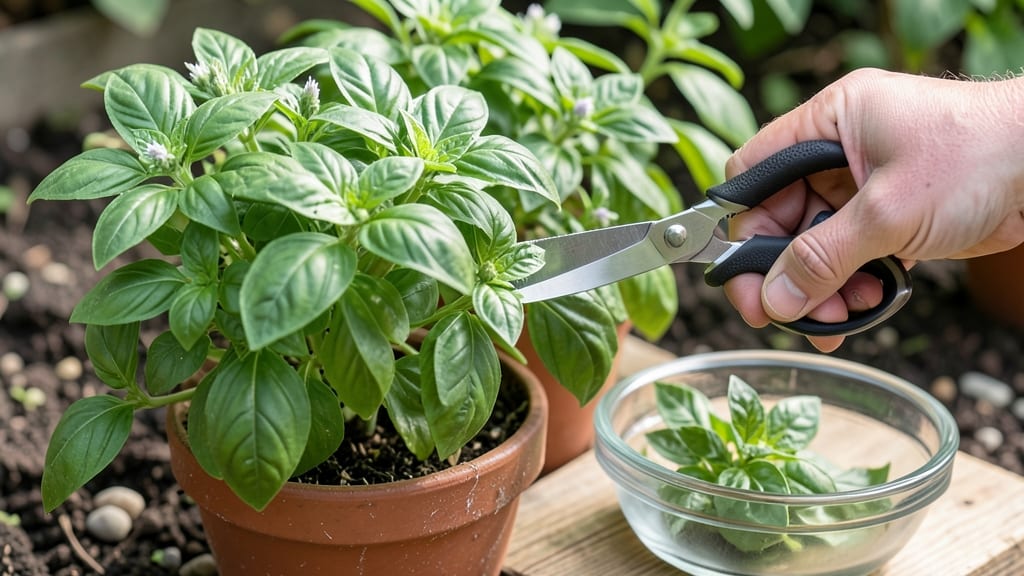
Harvesting basil so it keeps growing is all about the right cuts—and avoiding the mistakes that turn your plant into a stunted, woody mess. One wrong snip can kill future harvests, but the pinch-and-prune method ensures your 🌿 thrives between uses.
Picture this: You snip a few leaves, only for your basil to bolt or slow its growth to a crawl. That’s not just bad luck—it’s a sign you’re harvesting the wrong way.
The secret lies in cutting above leaf pairs (never the stem’s base) and timing your harvests to match the plant’s natural rhythm.
In this guide, I’ll walk you through the exact technique to encourage bushier growth, how often to harvest without stressing your plant, and the post-harvest care that keeps it lush. No more sad, leggy basil—just a never-ending supply of fresh, aromatic leaves.
Whether you’re a beginner or a seasoned gardener, these precision tips will transform your harvests. Ready to turn your basil into a high-yielding powerhouse? Let’s get started.


The correct way to pinch basil for continuous growth (with visual cues)
Pinching basil correctly is the secret to a bushier, more productive plant that keeps giving you fresh leaves all season long. When you cut stems at the wrong spots or over-prune, you risk stunting growth or even killing your plant.
The key lies in understanding growth nodes—those tiny leaf junctions where new branches can sprout—and using the right technique to encourage regrowth. I’ve learned through trial and error that timing and precision matter just as much as the cut itself.
Most gardeners make one of two mistakes: either they pinch too late, letting the plant become leggy, or they cut too aggressively, removing too much foliage at once. Both approaches shock the plant and slow down future harvests.
Instead, we’ll focus on selective pinching at the right leaf nodes, which are the points where leaves meet the stem. These nodes hold the magic for new shoots to emerge, so protecting them is crucial for continuous growth.
Before you grab your pruners, make sure your basil plant is ready for harvest. Look for 6-8 inches of height and at least 6-8 leaves per stem. The leaves should be large, vibrant, and aromatic when crushed.
If your plant is still small or the stems feel woody, wait a few more weeks—rushing the process can harm your basil’s ability to regrow. Patience here pays off with bigger harvests later.
How to Pinch Basil for Continuous Growth
-
Step 1: Identify the Growth Node
Locate the top pair of leaves on your basil stem. Just above this pair, you’ll find the growth node—this is where new branches will sprout. -
Step 2: Pinch Above the Node
Use your thumb and forefinger (or clean pruners) to pinch the stem just above the top leaf pair. Avoid cutting—pinching encourages callusing and reduces disease risk. -
Step 3: Remove No More Than 1/3 of the Plant
Never remove more than one-third of the plant’s foliage at once. This ensures the basil has enough leaves to photosynthesize and fuel regrowth. -
Step 4: Repeat on Multiple Stems
Pinch 3-4 stems per plant to encourage bushier growth. Focus on the healthiest stems first to maximize yield. -
Step 5: Use Clean Tools
Always use sterilized pruners or fingers to avoid introducing bacteria or fungi. Wipe tools with rubbing alcohol between plants if reusing. -
Step 6: Post-Pinch Care
After pinching, water the plant at the base and place it in a sunny spot. Avoid fertilizing immediately—wait 2-3 days to let the plant recover.
Visual cues are your best friend when pinching basil. Look for the small bump or leaf scar at the node—this is your target. If you pinch below this node, you’ll remove the growth point entirely, and no new branches will form.
Think of it like trimming a bush: you’re shaping the plant to encourage fuller growth, not just snipping off leaves willy-nilly. Over time, this method transforms a single stem into a lush, multi-branched basil bush.
Once you’ve pinched your basil, watch for new growth emerging from the nodes within 7-10 days. If you don’t see sprouts after two weeks, you may have pinched too late in the season or stressed the plant.
In this case, reduce future pinching and focus on watering and sunlight to revive it. A healthy basil plant can produce 3-4 harvests per season when pinched correctly, so consistency is key.
Another pro tip: avoid pinching during extreme heat or cold. Basil thrives in 60-80°F temperatures, so aim for mild days when the plant is actively growing. Early morning is the best time to pinch because the leaves are hydrated, and the plant is less stressed.
This simple habit can make a huge difference in your basil’s resilience and yield.
If you’re growing basil in containers, pinch the outer stems first to encourage inward growth. This keeps the plant compact and prevents it from becoming top-heavy, which can topple over in pots.
For garden beds, focus on the tallest stems to maintain an even canopy. Both methods work, but container basil often needs more frequent pinching because it has less root space to recover.
Remember, the goal isn’t just to harvest leaves—it’s to encourage the plant to grow more. Every time you pinch, you’re telling the basil, “Grow wider, not taller.”
With practice, you’ll develop an eye for the perfect pinch, and your basil plant will reward you with a never-ending supply of fresh, flavorful leaves. Happy pinching!
When and how often to harvest basil for maximum regrowth (seasonal schedule)
Timing your basil harvest correctly is the secret to a plant that keeps producing lush, flavorful leaves all season. Unlike many herbs, basil responds beautifully to regular pruning—but only if you follow the right schedule.
In spring, focus on encouraging bushy growth, while summer demands more frequent harvesting to prevent flowering. Fall slows everything down, so adjust your approach to protect your plant from frost.
Most gardeners make two critical mistakes: harvesting too early or too late in the season, and cutting stems at the wrong places. The key is to harvest when your basil has 6-8 mature leaves per stem and always cut just above a leaf node.
This encourages new branches to form, creating a fuller, more productive plant. Seasonal changes in sunlight and temperature also affect how often you should harvest.
🌿 Seasonal Harvesting Guide
| Season | Ideal Harvest Frequency | Key Signs to Harvest | Pruning Tips |
|---|---|---|---|
| Spring | Every 2-3 weeks | 6-8" height, 4+ leaf pairs | Pinch stems above leaf nodes |
| Summer | Weekly (if needed) | New growth appears daily | Remove flowers immediately |
| Fall | Every 3-4 weeks | Leaves turn purple or yellow | Reduce pruning as temps drop |
In spring, your basil is just waking up from dormancy, so limit harvesting to every 2-3 weeks until the plant establishes a strong root system. Look for stems with at least 4 pairs of leaves—this ensures the plant has enough energy to recover.
Use clean, sharp pruning shears or your fingers to pinch stems just above a leaf node. This small cut signals the plant to branch out, creating a bushier shape perfect for continuous harvests.
When summer arrives, your basil enters its prime growth phase, and that’s when you’ll want to harvest weekly if needed. The intense sunlight and warmth mean your plant can recover faster, but don’t let it go to seed—remove flower buds immediately to redirect energy back to leaf production.
Watch for new growth appearing daily; this is your cue to keep harvesting. In hot climates, you might even need to harvest twice a week to prevent bolting.
As fall approaches, slow down your harvesting schedule to every 3-4 weeks. The shorter days and cooler temperatures reduce your basil’s growth rate, so avoid heavy pruning. Instead, focus on harvesting only the outer leaves to protect the plant’s center.
If you notice leaves turning purple or yellow, it’s a sign the plant is preparing for dormancy—time to scale back and let it rest before the first frost.
Pro tip: Always harvest in the morning when essential oils are at their peak for flavor. After harvesting, water your basil deeply to help it recover, especially in hot weather. With the right seasonal approach, your basil plant can keep producing all summer long—sometimes even into early fall!