
How To
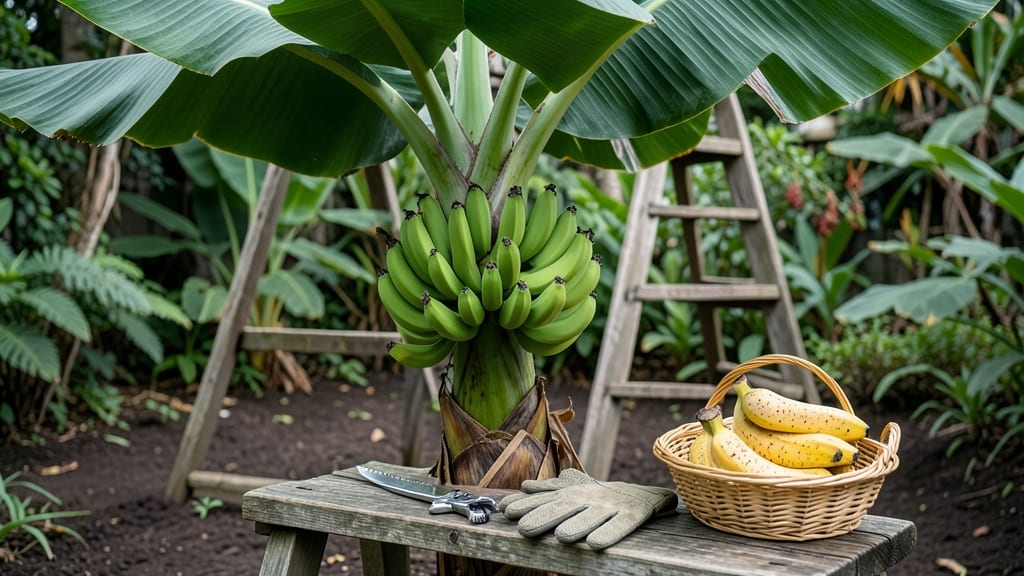
To harvest bananas at their sweetest, watch for three key ripeness signs—color change, firmness, and stem separation—that signal the perfect time to pick without damaging the fruit or the tree.
Bananas may seem simple to pick, but harvesting at the wrong stage ruins the flavor and stresses the plant. Overripe bananas turn mushy, while underripe ones stay hard and bland—neither is ideal.
The secret lies in spotting the exact moment when the bunch is ready, which I’ll break down in simple steps.
Once you’ve mastered the visual cues, the actual harvesting process is straightforward but requires care. A sharp cut at the right angle prevents bruising, and knowing how to support the heavy bunch keeps both the fruit and the tree healthy.
Plus, I’ll share how to store your harvest to enjoy it for weeks—even if you’re not in a tropical climate.
Whether you’re a backyard gardener or a small-scale farmer, these tips will help you maximize your yield and keep your banana tree producing for years. Let’s get started with the first sign of ripeness to watch for.


3 Key ripeness signs to harvest bananas at peak sweetness
Harvesting bananas at the right time transforms bland fruit into sweet, flavorful treats. Unlike grocery store bananas that ripen off the plant, homegrown bananas reach their peak sweetness when harvested at the perfect moment.
Miss this window, and you’ll end up with either underripe, hard fruit or overripe, mushy bananas that lack that caramel-like sweetness we all love.
As someone who’s grown bananas in my subtropical garden, I’ve learned that visual and tactile cues are your best friends. The hand color, peel texture, and even changes in the flower stem all signal when it’s time to harvest.
Ignoring these signs can mean sacrificing flavor—or worse, stressing your banana plant by letting fruit overripe and fall prematurely.
Here’s how to spot the three key ripeness signs that guarantee the sweetest harvest:
Look for a uniform color shift from green to yellow with slight speckling. For varieties like Cavendish, this means the majority of the bottom bananas (closest to the stem) turn yellow with small brown spots. Avoid harvesting if the color is patchy or still mostly green.
Gently press a bottom banana—it should yield slightly to pressure (like a ripe avocado) but not feel mushy. If it’s rock-hard, wait 3-5 days. If it’s too soft, the fruit may overripe quickly after harvest. This tactile test is your best indicator of internal sweetness.
The flower stem (where the bunch attaches) should turn brown and dry. If it’s still green or slightly yellow, the fruit needs more time. This sign often appears 1-2 weeks before the hand color changes, so it’s an early warning system for impatient growers like me!
Pro tip: Combine these signs with a smell test. A ripe banana bunch will emit a sweet, floral aroma near the stem. If you catch that scent, grab your pruners—it’s harvest time!
I’ve found that morning harvests work best because the fruit is cooler and less likely to bruise during transport.
Harvesting too early? Your bananas will lack sweetness and may never ripen properly off the plant. Harvesting too late? You risk fruit drop or attracting pests like fruit flies.
The sweet spot is when all three signs align—then you’re guaranteed bananas that taste like they were grown in a tropical paradise, not a grocery store.
Once you’ve confirmed ripeness, the next step is proper cutting technique to avoid damaging the tree. I’ll cover that in the next section, but for now, focus on mastering these ripeness cues. Your taste buds—and your banana plant—will thank you!
🍌🌿✂️
Step-by-step banana harvesting process for home growers
Harvesting bananas correctly is key to preserving both fruit quality and your tree’s health. Once you’ve identified ripe bunches—based on the color changes and fruit firmness we covered earlier—it’s time to detach them carefully.
The wrong technique can bruise fruit or stress the plant, reducing future yields. I’ve harvested dozens of bunches over the years, and I’ve learned that patience and the right tools make all the difference.
Start by gathering a few essentials: a sharp pruning saw or clean knife, heavy-duty gloves, and a bucket or basket lined with a soft cloth to cradle the fruit. Work on a dry, sunny day when the fruit is cool to avoid bruising.
If your tree is tall, have a sturdy ladder or helper ready—banana trees can grow 15-25 feet, and reaching the top safely is critical.
🌱 Step-by-Step Banana Harvesting Guide
- 1 Locate the peduncle: Identify the thick stem base (peduncle) where the bunch attaches to the tree. This is your cutting point—it’s usually 2-3 inches wide and woody.
- 2 Make a clean cut: Position your pruning saw or knife at a 45-degree angle about 1-2 inches above the peduncle base. Saw or cut smoothly in one motion to avoid tearing the stem.
- 3 Support the bunch: As you cut, use your other hand to gently cradle the bunch and guide it downward. Let gravity do most of the work—never pull or twist the fruit, which can damage the stems and cause bruising.
- 4 Lower the bunch carefully: Place the harvested bunch in your soft-lined bucket or basket, ensuring the stem end faces upward. This prevents sap from dripping onto the fruit, which can lead to rot.
- 5 Inspect and trim: Check the bunch for any damaged or bruised fruit. Trim off any broken stems or leaves with clean scissors, but leave the protective leaf sheath around the bunch intact to shield the fruit during transport.
- 6 Post-harvest care: After removing the bunch, apply a 1-inch layer of mulch around the tree’s base to retain moisture. If your tree has multiple bunches, prioritize harvesting the oldest, largest bunch first to avoid overloading the tree.
Once the bunch is safely on the ground, resist the urge to rush it indoors. Bananas continue to ripen after harvest, and leaving them at room temperature for 2-3 days allows them to develop fuller flavor.
If you’re harvesting in hot, humid climates, shade the bunch to prevent overheating, which can speed up spoilage.
Pro tip: Label your harvested bunches with the harvest date and variety if you’re growing multiple types. This helps track ripening progress and ensures you enjoy the sweetest bananas at their peak.
With practice, you’ll develop a rhythm—timing your harvests to coincide with your family’s needs while keeping your banana tree thriving for years to come.
Finally, don’t forget to monitor your tree post-harvest. A healthy banana tree can produce new flower stalks within months, especially if you provide balanced fertilization and consistent watering. Your next bunch will thank you for the careful attention!