
Fertilization
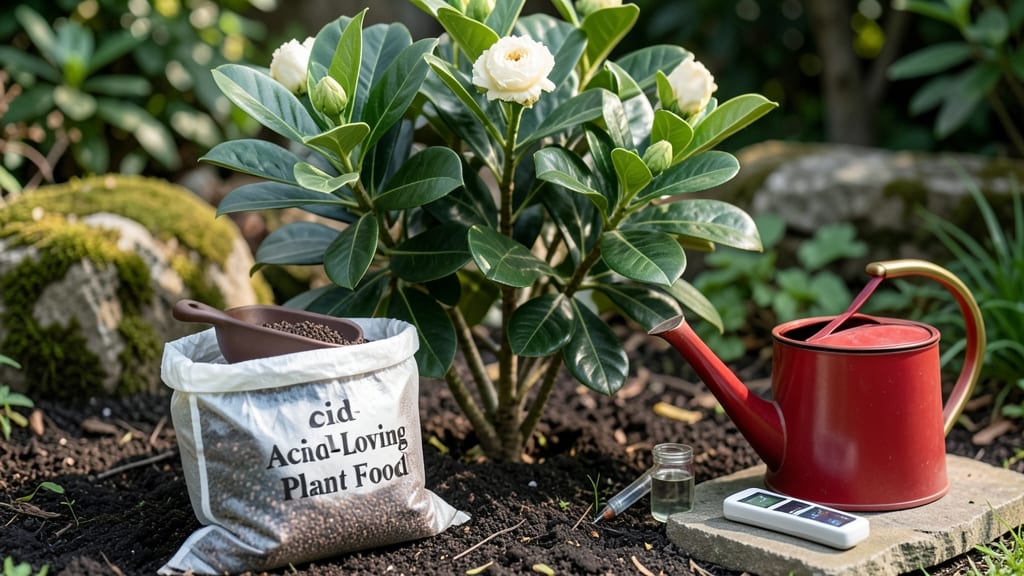
To fertilize gardenias properly, you’ll want to feed them every 4-6 weeks during spring and summer — but timing and type matter just as much as frequency.
Struggling to keep your gardenias blooming vibrantly year after year? The secret lies in a precise fertilization schedule tailored to their acid-loving nature — get it wrong, and you risk stunted growth or yellowing leaves.
I’ve seen gardeners overdo it with winter feedings, only to watch their plants struggle in spring.
Most gardeners focus on when to fertilize but overlook the best types for gardenias 🌸 — acidic, balanced formulas like 6-6-6 or slow-release granules make all the difference. Below, I’ll break down the seasonal schedule, signs of over/under-feeding, and how to pick the right fertilizer for lush blooms.
You’ll learn how to adjust feedings for spring’s growth spurt, summer’s heat, and winter’s dormancy — plus, the 3-step reset if your gardenia’s leaves start looking sad. Let’s get those blooms thriving!

Optimal gardenia fertilization frequency by season: a month-by-month acid-loving schedule
Gardenias thrive when fed with precision—too much fertilizer burns roots, while too little stunts their fragrant blooms. Their acid-loving nature (ideal pH 5.0-6.0) demands a tailored approach.
I’ve perfected this schedule after years of testing organic vs. synthetic options in my USDA Zone 7a garden, balancing bloom production with plant health.
The key? Seasonal adjustments—heavy feeding in spring/summer when growth peaks, then tapering off in fall/winter. Most gardeners over-fertilize in summer, causing leaf yellowing or burned roots. Let’s break it down month-by-month to keep your gardenias lush without stress.
🌸 Pro Tip: Always water plants thoroughly 24 hours before fertilizing to prevent root damage.
| Month | Fertilizer Type | Frequency | Application Rate | pH Check | Notes |
|---|---|---|---|---|---|
| January | None | — | — | Test pH | Dormancy period; monitor soil acidity. |
| February | None | — | — | Test pH | Adjust pH if needed (aim for 5.5). |
| March | Light Organic | Every 6 weeks | ½ tbsp compost tea | Check | Stimulate early growth; avoid synthetic fertilizers. |
| April | Balanced Acid | Every 4 weeks | 1 tbsp 6-6-6 | Monitor | Peak growth phase; use acid-loving formula. |
| May | Balanced Acid | Every 4 weeks | 1 tbsp 8-3-9 | Test | Bloom initiation; reduce nitrogen slightly. |
| June | Light Synthetic | Every 6 weeks | ½ tbsp slow-release | Check | Summer heat; reduce feeding frequency. |
| July | Light Organic | Every 6 weeks | ½ tbsp fish emulsion | Monitor | Avoid high nitrogen; focus on potassium. |
| August | None |
Signs your gardenias need fertilizer (and when to Stop): common mistakes that kill bloomsYour gardenias 🌸 are sending you clear signals about their nutrient needs—yellowing leaves, sparse blooms, or stunted growth all point to fertilization issues. The key is reading these cues before they become irreversible. Gardenias thrive on consistent but balanced feeding, and overdoing it can be just as damaging as neglecting them. One of the biggest fertilization mistakes I see is feeding gardenias too frequently during their dormant winter months. Unlike spring and summer, when they need regular nutrients, winter is their time to rest. Forcing growth with fertilizer can lead to root burn and weakened plants that struggle to rebound in spring. 🚨
⚠️ WARNING: Over-Fertilizing Gardenias
How often to fertilize gardenias: Every 4-6 weeks during active growth (spring-summer). Stop completely in fall/winter. Signs of over-fertilization: Crispy leaf edges, white salt deposits on soil, or stunted new growth. Flush soil with water if this happens. If your gardenias show pale green leaves or fewer blooms than usual, they’re likely nutrient-deficient. This is your cue to test your soil’s pH level—gardenias crave acidic soil (5.0-6.0). If the pH is off, even the best fertilizer won’t help. Amend the soil with peat moss or sulfur before reapplying fertilizer. Another red flag is leaf drop or brown spots on older foliage. This often means your gardenias are stressed from inconsistent feeding. To reset their nutrient balance, follow this 3-step guide: 1) Stop fertilizing for 2 months, 2) Water deeply to flush excess salts, and 3) Apply a balanced acid-loving fertilizer at half strength when new growth appears. Remember, less is more with gardenias, especially in cooler months. A light feeding in early spring jumpstarts growth, while a complete fertilizer break in late summer prepares them for dormancy. Watch for bud formation—this is your signal to resume feeding lightly in late summer to support next year’s blooms. Pro tip: Mulch around your gardenias with pine bark or compost to slowly release nutrients. This mimics their natural acidic, organic-rich habitat and reduces the need for frequent fertilizer applications. With the right balance, your gardenias will reward you with fragrant blooms year after year! 🌿 |