
How To
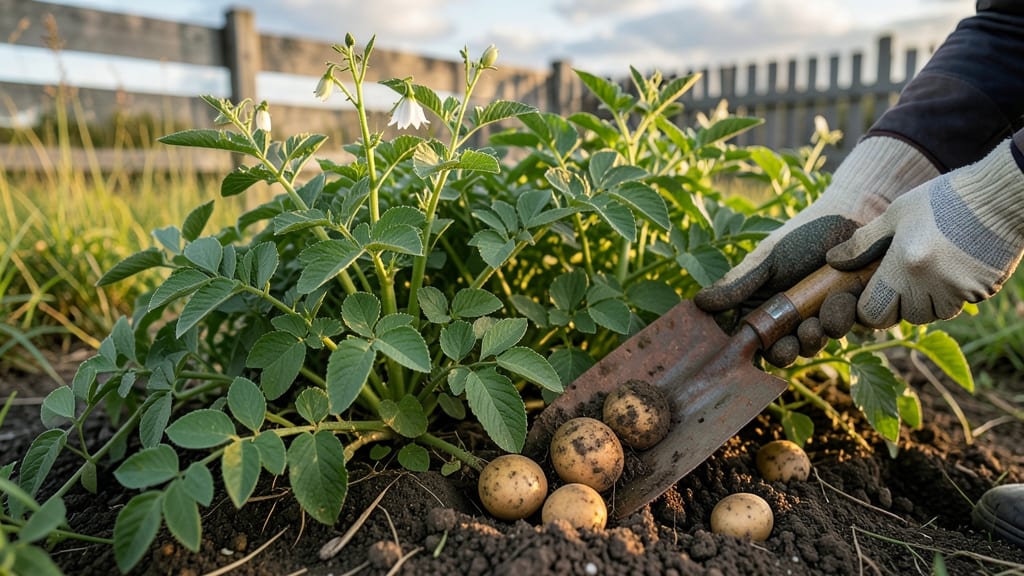
How do you know when it’s time to harvest potatoes? Knowing the perfect moment means catching them at peak flavor and size—before they rot in the soil or turn tough and woody.
If you’ve ever dug up a 🥔 only to find it shriveled or still green, you know the frustration. The secret isn’t guessing by days or weeks—it’s reading the soil, the leaves, and the tubers themselves.
These three simple cues will tell you exactly when to pull them for the best results.
Most gardeners wait until the foliage yellows or the flowers fade, but those are just part of the story. The real test happens underground, where tuber firmness and skin texture reveal whether your potatoes are ready to eat or still need time in the ground.
In this guide, I’ll walk you through the three foolproof soil tests that take the guesswork out of harvest timing—plus how to adjust for your climate and potato variety. No more wasted crops or second-guessing!

3 Unmistakable soil tests to determine potato harvest readiness
Knowing when to harvest potatoes can feel like guessing—until you learn these three foolproof soil tests. Instead of relying on days since planting, these methods let you check tuber readiness right in the garden.
I’ve used them for years to avoid small, underdeveloped potatoes or rotting tubers left too long in the ground.
The secret lies in what’s happening below the soil surface. Most gardeners focus on foliage, but the real clues are hidden where the tubers form. These tests take just minutes and require no special tools—just your hands and a little observation. Let’s dig in!
How to Test Potato Harvest Readiness
-
1. The Finger Probe Test
Gently push your finger 6-8 inches deep into the soil near the plant base. If you feel small, firm tubers (about 1-2 inches wide), they’re ready for new potato harvest. For storage potatoes, wait until you feel larger, irregular shapes (3+ inches). -
2. The Leaf Yellowing Check
Watch for lower leaves turning yellow and dying back—this signals maturity. For early varieties, harvest when 50% of foliage yellows. For storage types, wait until 90% of leaves die (but before they completely blacken). -
3. The Tuber Firmness Test
Carefully dig up 1-2 test tubers. If their skin is thick and rough (not smooth), they’re ready. For new potatoes, look for thin skin that peels easily. If tubers feel soft or spongy, leave them in the ground longer. -
Bonus: Flower Signal
If your variety blooms, harvest 2-3 weeks after flowers fade for peak flavor and size. Some early varieties may skip flowering—don’t wait for blooms!
✂️ Pro Tip: Test in dry soil (after 2-3 days without rain) for accurate results.
Timing matters more than you think. Harvesting too early gives you small, starchy potatoes with thin skins. Waiting too long risks shriveled or rotting tubers, especially in wet climates. These tests help you balance harvest timing for perfect spuds every time.
For new potatoes, I often harvest 3-4 weeks earlier than the full season. Just dig near the plant edges where tubers form closest to the surface. For storage potatoes, wait until the foliage fully dies back—this ensures maximum size and longer shelf life.
Don’t ignore the soil conditions either. Harvest on a dry, sunny day to prevent tubers from absorbing too much moisture. Wet soil can cause skin damage and increase disease risk. If rain is forecast, harvest early to avoid muddy, messy digging.
One mistake I see often? Gardeners wait until the entire plant dies before harvesting. By then, some tubers may have sprouted or rotted underground. Use the finger probe test every 7-10 days starting 2 weeks before your variety’s expected maturity date.
Remember: Potatoes continue growing until the plant dies. The sooner you harvest after reaching readiness, the sweeter and firmer they’ll be. Store any excess in a cool, dark place (like a basement) to preserve freshness for weeks.
Now you’ve got the tools to never guess again. Next time you’re wondering, “Are my potatoes ready?” just grab your finger, check the leaves, and dig up a test tuber. Your harvest will thank you!
When to harvest new vs. second-crop potatoes: key differences
Harvesting potatoes at the right time transforms your garden into a treasure trove of crisp, flavorful tubers—but timing is everything. New potatoes and second-crop potatoes (storage varieties) have wildly different harvest windows, and confusing the two can mean the difference between a bumper crop and a rotten mess.
Let me break down the critical distinctions so you never guess again.
The key difference lies in maturity benchmarks. New potatoes are harvested early—when tubers reach 1-2 inches in diameter—while storage potatoes need full maturity (3-5 inches) and a cured skin to store well. Ignoring these rules leads to either tiny, underdeveloped spuds or oversized, shriveled ones that spoil quickly.
🚨 NON-NEGOTIABLE: Harvest timing depends on variety. Early varieties like 'Yukon Gold' or 'Red Pontiac' are ready in 70-90 days, while storage types like 'Russet' or 'Kennebec' take 100-120 days. Planting dates and climate zones also shift these windows—cool regions delay maturity, while hot summers speed it up.
| Type | Days to Maturity | Tuber Size | Harvest Cues | Best For |
|---|---|---|---|---|
| New Potatoes | 60-90 days | 1-2 inches | Foliage greening, skin slips off easily | Fresh eating, salads |
| Second-Crop (Storage) | 100-120 days | 3-5 inches | Yellowing foliage, firm skin | Long-term storage |
| Late Blight Risk Zones | Adjust by -10 days | N/A | Harvest before foliage dies | Prevent rot |
For new potatoes, the secret is harvesting before the plant flowers. Use the thumbnail test: gently rub a tuber—if the skin peels away like a glove, it’s ready. Second-crop potatoes, however, demand patience.
Wait until 70% of foliage yellows and tubers reach golf-ball size (3+ inches). This ensures starch development for storage.
Climate plays a sneaky role. In cool, short seasons, prioritize early varieties and harvest new potatoes as soon as they’re edible. In long, hot summers, storage types thrive—just watch for late blight (brown spots on leaves) and harvest before foliage collapses to avoid tuber rot.
Pro tip: Hill soil around stems weekly to prevent greening (toxic solanine buildup) and encourage larger tubers. And always cure storage potatoes for 1-2 weeks in a dark, 50-60°F space before storing—this toughens the skin and extends shelf life to 5-6 months. 🌱