
Vegetables
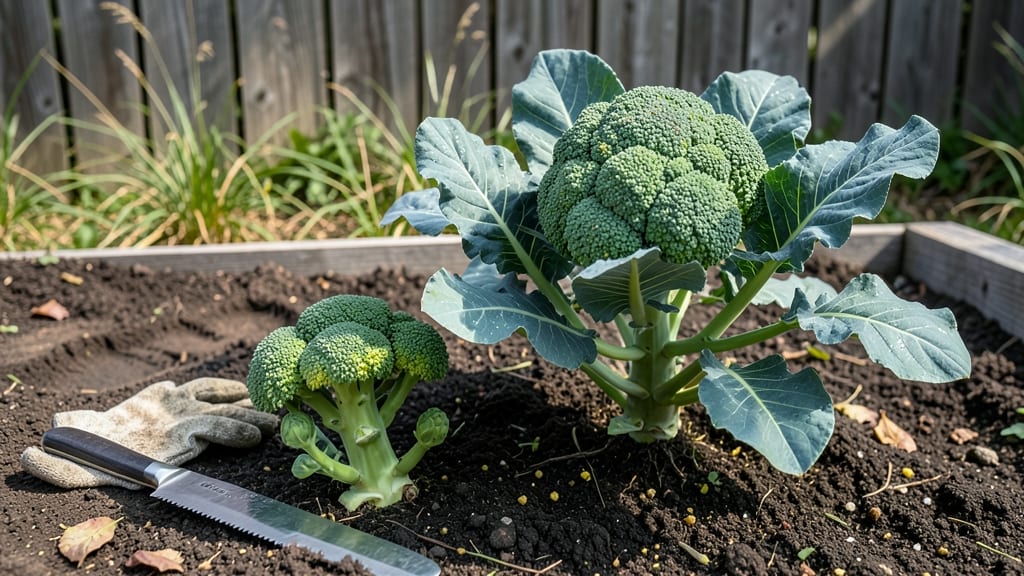
Knowing the exact broccoli harvest time ensures you enjoy crisp, flavorful florets 🥦 at their peak, before they turn bitter or woody.
Picture this: you’ve nurtured your broccoli for weeks, only to pick it too early and leave it hard as a rock, or too late and watch it bolt into yellow flowers.
The difference between a perfect harvest and a wasted plant comes down to three simple tactile tests—size, color, and firmness—that tell you exactly when to snip.
In Zone 6a, spring broccoli typically reaches harvest time between June and July, while fall crops are ready by October or November. But timing isn’t just about the calendar—it’s about the plant’s signals.
A head that’s too small or pale? Not ready. One that’s opening up or turning yellow? Past its prime. Master these cues, and you’ll turn every plant into a bounty of restaurant-quality sides.
Below, I’ll walk you through the three foolproof ways to test your broccoli’s readiness, plus how to coax extra harvests from the same plant. No more guesswork—just crisp, sweet heads every time.

How to identify the perfect broccoli harvest time using 3 tactile tests
Harvesting broccoli at the right moment transforms your garden into a treasure trove of crisp, sweet florets packed with nutrients. But timing is everything—wait too long, and those tight buds loosen into bitter, woody stems.
The secret lies in your hands and eyes: three simple tactile tests reveal when your broccoli is begging to be picked. These checks go beyond guesswork, ensuring every head reaches its flavor peak.
I’ve learned the hard way that broccoli doesn’t wait patiently. One day it’s perfect, the next it’s bolting into yellow flowers, signaling the end of its prime. That’s why I now rely on these three physical assessments before reaching for my pruners.
Each test—size, color, and stem firmness—works together like a puzzle, giving you confidence that your harvest is ready. Let’s break down exactly what to feel and see.
Look for 6-8 inch diameter heads that feel dense and heavy for their size. Smaller heads (under 4 inches) are underripe, while larger ones (over 10 inches) signal bolting.
Press gently on florets—ready heads show deep green with no yellowing. Pale or uneven colors mean poor sunlight or nutrient issues. Dark purple tones in some varieties (like Purple Sprouting) are normal but should still be vibrant.
Grip the lower stalk near the base—it should feel thick and sturdy, not hollow or brittle. A firm stem supports the head’s weight, while a soft or woody stem means the broccoli has passed its prime.
Start with the head size test—this is your first red flag. A broccoli head should feel like a compact, tightly packed bundle of florets. If you can see gaps between the buds or the head feels light in your hand, it’s not ready. I once harvested a batch that looked perfect but turned out to be woody and bland because the heads were slightly overripe. That mistake taught me to always double-check with the stem firmness test next.
Move to the color uniformity test by examining the florets up close. Ready broccoli should have a uniform deep green hue, with no yellowing or browning. Some varieties like Calabrese develop a bluish tint, but this should still be consistent across the head.
Uneven colors often signal stress—whether from inconsistent watering or nutrient deficiencies. If you spot yellowing leaves at the base, the plant may be struggling, and the head might not reach its full potential.
The stem firmness test is where I catch the most mistakes. A ready broccoli stalk should feel solid and resilient, almost like a small tree branch. If it bends easily or feels hollow when squeezed, the head is past its peak.
I’ve found that morning harvests often yield firmer stems because cooler temperatures help maintain moisture and structural integrity. Always harvest in the morning to maximize freshness and texture.
Pro tip: Combine these tests with a visual inspection of the buds. The tiny flower buds at the center should still be tightly closed—if they’re starting to open, the broccoli is bolting and will turn bitter.
I keep a small notebook by my gardening tools to track which plants pass all three tests first, so I can prioritize harvesting them. This system has cut my harvest time in half and ensured every bite is as sweet as possible.
Regional climate plays a role too. In cooler zones (USDA 3-5), broccoli matures slower, so heads may take 70-80 days to reach harvest size. Meanwhile, in warmer zones (USDA 7-10), the process speeds up to 50-60 days.
Always adjust your tactile tests based on local growing conditions—what feels "ready" in Arizona might differ slightly from what’s perfect in Maine.
One common pitfall is assuming all broccoli varieties follow the same rules. Sprouting broccoli (like Purple Sprouting) and Romanesco have different harvest cues—their heads often mature smaller but denser. For these types, focus more on the stem firmness and bud tightness than head size.
I’ve grown both side by side and learned to treat them like separate crops entirely.
Finally, trust your instincts. If a broccoli head passes all three tests but still feels "off" in your hands, it’s better to wait a day or two.
Overharvesting is a gardener’s worst enemy—once you cut a head, that plant’s energy shifts to side shoots, which may never reach the same quality. I’ve seen gardeners rush harvests only to end up with a bitter, fibrous mess. Patience pays off with broccoli.
With these three tactile tests, you’ll never second-guess your broccoli harvest again. The key is consistency—check each head against all three criteria before picking. Your future meals (and your plants’ side shoots) will thank you for it.
Now grab those pruners and get ready for the crispiest, sweetest broccoli of the season! 🥦
Common mistakes that ruin broccoli flavor and how to avoid them
Even with perfect growing conditions, broccoli flavor can turn bitter or bland if you harvest at the wrong time or ignore subtle environmental cues. The most common mistakes I see in home gardens involve overharvesting too early, letting heads overmature, or ignoring temperature stress that alters sweetness.
These errors often happen because gardeners focus on size rather than sensory readiness.
One frequent pitfall is harvesting broccoli heads before they're fully developed. While it might seem like a good idea to pick smaller heads for quicker harvests, underripe florets lack the sweetness and crisp texture that come with proper maturation.
The plant needs 50-80 days to develop that signature flavor profile, and rushing this process leads to disappointment in the kitchen.
⚠️
Problem: Picking broccoli before 50 days results in woody stems and bitter florets.
Solution: Wait until heads are 3-4 inches wide with tight buds—never sacrifice size for speed.
Visual Check: Look for deep green color and firmness when pressed gently.
Another critical error is ignoring environmental stress signals. Broccoli plants under heat stress (above 85°F) or cold snaps (below 40°F) can develop off-flavors or even bolt prematurely.
I've seen gardeners in USDA Zone 6a lose entire crops by not providing row covers during late spring frosts or shade cloth during summer heatwaves.
To extend your harvest window, prune side shoots after the main head is cut. These secondary shoots often produce smaller but flavorful heads if given proper care.
I recommend fertilizing lightly with a 10-10-10 NPK blend after harvest to encourage regrowth, but avoid overfeeding—this can lead to leafy growth at the expense of florets.
Finally, harvesting at the wrong time of day affects quality. Morning harvests yield the crispest broccoli because evening heat can make florets wilting and less sweet.
Store harvested heads in the crispier drawer of your fridge for up to 5 days, but eat them sooner for peak flavor—stale broccoli loses its glucosinolates, the compounds responsible for that signature taste.
By avoiding these common mistakes—patience with maturity, environmental awareness, and proper timing—you'll transform your broccoli from store-bought blandness to homegrown sweetness that rivals restaurant-quality dishes. The key is paying attention to the plant's signals, not just the calendar. 🥦