
Picking
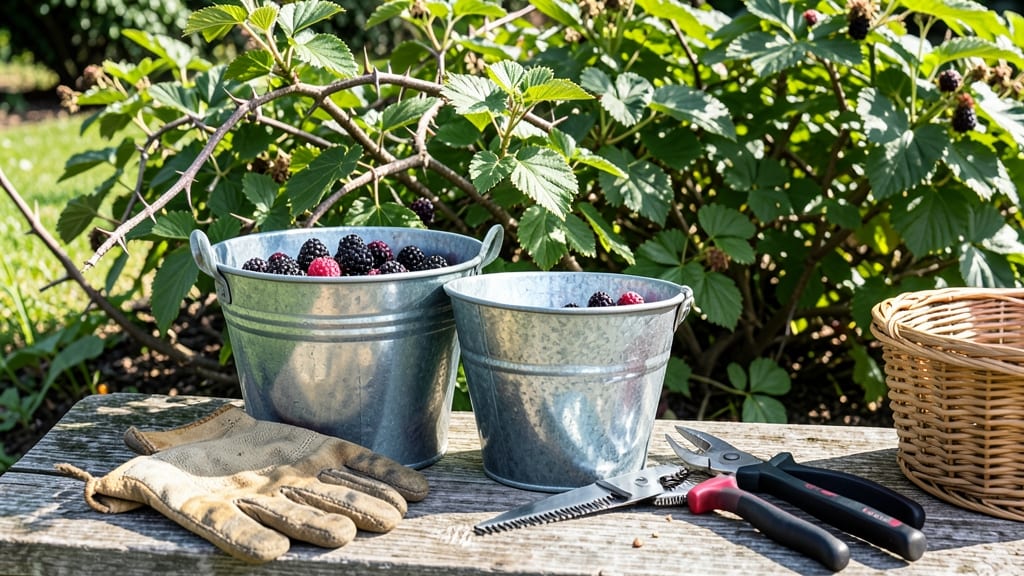
The best time to harvest blackberries is when they’re deep black or purple and yield slightly to a gentle touch—usually between July and September in most growing zones.
Picture this: you’ve waited months for those glossy 🍇 clusters to ripen, only to pick them too early and end up with tart, mealy berries. Or worse, you wait too long and they turn mushy on the vine.
The difference between perfect and disappointing harvests comes down to knowing exactly when to pluck them.
Ripeness isn’t just about color—texture and flavor play a big role. A fully ripe blackberry should detach easily with a slight tug, feel plump but not squishy, and burst with sweetness when you taste it. Ignore these cues, and you might miss the peak flavor window entirely.
In this guide, I’ll walk you through the foolproof ripeness test, regional harvest timelines, and pro tips to stretch your blackberry season—so you can enjoy sweet, juicy berries all the way through summer.

How to determine blackberry ripeness for optimal harvest time
Blackberries reach their peak flavor only when fully ripe, but many gardeners struggle to identify the exact harvest time. Picking too early means tart, underdeveloped berries, while waiting too long leads to mushy, bird-snacked disappointment.
The key lies in combining visual cues, tactile tests, and even taste sampling for absolute confidence.
Start by examining the berry color, which is your first clue. Most blackberries transition from red to deep purple-black when ready. However, some varieties like Cheyenne or Arapaho may stay slightly reddish—never judge ripeness by color alone.
Pair this with a gentle firmness test by lightly squeezing the berry; it should yield slightly but not feel mushy.
📋 Blackberry Ripeness Summary Table
| Ripeness Indicator | What to Look For | Action Required |
|---|---|---|
| Color | Deep black/purple (not red) | Proceed to tactile test |
| Texture | Firm but yields slightly when pressed | Gently tug to test detachment |
| Detachment | Separates easily from stem | Harvest immediately |
| Taste Test | Sweet with slight tartness | Confirm ripeness |
| Leaves | Yellowing/browning near berries | Harvest soon—berries won't last |
Avoid the common mistake of harvesting based solely on color. Some blackberry varieties, especially everbearing types, may stay partially red even when ripe. Always perform the gentle tug test: ripe berries detach easily from the plant with minimal force. If the berry resists, it’s not ready yet.
Time of day matters too. Harvest in the morning when berries are coolest and firmest. Avoid picking after rain or extreme heat, as these conditions can distort the berry texture and flavor. Early morning also means fewer birds have already feasted on your crop!
For thornless varieties like Natchez or Ouachita, ripeness tests are even more critical since their softer canes make them vulnerable to bird damage when overripe. Check for plumpness—ripe berries should feel heavy for their size. If they feel hollow or light, they’re past their prime.
Don’t ignore the stem attachment. When ripe, blackberries separate cleanly from the stem with just a slight pull. If the stem tears or the berry stays attached, it’s not ready. This test is especially useful for floral varieties, which often ripen unevenly across the same cluster.
Finally, trust your taste buds. Pop one berry into your mouth—ripe blackberries should burst with sweetness and just a hint of tartness. If it tastes bland or overly tart, wait another day. Remember, overripe berries spoil quickly and attract pests, so act fast once you’ve confirmed ripeness.
Pro tip: Use a harvest basket with a lid to prevent bruising during transport. And always harvest with clean, sharp pruning shears to avoid damaging the canes. With these tests, you’ll never miss the perfect blackberry harvest time again! 🍇
Best blackberry harvest time by variety and climate zone
Timing your blackberry harvest depends on both variety type and your USDA climate zone. Early-season varieties ripen weeks before late-season types, while warmer zones push harvests earlier than cooler regions. Understanding these patterns helps you avoid missed opportunities or overripe berries that attract pests.
In USDA zones 5-7, most blackberries ripen between mid-July and late August, while zones 8-10 see harvests stretching from June to October. Heatwaves can accelerate ripening by 1-2 weeks, while cool summers may delay harvests until September or October.
Let’s break down the best harvest windows for popular varieties.
| Variety Type | USDA Zones | Harvest Window | Weather Impact |
|---|---|---|---|
| Thornless (e.g., 'Natchez', 'Chester') | 5-9 | Late July - Early September | Heat speeds ripening; frost shortens season |
| Native (e.g., 'Cheyenne', 'Arapaho') | 4-8 | Mid-August - Mid-September | Drought delays; rain improves flavor |
| Hybrid (e.g., 'Triple Crown', 'Ouachita') | 6-10 | June - October | Extended season; frost-sensitive |
For thornless varieties, like 'Natchez', expect a 4-6 week harvest window starting in late July. These types are bred for early and prolonged fruiting, making them ideal for commercial growers or home gardeners in cooler zones.
In USDA zone 7, for example, you might harvest from July 25 to September 5.
Native varieties, such as 'Cheyenne', thrive in drier climates and ripen later, often in August or September. Their hardier canes handle temperature swings better than hybrids, but they require consistent watering during fruit set. In zone 5, plan for harvests between August 10 and September 15.
Hybrid varieties like 'Triple Crown' offer the longest harvest season, from June to October in warmer zones. These floricane-producing types rely on winter chilling, so gardeners in zones 8-10 may see two harvests per year if planted correctly. Monitor for bird damage during peak ripeness!
Weather plays a critical role in ripening speed. Hot, dry summers accelerate harvests by 10-14 days, while cool, wet conditions can stretch the season. In zone 9, for instance, a heatwave in July might push 'Ouachita' blackberries to ripen by mid-August instead of September.