
Picking
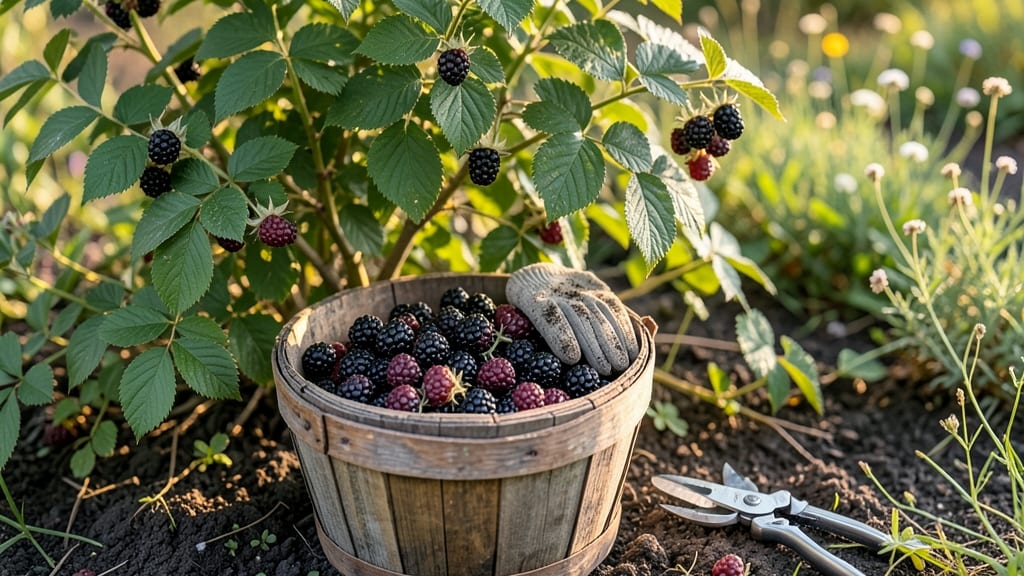
Blackberry harvest season arrives when those glossy 🫐 berries swell to perfect ripeness—usually between July and September, depending on your climate zone.
Timing your blackberry harvest wrong means missing out on peak sweetness—or worse, overripe berries that turn mealy in seconds. Master the perfect picking window and extend your harvest with regrowth secrets that keep your bushes producing all season.
Regional differences matter: Southern gardeners might start harvesting as early as June, while cooler northern zones could stretch the season into October. Learn the telltale signs of ripeness—color, firmness, and that signature gloss—so you never pick too soon or too late.
Beyond the harvest, I’ll show you how to prune for next year’s bounty, troubleshoot weather delays, and store your berries for weeks. Let’s make this your most productive blackberry season yet!


Blackberry harvest season timeline: when to pick for maximum sweetness
Knowing the perfect blackberry harvest window transforms your crop from tart to sweet in seconds. The difference between peak ripeness and overripe mush often comes down to understanding your regional growing zone and variety type.
Early varieties like Chester ripen weeks before late-season Natchez, while European varieties often mature 2-3 weeks earlier than their American counterparts.
Weather plays a surprising role too—cool nights and warm days boost sugar development, while prolonged heat can make berries ripen too fast and lose flavor.
I've learned the hard way that harvest timing isn't just about color; it's about the perfect balance of firmness, gloss, and that signature blackberry aroma.
📅 Regional harvest windows vary dramatically: Southern US gardeners might start picking as early as June, while Northern growers wait until August-September. European blackberries typically ripen 3-4 weeks earlier than North American varieties due to cooler climates. Let's break down the key ripening cues and regional differences so you never miss peak season.
Your local climate can shift harvest windows by weeks or even months. For example, my Zone 7 garden in Virginia typically sees Chester blackberries ripen in early July, but a cool spring can delay harvest until mid-July.
Pay attention to nighttime temperatures—if nights stay above 70°F (21°C) consistently, berries may ripen too fast and become less sweet.
The color change is your first visual cue—green berries won't ripen properly, while deep black or rich purple-red indicates readiness. But don't rely solely on color! Press a berry gently between your thumb and forefinger.
If it yields slightly (like a ripe peach), it's ready. If it's hard as a rock, wait 2-3 days. The glossy sheen on ripe berries is another telltale sign of peak sweetness.
Weather patterns can completely disrupt your harvest timeline. Prolonged rain or humidity before picking can cause berries to split or develop mold, while drought conditions may concentrate sugars too much, making them dry and mealy. I once lost an entire Natchez harvest to a 48-hour downpour—the berries turned mushy overnight. Always check the 5-day forecast before planning your harvest.
Did you know European blackberries often ripen 2-3 weeks earlier than American varieties? This is because cooler European summers slow down the ripening process slightly, allowing for more even sugar development.
If you're growing dual varieties, like Chester and Natchez, you'll likely have a 6-8 week harvest window—
How to prune and encourage blackberry regrowth after harvest
After your blackberry harvest season winds down, proper pruning isn't just about tidying up—it's the key to next year's abundant production. Blackberries grow on floricanes (last year's canes) and primocanes (current year's growth), so strategic pruning ensures a steady supply of both.
I've learned that timing and technique make all the difference between a sparse harvest and a berry bonanza.
Start by understanding your blackberry type: summer-bearing varieties produce on second-year canes, while everbearing types may produce on both first and second-year growth. My everbearing 'Natchez' bushes, for example, need special attention to encourage continuous fruiting. The secret lies in removing spent canes while preserving the framework for new growth.
Remove Dead Canes
Cut back all brown, dead canes to the ground immediately after harvest. Use clean, sharp pruners to avoid spreading disease. Look for canes that are hollow or brittle—these won't produce fruit and compete with healthy growth.
Prune Spent Floricanes
For summer-bearing varieties, cut back all floricanes (fruit-producing canes) to the ground after harvest. Leave 6-8 of the strongest primocanes to grow into next year's fruit producers. My Thornless Chester bushes thrive when I leave exactly 7 primocanes each year.
Install Trellis System
Install a T-post trellis (4-6 feet tall) to support new canes. This improves air circulation and makes harvesting easier. I use galvanized wire spaced 12 inches apart—it's durable and prevents canes from tangling.
Fertilize for New Growth
Apply a balanced fertilizer (10-10-10) at 1/2 cup per 10 sq ft right after pruning. Focus on the root zone and water thoroughly. I add compost to the soil surface for extra organic matter—this supports strong root development for next season.
Mulch and Water
Spread 3-4 inches of mulch around the base (keep it 6 inches from the crown) to retain moisture and suppress weeds. Water deeply 2-3 times per week during dry spells. My bushes stay healthier with this consistent moisture regimen.
Don't forget to monitor your blackberries throughout the growing season. I've found that regular pruning of suckers (shoots growing from the roots) keeps energy focused on the main canes. For everbearing varieties, you'll need to prune differently—removing only the oldest canes while preserving some primocanes for fall harvests.
This two-tiered approach has doubled my fall production over the past two years.
Finally, consider your blackberry variety when planning. Thornless varieties like 'Arapaho' require less aggressive pruning, while traditional types may need more structural support. I always check my plants' growth patterns in late winter to adjust my pruning plan for the coming season.
With the right approach, your bushes will reward you with vibrant new canes and a bountiful harvest next year.